https://youtu.be/xliM7atAwD0?si=ORBSx1V0J9qcHBUP
Born from the ashes of World War II, the Geneva Conventions are a powerful promise that even in war, humanity must prevail. Created to put limits on the way wars are conducted and to protect those not taking part in the fighting – like civilians, prisoners and wounded soldiers – they have since been complemented with a series of treaties and customary law. This legal framework, known as international humanitarian law - or the laws of war - sets clear rules to follow amid the chaos of conflict.
There are now around 130 active armed conflicts worldwide.
They are not abstract legal concepts. They are the line between life and death, between dignity and despair, for millions caught in the crossfire. Yet despite a global consensus supporting the Geneva Conventions, adherence to even the most basic humanitarian norms remains shockingly insufficient in today’s war zones. Current conflicts reveal, in appalling and devastating ways, the immense challenges facing international humanitarian law in providing real and effective protection.
The suffering witnessed in war zones across the world is not inevitable. With strong political will, we can close the gap between the law and the reality on the ground.
https://www.upholdhumanityinwar.org/en
-
Civilians must be protected.
It is illegal to target civilians and civilian objects, such as homes, schools and hospitals. Civilians must also be protected against the effects of military operations.
-
The sick and wounded must be cared for regardless of whose side they're on.
Wounded, sick and shipwrecked civilians, soldiers and fighters, as well as medical staff, are all protected under IHL.
-
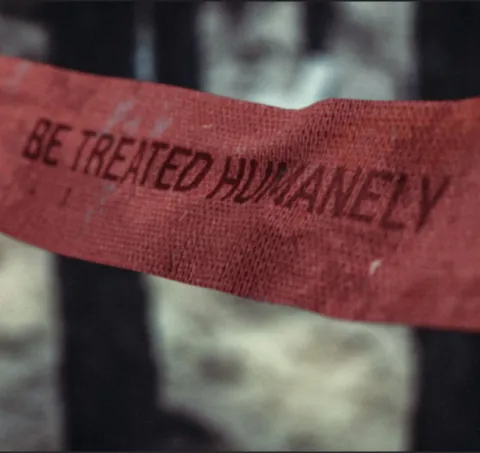
Detainees must be treated humanely and with dignity.
IHL protects those deprived of their liberty from ill treatment, acts of violence and intimidation.
-
The dead must be treated with dignity.
Warrying parties must take all possible measures to search for, collect and evacuate the dead.
-
Parties to a conflict must facilitate humanitarian access.
People must be able to receive humanitarian aid, like food, water and medicine.
-
IHL places limits on the fighting
IHL treaties and customary law regulate weapon use and ban some, such as biological and chemical weapons, landmines, and cluster munitions.
-
War crimes must be punished.
States have the responsibility to investigate, prosecute and punish serious violations of IHL.
Why this matters
To uphold and reaffirm the promise that, even in war, humanity must prevail.
The Global IHL Initiative exists to restore respect for the rules of war and ensure that the Geneva Conventions remain a living lifeline for the vulnerable. In an age of rising conflict and fading restraint, we stand for the sanctity of life, for accountability and for a future where the laws of war are not forgotten relics but the foundation of our shared humanity.
Despite the universal ratification of the Geneva Conventions, violations of fundamental humanitarian norms are widespread. Ongoing conflicts around the globe, whether in urban centres, rural villages or at sea, are causing devastating human suffering, destruction and displacement. Attacks on civilian infrastructure, hospitals and humanitarian workers are all too frequent. The human, social, economic and environmental costs of these violations are unsustainable.
https://www.upholdhumanityinwar.org/en