Labels

Thursday, October 28, 2010

No Bethlehem miracle as priests routed 9-1 by Palestinians

The Palestinian national football squad takes on a team of visiting Catholic priests (yellow T-shirts) from Italy in a friendly match at the Al-Khader Stadium outside the West Bank biblical town of Bethlehem. The priests may have been hoping for a miracle when they took on the Palestinian national football team in Bethlehem but they lost 9-1 in a rout of biblical proportions (AFP/Musa al-Shaer)

No Bethlehem miracle as priests routed 9-1 by Palestinians

BETHLEHEM, Palestinian Territories (AFP) – The priests may have been hoping for a miracle when they took on the Palestinian national football team in Bethlehem but they lost 9-1 in a rout of biblical proportions.

After an heroic first half battling valiantly to fend off their hosts, the international lineup of Catholic priests in their yellow and blue strip managed to hold the home side to 0-0 at half-time in a charity match in the southern West Bank late on Tuesday.

Decked out with Palestinian and Italian flags, alongside the white and gold of the Vatican, Bethlehem's Al-Khader stadium was packed with spectators -- among them hundreds of excited children and a respectable showing of Franciscan monks in their trademark brown robes.

Time after time through the tense first half, their God-fearing goalkeeper fended off the Palestinian attack, aided by providence -- and the goal posts.

But it was the second half that proved to be their undoing, as the red-shirted youngsters ran rings around them, putting goal after goal into the back of the net.

"Football means everything here. Children, they love football. It keeps them out of violence, out of the intifada," said Father Ibrahim Faltas, an Egyptian-born Franciscan who founded a football academy for young Palestinians.

"Through sport you can reach peace," he told AFP.

Among those cheering on the team was Jibril Rajoub, head of the Palestinian Football Federation and the man widely credited with revitalising football in the occupied territories.

"The Christian world is with us and the international community got the message," said Rajoub, referring to a recent Middle East synod convened by Pope Benedict XVI at the Vatican which called for an end to the Israeli occupation.

"It has a very positive impact. It means we are not alone."

For the priests, some of them way past their footballing prime, the final whistle brings deliverance and a return to more conventional pastoral duties.

By Wednesday morning, the ecclesiastical eleven were back to the altar, celebrating mass in the Basilica of the Holy Sepulchre in the heart of Jerusalem's Old City.

Religious leaders needed in peacemaking By Ghassan Rubeiz


Religious leaders needed in peacemaking
By Ghassan Rubeiz
Commentary by
Wednesday, October 27, 2010

Mutual distrust leads many Palestinians and Israelis to think of peace as a mirage. Since religion plays a significant role in justifying the Israeli-Palestinian conflict, politicians need the help of religious leaders in their search for a solution.

The problem is that often the patriarchal figures of the three faiths are too focused on “protecting” the community from erosion of piety or the threat of assimilation to pay enough attention to moral empowerment. Too many leaders defend ownership of land at the expense of justice, rationalize war and its spoils, and remind their people to track the enemy vigilantly using partial interpretations of sacred texts for this purpose.

Religious leaders from outside the region oftentimes also fuel the conflict, sometimes without even being aware that they are doing so. Based outside of the area and free from the considerations of local day-to-day life, these authorities too often espouse hardline positions. The American charismatic church, for example, supports Israel automatically, even at the risk of threatening long-term Jewish security. To become enablers of peace, religious authorities will have to shift from a preoccupation with protecting the tradition from change to becoming agents of inter-communal reconciliation.

Prophetic change must start in the region. The pulpit message must become morally transformative. Religious leaders will take their place at the peace table when imams, priests and rabbis shift their sermons from war to peace, from blame to forgiveness. Weekly sermons of all three faiths should also shift from promoting security through land acquisition to security through friendly neighborly relations and from defending hegemony to a willingness to accept the legitimacy of the other’s claim to land.

Good news does exist. Over 13 years of work with a variety of Middle East communities – on the staff of the World Council of Churches – I met many courageous religious leaders who challenged the institutional norms, tested their traditions and risked their personal security in working for justice and peace across the religious divide.

I witnessed the work of Palestinian church leaders who served their refugees for decades, not through charity but through creative self-help projects. Protestant churches in the Holy Land are pioneers in interfaith dialogue; this form of Palestinian liberation theology is relevant to all churches and all religions. Such theology serves the poor and the oppressed, regardless of religious, political or ethnic identity.

Many religiously motivated Jewish leaders in Israel are active in dialogue with Muslim communities. Some take this to the next step: for example, in the 1980s, a religious-minded peace activist and his wife tried to return a house they owned to its original Palestinian owner whose family lives in a refugee camp in Beirut. The government rejected the gesture, but with ecumenical support, the property was turned into an Open House for service and dialogue with Arab families.

Thanks to the support of committed Muslim clerics, the leadership of the Palestinian non-violence struggle has shifted from being limited to a church-sponsored ecumenical project to ongoing nationwide civic resistance programs. Demonstrations for justice in the West Bank are part of this movement.

These are some examples of how religion can promote peace in the Middle East. Yet, these should be replicated, multiplied and developed to break new ground. Here are a few ideas:

Leaders of all faiths should advocate religious tolerance through the school curriculum. Like issues of global warming, religious tolerance deserves a spot in the classroom.

Expanding on the idea of “prayer without borders,” how about starting a Jerusalem encounter center, where Muslims, Jews and Christians could worship and pray for peace side-by-side?

Reclaiming Jewish heritage in the Arab world is another step. Ancient synagogues, long abandoned, are being renovated in Cairo and in Beirut. This rebuilding of Jewish heritage can urge reconciliation, yet such architectural projects should be accompanied by exchange of visits between spiritual leaders in Israel and the Arab world.

Experiences in Latin America and Northern Ireland reveal that community-based expressions of forgiveness by victims of war on both side of the conflict are morally powerful. Such collective expressions of moral fortitude are helpful in creating a peace climate and must be further cultivated by religious leaders. For example, Muslim and Jewish leaders could jointly help people who lost loved ones in war in order to organize for constructive change.

Even if politicians were to succeed in reaching an agreement, the enforcement of peace requires familiarity with reconciliation and experience with forgiveness, an essential element of faith. Without prophetic religious leadership, Mideast peace will most likely remain a mirage.

Dr Ghassan Rubeiz (grubeiz@comcast.net) is an Arab-American commentator on issues of development, peace and justice. He is the former Middle East Secretary of the Geneva-based World Council of Churches. THE DAILY STAR publishes this commentary in collaboration with the Common Ground News Service (www.commongroundnews.org).

Jewish or Israeli? By Daoud Kuttab

Jewish or Israeli?

By Daoud Kuttab

I have always tried my best to differentiate between Jews and Israelis. It bothers me when Palestinians use these two terms interchangeably.

Every time I cross the Jordan River, I overhear people talk on their cell phones, saying how they just got into the Jewish side, left the Jewish side, or were waiting to go through the Jewish side. Such comments can be heard as people approach or leave an Israeli checkpoint or have any other dealings with Israelis.

Religious preachers use the terms interchangeably when referring to negative actions of the Israelis or the lack of trust in Jewish negotiators, etc.

When I used to cover the Intifada and travel through the occupied territories, I had a similar concern. People would be telling me that Jews came from a certain side, Jewish soldiers beat up someone’s son, Jews shot from behind some trees, statements that referred to the actions of the occupying Israeli forces.

When I would go with foreign journalists, I would have to interpret and I would find myself in a bind, wondering whether I should literally translate words or just refer to the adjective used for the soldiers as Israeli.

Using the word Jew for Israeli is not restricted to Palestinians from certain geographic areas or those from a particular economic background. I would hear it and get upset whenever a university professor or a person from my own family would use the term Jewish referring to Israelis, because I would think of a number of American Jewish friends that I know and who would have nothing to do with the occupiers and the state of Israel, or would be anti-Zionist and share with Palestinians their aspiration to be ?id of the Israeli occupation.

I thought of these terms a lot in recent weeks as we have been inundated with continuous demands by Israel’s leaders that Palestinians not only recognise the state of Israel but its Jewishness as well. These demands also included a set of new laws that the Israeli government has approved, demanding others to refer to the Jewishness of the state and paying little attention to the 20 per cent of the non-Jewish citizens of Israel.

What bothered me was what seems to be a muted reaction from the world’s Jewish population. I can understand the diaspora Jews having special feelings towards the state of Israel for ethnic and religious reasons. But I always thought that those Jews insisted on their local nationality (American, British or Hungarian), while stressing their unique Jewish faith and culture.

Regarding the subject of Jews in the diaspora, I feel that it is problematic to erase differences between Israeli and Jew. The attempts to blur these differences certainly play into the hands of those trying to describe every anti-Israeli action or statement as anti-Semitic.

Palestinians have rejected, and will continue to do so, equating the two terms, for a variety of reasons. Palestinian nationalists insist that the Arab-Israeli conflict is a political national struggle and not a religious one. And although Palestinians have recognised Israelis within the 1967 borders, they totally refuse the concept that Jews have a biblical right to the land of historic Palestine or beyond.

Furthermore, Palestinian leaders will not give up on their brethren who are Palestinian citizens of Israel and whose status would be further hurt by such an attempt that cancels the concept that Israel is the state for its citizens irrespective of their religion.

Right-wing Israeli leaders led by Prime Minister Benjamin Netanyahu and his Foreign Minister Avigdor Lieberman might think that they have found a winning strategy to obstruct Palestinian demands for an end to their military occupation. Palestinians and most level-headed persons around the world will accept the Palestinian position that Israel can call itself whatever it wants. But by ramming the Jewishness of Israel down the throat of Palestinians, the Israeli leadership is harming the attempts by Jews aro?nd the world to distance themselves from the political state of Israel even if they support it ethnically, culturally and emotionally.

This will have a much longer negative effects on world Jewry than on Palestinians. I hope they will realise this dangerous move and will act to stop it before it is too late.


28 October 2010

Wednesday, October 27, 2010

Rula’s View ... in Vogue Magazine

Rula Jebreal: Photographed by Annie Leibovitz

Rula’s View

Tuesday, October 26, 2010

"It is not the right of a single UNRWA worker to derogate from international texts, particularly those that were established by the agency itself. "

PA envoy to UN to meet UNRWA director

BETHLEHEM (Ma’an) -- Riyad Mansour, the Permanent Observer of Palestine to the UN, said Tuesday that he would meet with the director of UNRWA's New York office following controversial remarks on the right of return.

Andrew Witly came under fire Tuesday after saying Palestinian refugees should abandon the "illusion" of their right to return and that Arab countries should begin searching for available land to provide the refugees.

Mansour said he would meet with Witly to explain to him the condemnation of the Palestinian Authority concerning such statements and to reiterate that this position is not acceptable.

He said it is not the right of a single UNRWA worker to derogate from international texts, particularly those that were established by the agency itself.

Mansour told Ma’an radio that Witly will be stepping down soon and that he doesn’t know if the decision is a coincidence or if the agency has decided to ask for his resignation over the remarks.

He also said that in the next two weeks there will be a UN resolution that will affirm the right of return and renew a resolution 60 years ago to the same effect.

Cristopher Gomez, UNRWA's West Bank spokesman, said the agency’s position is the opposite of what Witly said. Gomez assured that the remarks were not in any way related to UNRWA's position.

Illegal Israeli actions in Occupied East Jerusalem and the rest of the Occupied Palestinian Territory

http://www.reliefweb.int/rw/rwb.nsf/db900SID/EGUA-8AKSHG?OpenDocument&rc=3&emid=ACOS-635PFR

Identical letters dated 15 October 2010 from the Permanent Observer of Palestine to the United Nations addressed to the Secretary-General and the President of the Security Council (A/ES-10/504–S/2010/535)


General Assembly
Tenth emergency special session
Agenda item 5
Illegal Israeli actions in Occupied East
Jerusalem and the rest of the Occupied
Palestinian Territory

Security Council
Sixty-fifth year

I write to you today to express our strong condemnation of the latest unilateral, illegal Israeli measures in Occupied East Jerusalem. On Thursday, 14 October 2010, Israel, the occupying Power, approved the construction of 240 more new settlement units in the illegal settlements of "Pisgat Ze'ev" and "Ramot", in Occupied East Jerusalem. The approval for the construction of these units in the Occupied Palestinian Territory is yet further proof of the ongoing and intensifying Israeli policy of land grab and colonization, which has been most aggressive in Occupied East Jerusalem.

This Israeli decision shows, once again, that the current Government of Israel is set to undermine any chances of salvaging the peace talks and what they intended to achieve. It is also in grave breach of the Fourth Geneva Convention and other relevant provisions of international law and relevant United Nations Security Council and General Assembly resolutions. Moreover, it is absolutely contrary to the well-defined and internationally supported objective of a peace process to resolve the Israeli-Palestinian conflict, namely the achievement of independence of the State of Palestine, living side by side with Israel in peace and security on the basis of the pre-1967 borders.

I regret to inform you also that Israeli settler terror, violence, harassment and intimidation against the Palestinian civilian population in the Occupied Palestinian Territory, including East Jerusalem, continues to intensify, particularly during the olive harvest season. Today, the armed settlers of the outpost "Gevat Gilad" set fire to the village of Fara'ta east of Qalqilya, causing damage estimated at tens of thousands of dollars. These criminal armed settlers also prevented Palestinian firemen from reaching the affected area, leading to more damage in the lands belonging to Palestinian citizens. Such lawlessness and impunity have clearly been fostered and fuelled by the military, financial and physical reinforcements and incentives provided to the settlers by the Government of Israel, including its absolute failure to hold the settlers accountable for their crimes. Extremist settlers have been no doubt further emboldened by repeated declarations of support and incitement from members of the current right-wing Government of Israel.

We once again alert the international community to the fact that illegal Israeli settlement expansion in Occupied East Jerusalem is accelerating in an unprecedented manner and that it continues in conjunction with the aggressive Israeli campaign of demolishing Palestinian homes and evicting and displacing hundreds of indigenous Palestinian families from the city. Such Israeli policies and measures clearly aim at altering the demographic composition, status and nature of East Jerusalem, in an attempt to create a new reality on the ground, in effect pre-empting any final solution to the Palestinian-Israeli conflict.

These illegal Israeli actions undermine the efforts to resume and accelerate the peace process and represent an affront to the international community's unanimous call to halt such actions to allow for the peace efforts to succeed. In this regard, the Palestinian people and their leadership have expressed deep appreciation for the unanimous assertion of principled positions and strong, clear statements recently made by leaders from around the world, regarding the latest such illegal, unilateral Israeli actions. However, what is needed now is for the international community, including the Security Council, to take immediate, practical and decisive action to bring Israel into compliance with international law, including its obligations under the Fourth Geneva Convention, relevant United Nations resolutions and the Quartet Roadmap because the alternative gravely threatens not only Palestinian national aspirations for freedom and independence in the Palestinian Territory occupied since 1967, including East Jerusalem, but also gravely threatens the stability and security of the entire region.

This letter is in follow-up to our previous 376 letters regarding the ongoing crisis in the Occupied Palestinian Territory, including East Jerusalem, since 28 September 2000. These letters, dated from 29 September 2000 (A/55/432- S/2000/921) to 8 October 2010 (A/ES-10/503-S/2010/515) constitute a basic record of the crimes being committed by Israel, the occupying Power, against the Palestinian people since September 2000. For all of these war crimes, acts of State terrorism and systematic human rights violations committed against the Palestinian people, Israel, the occupying Power, must be held accountable and the perpetrators must be brought to justice.

I should be grateful if you would arrange to have the text of the present letter distributed as a document of the tenth emergency special session of the General Assembly, under agenda item 5, and of the Security Council.

(Signed) Riyad Mansour
Ambassador
Permanent Observer of Palestine to the United Nations

Monday, October 25, 2010

Tomorrows Youth Intern Journal: Olive Picking in Beit Furik

Intern Journal: Olive Picking in Beit Furik

If the essence of Palestine were to be captured in one image, that image could very well be the olive tree. Much of the rustic landscape is peppered with olive trees, many of which are centuries old and have been tended to by the same family for generations upon generations. One of the very first images of Palestinian life I observed after crossing into the West Bank by car on the way to Nablus was a family beginning their olive harvest, so I was delighted to hear that Ahmad, TYO’s health educator, had invited the international staff and interns to come pick olives alongside his family in the village of Beit Furik.... READ MORE

Economist Review of a new translation that captures the ache of exile ... Sad prophet - Mahmoud Darwish's "Journal of an Ordinary Grief "

Journal of an Ordinary Grief. By Mahmoud Darwish. Archipelago Books; 177 pages; $16. Buy from Amazon.com

MAHMOUD DARWISH is the Palestinian poet laureate. His verses chronicle the Palestinians’ anguish at the loss of their land. His rhythms tattoo their angry heartache. After his death in 2008, he was buried in Ramallah, a final return to the land that was his life, his cause and his identity.

He wrote “Journal of an Ordinary Grief” in 1973 but this is its first translation into English. The first of three semi-autobiographical prose works (the second, “Memory for Forgetfulness”, was published in English in 1995; the third, “In the Presence of Absence”, will come out next year), it recounts the poet’s house arrest, his run-ins with Israeli interrogators and various spells in jail. Darwish’s voice, drifting between his own and that of his people, searches endlessly for what it cannot find.

Ibrahim Muhawi’s limpid translation captures the longing, the ache of exile. When Darwish and his family left their village in 1948, they expected to return soon. The painful realisation of their loss comes gradually. The trees that are the “ribs of childhood” have been left behind. Palestine has become a homeland defined by those who occupy it, a place that is “a dream in its actuality, and an actuality in its dream”. Occupied though it may be, it is a paradise that is “subject to being regained”. Despite everything, it is attainable.

Some question the Palestinians’ all-consuming attachment to their land. Darwish answers them simply: “‘Can the land be so holy?’ For the Palestinians, the answer is yes.” He regrets that they have produced no Jeremiah, no one who can “walk around in our streets and in our failings, one who can scourge us and lament us”. Perhaps it was hard for him to see how well he did that himself.

Marking the 65th anniversary of the UN, Erekat called on UN member states "to honor the noble objectives of the UN

Erekat: Israel undermined efficacy of UN

RAMALLAH (Ma'an) -- Chief PLO negotiator Saeb Erekat slammed Israel for violating UN General Assembly and Security Council resolutions and as a result has undermined the UN, a statement issued by the official on Monday read.

Marking the 65th anniversary of the UN, Erekat called on UN member states "to honor the noble objectives of the UN by holding Israel accountable for its continued occupation of Palestine and to uphold the rights of Palestinian refugees."

Through several violations of UN resolutions, he said, "Israel has undermined the efficacy of and derogated the UN System, the very authority through which it was created. Instead, Israel works diligently to pressure its allies to oppose the creation of a Palestinian state."

The PLO official also said it was "time for Israel to stop its blatant disregard of international law and international consensus," and to respect human rights the Palestinian right to self determination.

"It is time for the international community to hold Israel accountable for its disregard for international law. It is time for Palestine to be free," he said.
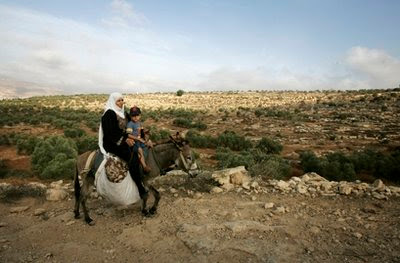
A Palestinian woman and boy ride a donkey on their way to harvest olives in the West Bank village of Salim, near Nablus, Thursday, Oct. 21, 2010. Palestinian farmers from Salim need permission to pass a gate which the Israeli army opens from 07:00 am to 4:00 pm during the olive season, near Israeli settlement of Elon Moreh. (AP Photo/Nasser Ishtayeh)

Palestinian fishermen look for fish caught in their net at the seaport in Gaza October 20, 2010 REUTERS/Mohammed Salem (GAZA - Tags: POLITICS EMPLOYMENT BUSINESS)

An Israeli woman pauses at the memorial site of assassinated Prime Minister Yitzhak Rabin, in Tel Aviv, Israel, Wednesday, Oct. 20, 2010. Israel on Wednesday marked 15 years since Prime Minister Yitzhak Rabin was assassinated by an Israeli extremist who opposed his concessions for peace with the Palestinians. (AP Photo/Dan Balilty)

Secretary of State Hillary Rodham Clinton speaks at the Fifth Annual Gala of the American Task Force on Palestine in Washington, Wednesday, Oct. 20, 2010 (AP Photo/Carolyn Kaster)

Palestinian Raeifeh Zakarneh, age 83, sorts olives in her field near the West Bank village of Kabatyeh near Jenin, Thursday, Oct. 21, 2010. Palestinians began to harvest olives in October, a staple for many local farmers that also use them to make oil (AP Photo/Mohammed Ballas)

A Palestinian-owned house is seen shrouded in the morning mist on Mount Gerizim near the West Bank town of Nablus October 22, 2010. REUTERS/Baz Ratner (WEST BANK - Tags: RELIGION SOCIETY IMAGES OF THE DAY)

A Palestinian security officer helps local girls to sort olives during olive harvest in the West Bank city of Jenin, Wednesday, Oct. 20, 2010. Palestinians began to harvest olives in October, the olives are a staple for many local farmers. (AP Photo/Mohammed Ballas)

A boy from the Samaritan sect smiles during their traditional pilgrimage ceremony marking the holiday of the Tabernacles, or Sukkot, in Mount Gerizim near the West Bank town of Nablus October 22, 2010. The Samaritans, who trace their roots to the biblical Kingdom of Israel in what is now the northern occupied West Bank, observe religious practices similar to those of Judaism. REUTERS/Baz Ratner (WEST BANK - Tags: RELIGION SOCIETY)

The Samaritan high priest holds up their Torah scroll during a traditional pilgrimage ceremony marking the holiday of the Tabernacles, or Sukkot, in Mount Gerizim near the West Bank town of Nablus October 22, 2010. REUTERS/Baz Ratner (WEST BANK - Tags: RELIGION SOCIETY)

Members of the Samaritan sect take part in their traditional pilgrimage ceremony marking the holiday of the Tabernacles, or Sukkot, on Mount Gerizim near the West Bank town of Nablus, October 22, 2010. REUTERS/Baz Ratner (WEST BANK - Tags: RELIGION SOCIETY)

Members of the Samaritan sect take part in their traditional pilgrimage ceremony marking the holiday of the Tabernacles, or Sukkot, in Mount Gerizim near the West Bank town of Nablus October 22, 2010. REUTERS/Baz Ratner (WEST BANK - Tags: RELIGION SOCIETY)

Members of the Samaritan sect take part in their traditional pilgrimage ceremony marking the holiday of the Tabernacles, or Sukkot, on Mount Gerizim near the West Bank town of Nablus October 22, 2010.The Samaritans, who trace their roots to the biblical Kingdom of Israel in what is now the northern occupied West Bank, observe religious practices similar to those of Judaism. REUTERS/Baz Ratner (WEST BANK - Tags: RELIGION SOCIETY IMAGES OF THE DAY)

Fishing from rubble : A Palestinian fisherman stands with his rod at the port of Gaza City (AFP/Mahmud Hams)

Members of the Elders Delegation (from R-L) former U.S. President Jimmy Carter, Ela Bhatt and former President of Ireland Mary Robinson visit the East Jerusalem neighbourhood of Silwan October 21, 2010. The mostly Arab neighborhood of Silwan is a frequent flashpoint between Palestinians and Israelis. The Elders, a group of retired world leaders, arrived in the East Jerusalem neighborhood to provide assistance to Palestinians facing the prospect of having their homes demolished. REUTERS/Menahem Kahana/Pool (JERUSALEM - Tags: POLITICS)

In this file photo taken Thursday, Nov. 22, 2007, a Palestinian walks along a section of Israel's separation barrier between the Shuafat refugee camp and the Jewish neighborhood of Pisgat Ze'ev in Jerusalem. With just-restarted peace talks already stalled over renewed Jewish settlement construction, it is increasingly difficult to find Israelis or Palestinians who believe their leaders can achieve the stated goal of a comprehensive agreement within a year - and people on both sides are quietly mulling alternatives. (AP Photo/Emilio Morenatti, File)

A Palestinian worker stands on a construction site in the West Bank Jewish settlement of Kiryat Arba, near Hebron, Wednesday, Oct. 20, 2010. Israeli settlers have begun work on at least 544 new homes since Israel's 10-month-old moratorium on West Bank housing starts expired three weeks ago, according to an Associated Press count based on an extensive tour of settlements and interviews with mayors, construction workers and a contractor. (AP Photo/Tara Todras-Whitehill)

A Palestinian protestor runs from tear gas shot by Israeli soldiers during a protest against the expansion of the nearby Jewish settlement of Halamish in the West Bank village of Nabi Saleh near Ramallah, Friday, Oct. 22, 2010. (AP Photo/Majdi Mohammed)

Palestinian school children stand in front of a school that was vandalised in the West Bank village of Sawiya south of Nablus October 20, 2010. Local Palestinians said that Jewish settlers from the area set fire and vandalised the school on Wednesday.REUTERS/Ammar Awad (WEST BANK - Tags: POLITICS CIVIL UNREST EDUCATION)

REUTERS/Ammar Awad

In this Monday, May 31, 2010 file photo, image reviewed by the Israeli military and taken aboard an Israeli Naval vessel, Israeli Navy soldiers intercept one of several boats headed towards the Gaza Strip, in international waters in the Mediterranean Sea. The Israeli commission looking into a deadly raid on a pro-Palestinian flotilla last May has summoned Israel's military chief to testify for a second time Sunday, Oct. 24, 2010 (AP Photo/Uriel Sinai, Pool, File)


A Palestinian man walks in to the 'Rachel Restaurant' in the West Bank city of Ramallah,Sunday, Oct. 24, 2010. (AP Photo/Majdi Mohammed)

A Palestinian man cleans a table in the 'Rachel Restaurant' in the West Bank city of Ramallah,Sunday, Oct. 24, 2010. A restaurant named in honor of pro-Palestinian activist Rachel Corrie, an American, has opened in Ramallah. Corrie was 23 when she was crushed to death by an Israeli army bulldozer in Gaza in 2003, while trying to prevent the demolition of a Palestinian home. A street in Ramallah has also been named after Corrie, and the restaurant is located on that street. The restaurant owners said they wanted to honor her for her show of solidarity with the Palestinians. (AP Photo/Majdi Mohammed)

A Palestinian family participates in a weekly demonstration supporting Palestinians evicted from their homes in the east Jerusalem neighborhood of Sheikh Jarrah, Friday, Oct. 22, 2010. (AP Photo/Bernat Armangue)

Palestinian women hold black umbrellas and wave Palestinian flags at Damascus Gate, one of the entrances to the Muslim quarter in Jerusalem's Old City, Sunday, Oct. 24, 2010. Israel's leader cautioned the Palestinians on Sunday against taking unilateral action in their efforts to establish an independent state, saying that only direct talks could bring peace to the region (AP Photo/Sebastian Scheiner)

Palestinian, Israeli and foreign activists take part in a protest outside the Damascus Gate in Jerusalem's Old City against Jewish settlements in East Jerusalem October 24, 2010. Israel captured East Jerusalem along with the West Bank from Jordan in the 1967 war and regards all of the city as its capital -- a status not recognized internationally. Palestinians want East Jerusalem as the capital of the state they intend to establish in the West Bank and Gaza Strip. REUTERS/Baz Ratner

Palestinian boys take part in a demonstration against a Jewish settlement in the Sheikh Jarrah neighborhood, in East Jerusalem October 22, 2010. REUTERS/Amir Cohen (JERUSALEM - Tags: POLITICS CIVIL UNREST)

Palestinians riding their horses cast a shadow on a wall, during a graduation event for a horse riding club in Gaza City, Monday, Oct. 18, 2010. (AP Photo/Hatem Moussa)

FILE - In this Sunday, Oct. 10, 2010 file photo, Cindy, left, and Craig Corrie, the parents of Rachel Corrie, a pro-Palestinian activist who was killed by an Israeli bulldozer in Gaza in 2003, pause during an interview with the Associated Press in Jerusalem. The parents got their first chance Thursday to hear from the man who drove the vehicle that killed her. But they were denied a chance to confront him face-to-face in an Israeli courtroom, dashing a central goal of their civil lawsuit against Israel's Defense Ministry. The unidentified former soldier was shielded behind a wood-and-plastic partition, and his testimony about the events leading up to 23-year-old Rachel Corrie's death floated into the hall over a microphone. (AP Photo/Sebastian Scheiner, File)

Palestinians pick olives from trees farmers say were cut overnight by Jewish settlers, nearby the Jewish settlement of Eli in the northern West Bank village of A Laban al-Sharkiyeh, Saturday, Oct 23, 2010. Vandals chopped down around 20 Palestinian-owned olive trees in the West Bank overnight Saturday, the latest in a string of attacks against Palestinian property during the important autumn harvest season. 'We found our trees sawed when we came to pick them this morning,' said farmer Raja Aweis, 42. A military spokesman said police were investigating (AP Photo/Nasser Ishtayeh)

A chess player makes a move against Israeli chess Grandmaster Alik Gershon, not pictured, during an attempt to break the Guinness world record of simultaneous chess play in Rabin square in Tel Aviv, Israel, Thursday, Oct. 21, 2010. The Jewish Agency and the Israel Chess Federation invited hundreds of chess players, many of them new immigrants from the former Soviet Union to break the Guinness world record for simultaneous chess play against Israeli Grandmaster Alik Gershon. The world record of 500 games played simultaneously is now held by Iran. (AP Photo/Ariel Schalit)

HOME (UNRWA - Peace Starts Here)


unrwa | October 20, 2010

"Home" is a first-hand account of a family of refugees whose house was demolished before their eyes.

Location: East Jerusalem, West Bank.

For more stories go to http://www.peacestartshere.org


STORY 1: HOME
East Jerusalem, West Bank

How does it feel to lose your home? Home is a first-hand account of a family of refugees whose house was demolished before their eyes.

Like many Palestinian residents of occupied East Jerusalem, Ala’a and his family faced insurmountable obstacles when trying to obtain an Israeli building permit to build their home.

They were left with practically no choice but to build without a permit, rather than not at all.
In 2001 the family moved to their new home in Beit Hanina, East Jerusalem. They were fined 70,000 shekels for not having a permit.

Three months after they paid the last installment of this fine, the family received a demolition order for their home. Shortly after that, they watched as their home - and with it their entire life savings - was demolished.

Unfortunately Ala’a’s story is far from unique. Palestinians make up about 30 per cent of Jerusalem’s population but can only apply for permission to build on 13 per cent of the land in the eastern half of the city, much of which is already built-up.

In addition, the number of permits granted to Palestinians each year does not meet demand for housing. The gap – around 1,100 houses each year – has caused a serious housing shortage.
The UN estimates that between 28 and 46 per cent of Palestinian homes could be at risk of demolition.

In 2009, 300 Palestinians, including 149 children, were displaced by house demolitions in East Jerusalem. A third are refugees registered with UNRWA, who now must cope with further displacement and dispossession.

UNRWA seeks to protect refugees against infringements of their human rights, such as eviction, displacement, or restriction of movement. UNRWA monitors violations of international law, including human rights and international humanitarian law, and advocates for the protection of Palestine refugees’ rights. It also provides emergency assistance to victims of house demolitions, evictions, and refugees whose property is damaged as a result of the conflict.

This film was supported by the European Commission through its Humanitarian Aid department.

ADDITIONAL INFORMATION

LINKS
West Bank – UNRWA overview
West Bank demolitions (PDF) - UN Office for the Coordination of Humanitarian Affairs (OCHA)
Jerusalem: City of Dispossession

Sunday, October 24, 2010

We Shall Overcome....White House Celebrations of Music From the Civil Rights Movement

Watch the full episode. See more In Performance at The White House.

In Performance at The White House | A Celebration of Music From the Civil Rights Movement

"In Performance at the White House: A Celebration of Music from the Civil Rights Movement" features songs from the Civil Rights Movement performed by top entertainers, as well as readings from famous Civil Rights speeches and writings.

In Performance at The White House | Celebrating the Music of Paul McCartney
[Paul McCartney,
(born 18 June 1942) is an English musician, singer-songwriter and composer. Formerly of The Beatles (1960–1970) and Wings (1971–1981), McCartney is the most successful songwriter in the history of popular music]

Did you know? Viewers like us are PBS's largest single source of support... DONATE NOW