Labels

Wednesday, October 7, 2009

My letter to The Daily Star RE Credit Barack Obama with resolve on a Palestinian state By Hussein Ibish

RE: Credit Barack Obama with resolve on a Palestinian state By Hussein Ibish
http://www.dailystar.com.lb/article.asp?edition_id=10&categ_id=5&article_id=107229

Dear Sir,

Excellent to see "Credit Barack Obama with resolve on a Palestinian state" By Hussein Ibish. I like Ibish's Ibishblog www.ibishblog.com and his many thoughtful contributions to a very difficult and often confusing conversation concerning Palestine- and America. His most recent blog post today is a wise warning: Palestine on the brink: only a quick de-escalation can prevent an explosion

It really would be a horrible and senseless tragedy, if after all these years of valiantly struggling to be free, the remnants left of historic Palestine end up totally sabotaged, torn asunder and destroyed by various extremists and hate mongers who scorn the current efforts to bring about a just and lasting peace for Israel and Palestine based on the Arab Peace Initiative.

Sincerely,
Anne Selden Annab

Midnight Prayers by Artist: Helen Zughaib (ATFP Silent Auction)

Midnight Prayers
by Artist: Helen Zughaib
Measurements: 33x39
Donated By: Helen Zughaib
Created: 2009

Limited Edition piece of a set of twenty, done by Lebanese-American artist Helen Zughaib. U.S. President Barack Obama donated the original piece to Iraqi Prime Minister Nouri Al Maliki. Features nontraditional use of space and perspective.

Starting Bid: $1,200.00
Bid Increments: $100
Market Value: $1,600.00


Silent Auction 2009

The Gala will feature a silent auction of approximately 150 works of art and crafts. For more information on the auction and the items available:
http://www.americantaskforce.org/gala_2009/silent_auction

To view the Gala Host Committee:
http://www.americantaskforce.org/fourth_annual_gala_honorary_host_committee

For more information:
http://www.americantaskforce.org/gala_2009

To Purchase Tickets online:
https://www.americantaskforce.org/civicrm/contribute/transact?reset=1&id=2

Gala 2009: Palestine Alongside Israel: Liberty, Security, Prosperity

Media contacts: Hussein Ibish, (202) 438-7297

Tuesday, October 6, 2009

UN News Centre: Palestine Rights Bureau Says Situation in East Jerusalem ‘Deeply Disturbing’

General Assembly
GA/PAL/1137

Department of Public Information • News and Media Division • New York

Palestine Rights Bureau Says Situation in East Jerusalem ‘Deeply Disturbing’


This statement was issued today by the bureau of the Committee on the Exercise of the Inalienable Rights of the Palestinian People on the situation in occupied East Jerusalem:


Further to the statement by the Committee on the Exercise of the Inalienable Rights of the Palestinian People of 19 May 2009, expressing concern about illegal and provocative Israeli policies and measures in occupied East Jerusalem, the bureau of the Committee is once again, compelled to voice its alarm about recent developments in the city.


The situation in East Jerusalem is deeply disturbing. The Israeli authorities continue to expand illegal settlements in and around East Jerusalem, as well as take discriminatory measures against the city’s Palestinian residents. On 2 August, following a decision by the Israeli High Court of Justice, Israeli security forces had forcibly evicted nine Palestinian families -- 53 refugees registered by United Nations Relief and Works Agency for Palestine Refugees in the Near East (UNRWA), including 20 children -- from their homes in the Sheikh Jarrah neighbourhood of East Jerusalem. Their property was handed over to a settler organization.


Moreover, on 7 September, Defence Minister Ehud Barak approved the construction of 455 new settlement units. On the same day, the Israel Land Administration published tenders for the construction of 486 units in the “Pisgat Ze’ev” settlement. There are also plans to build 14,000 housing units in the area of the Palestinian village of Al-Walaja, south-west Jerusalem, which would become the largest settlement project in the vicinity of East Jerusalem since the construction of the “Pisgat Ze’ev”, “Gilo” and “Har Homa” settlements.


Most recently, the violent incidents at the Al-Haram Al-Sharif compound demonstrate how tense and explosive the situation in the city is. Any illegal or provocative actions, in particular at or near the city’s holy sites, are prone to escalate into large-scale violence with far-reaching implications.


The bureau of the Committee states most emphatically that continued house demolitions, eviction of Palestinian residents, settlement construction, transfer of settlers or any other legal or administrative measures aimed at altering the status and physical and demographic character of occupied East Jerusalem constitute violations of international law and must be rescinded by the occupying Power. These unilateral policies and actions also sabotage the important efforts by the Quartet and its partners to relaunch permanent status negotiations between Israel and the Palestinians. Moreover, they call into question the credibility of official declarations by the Israeli Government regarding its readiness to resume serious negotiations with the declared goal of reaching a two-State solution to the conflict on the basis of the 1967 borders.


East Jerusalem remains part of the Occupied Palestinian Territory. Achieving a negotiated solution of the question of Jerusalem based on international law and relevant United Nations resolutions is absolutely essential for resolving the Israeli-Palestinian conflict and crucial for a durable peace in the whole region. The bureau of the Committee stresses that in the absence of the political will on the part of the Israeli Government to adhere to its obligations, the international community must shoulder the responsibility of ensuring respect for the norms of international law.


The bureau of the Committee also urges the Security Council to implement its own resolutions on the question of Jerusalem. The members of the Quartet must also ensure the implementation by the parties of their obligations under the Road Map. The Committee on the Exercise of the Inalienable Rights of the Palestinian People, for its part, pledges to continue to work in support of a comprehensive, just and lasting solution of the question of Palestine. The status and the future of the Holy City of Jerusalem remain an important integral part of any such settlement.


* *** *

Palestinian Rights Committee Adopts Annual Report, Noting Concern at Israeli Settlement Activity, Other Issues

Palestine Rights Bureau Says Situation in East Jerusalem ‘Deeply Disturbing’

Palestine Refugee Agency Has Saved Countless Lives, Offered Hope to Generations

Monday, October 5, 2009

Arab News: Palestinians should trust Obama

by ATFP President, Ziad Asali

Arab News
October 4, 2009

http://www.arabnews.com/?page=7&section=0&article=127040&d=4&m=10&y=2009
http://www.dailystar.com.lb/article.asp?edition_id=10&categ_id=5&article_id=1071...

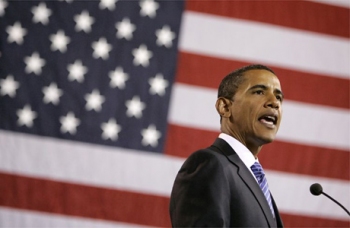
Obama with flagTHINGS have changed over the past decade between Palestinians and the United States, and much for the better. Yasser Arafat was enticed to attend the Camp David meeting in 2000 with the promise that he would not be blamed if it failed. It did, and he was. Last week Palestinian President Mahmoud Abbas was invited to attend the New York meeting without any such promise. He was not blamed, and the meeting was not a failure.

The meeting dealt with both an immediate crisis and a long-term strategic goal.

The crisis was generated by Israeli Prime Minister Benjamin Netanyahu’s refusal to budge on the total settlement freeze proposed by the US administration and by Abbas refusing to negotiate without it.

Entering the trilateral meeting, the Palestinians had no expectations that US President Barack Obama could deliver a 100 percent freeze or even find a way out of the crisis, let alone offer a commitment and a mechanism to advance a major strategic goal.

However, Obama refused to yield on his own demand for a freeze, set it aside for now, and responded by demanding an even more ambitious and strategic goal — the resumption of final-status issues, which Netanyahu did not exactly seek. In his speech to the UN General Assembly, Obama spelled out the parameters for these negotiations: Security for all, borders, refugees and Jerusalem. And to add clarity, he said the goal was to end the occupation that began in 1967, and declared settlement activity illegitimate.

Netanyahu may have won the first round on freezing the settlements, but he lost the case on their legitimacy. Moreover, the endgame is about establishing a Palestinian state, and that is very much in play. Netanyahu’s commitment to a two-state solution, now twice expressed in official pronouncements, will be seriously tested in new negotiations.

He stymied the quest for a settlement freeze, but he has yet to prove that his opposition was to this one specific issue, rather than to negotiating a genuine end to the conflict. Many parties have yet to be convinced that Israel is serious about ending the conflict because it thinks that it has an inexhaustible base of American support, even if it takes positions that are not aligned with the US national interest.

However, the strategic commitment by the US to Israel does not extend to its occupation of Palestinian land. Obama has made it unmistakably clear that the two-state policy is real, and that he is ready to take political risks to make it work.

The Palestinians know they cannot afford to loose the support of the American president, especially since he has called for immediate negotiations on all the issues, including Jerusalem, deemed settlement expansion illegitimate and invited them to work out the terms of reference. This package offers the Palestinians an acceptable way to resume negotiations.

Palestinians should continue to insist on a full settlement freeze. However to refuse to negotiate without it will simply mean there will be no negotiations, which cannot conceivably serve Palestinian interest. Their historic doubts about Netanyahu, no matter how justified, should not lead to an impasse they will pay for disproportionately.

When Obama asks the Palestinians to put an end to incitement, they should pay attention. It is significant that he found nothing else to ask of them. Outmoded rhetoric in the Arab media may score domestic political points, but comes at a withering cost to the Palestinian cause diplomatically.

The Israeli prime minister has defied the US president by refusing to agree to a complete settlement freeze. This has real consequences for Israel and its leadership. They may be hoping that Obama’s political fortunes sour given the challenges facing his administration and that they can garner more support in the US political system, or that the Palestinians will inadvertently bail them out and help blunt US demands.

They could well lose such a gamble. Obama might continue to be popular and remain insistent on resolving this issue. The American Jewish community is still solidly behind a two-state solution, as are the American people in general. Even a slight devaluation of the strategic relationship with the United States is a risk that Israeli leaders can ill afford.

Since there is no military solution available to either party, these two people must find a way to negotiate a means of living side by side in a narrow strip of land. And, since there cannot be meaningful negotiations without the active engagement of the United States, its policies and national interest are defining issues.

The evolving redefinition of US interests over the past decades inexorably led to official support for the creation of a Palestinian state by the Bush administration, and to the formation of the Quartet, which embodied international support. What we have now in this president and his administration, though they face a myriad of daunting challenges, is a leadership that offers the right policy and political will that might save the Israelis and Palestinians from their dysfunctional relationship.

What happens on the ground as negotiations resume is at least as important as the outcome of negotiations. The status quo — a one-state reality with that state occupying another, stateless, people — cannot be sustained.

The vigorous and proactive state institution-building program proposed by Palestinian Prime Minister Salam Fayyad is the most responsible and creative idea the Palestinians have put on the table since they accepted a two-state solution. The Quartet has just endorsed it. The United States should now mobilize its resources to make it work, and Israel would be wise not to stand in the way.

It seems that Obama is willing to spend resources and political capital to help the Palestinians create the infrastructure of their state, and negotiate its final status. His stand on the illegitimacy of settlement expansion and agreement on terms of reference for final-status talks should pave the way to renewed serious negotiations. After more than a decade of dramatic evolution, the United States led by Obama has finally become as close to an honest broker as the Palestinians can ever expect to be dealing with.

ATFP


Saturday, October 3, 2009

PLEASE Tell President Obama You SUPPORT SUSTAINED U.S. EFFORTS TOWARDS M.E. PEACE TODAY!

http://www.aaiusa.org/page/s/middleeastpeace


The time is now. The Arab American Institute is standing up for peace. Americans are joining together to stand up for peace. Will you join us?

Add your support to the letter signed by the leaders of over 30 Arab and Jewish American organizations as well as religious leaders around the country and let the Administration know of your commitment to Middle East peace.

"We come from varied ethnic backgrounds and religious faiths that are diverse. We are Democrats and Republicans. We are veterans of war and of the struggle for peace. Together, we are all Americans.

We find common cause in supporting strong U.S. leadership to achieve a negotiated, sustainable resolution to the Palestinian-Israeli conflict - a fundamental American interest that crosses racial, ethnic and religious lines."

These are the opening lines of the Letter in Support of a Comprehensive Middle East Peace: An American National Interest Imperative that was submitted to President Obama on September 22, 2009.

Please add your support.

Read the entire letter here and sign on


A Conversation With Her Majesty Queen Rania Al Abdullah of Jordan

Friday, October 2, 2009

UNRWA at 60

UNRWA at 60

By Rami G. Khouri

Activities at the UN headquarters in New York City Thursday, commemorating the 60th anniversary of the United Nations Relief and Works Agency for Palestine Refugees (UNRWA), coincided with the latest political developments revolving around the meeting last Tuesday of US President Barack Obama, Prime Minister Benjamin Netanyahu and President Mahmoud Abbas.

Political leaders on all fronts have wildly failed the Palestinian and Israeli peoples’ right to live in secure, stable societies, while the thousands of UNRWA employees have consistently made sure that millions of politically abandoned and physically vulnerable refugees receive the basic services and common decencies that are the birthright of every human being.

The work that UNRWA has done to deliver education, healthcare, social services and basic protection for many of the 4.6 million refugees registered with it represents the United Nations at its best - helping people at the material level, while drawing attention to the need to ensure their political, national and human rights, even in conditions of vicious warfare.

Some of the refugees live in appalling conditions, especially in Lebanon and Gaza, where unemployment and school dropout rates are often very high. Yet the continued mandate of UNRWA and its adaptation to changing circumstances sends the message that the world sees the refugees as people who have basic rights that are not mere slogans, but realities that must be exercised.

UNRWA was established in 1949 shortly after the nations of the world issued the Universal Declaration of Human Rights, which saw individuals as unique in every way except for their identical right to leave behind the jungle and to live in conditions governed by access to equal rights guaranteed by the rule of law.

UNRWA is also important to recognise today as a living symbol of the desire and ability of ordinary Palestinians to create a society of integrity, decency and opportunity when they are given a chance to do so.

Because UNRWA is staffed mainly by Palestinians, it is something of a microcosm of how a Palestinian society would evolve if it were not subjected to the attacks and pressures of others. Several million Palestinians have passed through hundreds of UNRWA schools in the last 60 years, and many of them have gone on to contribute to the development of the modern Arab world as employees or entrepreneurs in their home communities or further afield.

The Palestine issue has probably been the single most radicalising and destabilising force in the modern Arab world - but UNRWA has been the most powerful force for moderation and sensibility among Palestinians who might otherwise have become disruptive and violent if they had been denied the basic services and dignity that UNRWA represents. Thousands of young Palestinians have indeed turned to violence, fighting other Palestinians and Arabs, Israelis or even attacking foreign targets in some cases of particularly absurd terror. Yet if UNRWA did not exist or provide the level and quality of services that keep young men and women healthy and in school or work, the discarded and dispirited Palestinians who would have turned to violence would probably have numbered in the hundreds of thousands, if not even a few million.

Perhaps the most important new role that UNRWA has played in recent years has been its increasing determination - represented by its senior officials - to speak out forcefully when the refugees were in the most dire circumstances and in the greatest need of assistance and protection - such as during the recent Israeli attack on Gaza.

UNRWA has expanded its role from a provider of basic services to a voice of conscience that reminds the world of two related points: that Palestinian refugees are often helpless and vulnerable and thus must be afforded the most fundamental level of protection that is commensurate with their status as human beings, and that the international community has a moral and legal obligation to provide that protection while simultaneously seeking the political resolution needed to end the status of refugee and the exile of the Palestinians.

UNRWA Commissioner-General Karen Koning AbuZayd put it eloquently in her comment last Thursday: “The protracted exile of Palestine refugees and the dire conditions they endure, particularly in the occupied Palestinian territory, cannot be reconciled with state obligations under the United Nations Charter…. UNRWA stands ready to play its constructive and enabling role to ensure that the Palestine refugee voice is heard and that their interests and choices are reflected in any future agreement.”

Paying attention to the refugees’ voice, interests and choices, as AbuZayd states, is the essence of what we should grasp as we mark this anniversary. Sixty years is a long time for refugees to suffer their miserable conditions, but this period has also shown, through UNRWA’s work, what can be done when men and women of decency put their mind to it, and when states take seriously their obligation to protect the vulnerable among us.


2 October 2009


Yale Bulletin: Jordan’s Queen Rania Urges U.S. Support of Palestinian Cause

FOUND IN: Yale Bulletin

Jordan’s Queen Rania Urges U.S. Support of Palestinian Cause

President Richard C. Levin and Queen Rania discussed the ways in which Americans and Arabs can diminish the mistrust they have felt for each other since 9/11.

New Haven, Conn. — In Jordan, where nearly a third of the population is composed of Palestinian refugees, the Israeli occupation of the Palestinian territories of Gaza and the West Bank is "a hurt we feel each day," Her Majesty Queen Rania Al Abdullah told a packed audience at Yale on Sept. 22.

The plight of the Palestinians, and the role the United States can play in helping bring peace to the Middle East, were the focus of the Jordanian queen's address in Sprague Memorial Hall, which was followed by a discussion with President Richard C. Levin.

Queen Rania said that as a Jordanian, she feels she must "speak for those voices that Americans rarely hear, to describe the sense of ‘identity theft' that Palestinians have endured for over 60 years."

In the Israeli-occupied West Bank and Gaza, she told her audience, Palestinians must carry IDs that limit their movement and their potential. Their IDs are "a constant reminder that in others' eyes, they are less valuable, less important, simply less," Queen Rania said in her address.

In contrast, she noted, the IDs that Yale students carry actually give them access - to the dining halls and libraries, to their education and their diplomas.

According to the United Nations, almost 40% of the West Bank "is now covered by settlement-related Israeli infrastructure — barriers, buffer zones, military bases, barbed wire and barricades," Queen Rania told her audience. Likewise, she noted, 400 kilometers of walls are going up.

"Parents can't go to work," she added. "Students can't get to class. Sick people can't get to hospitals. All traffic is stopped, from people on foot to cars and trucks to ambulances. The wait can be hours, often only to find that passage is refused; relatives detained on their way to a family wedding; schoolchildren searched, their notes ripped from the schoolbooks; grandparents forced to stand for hours holding packages and heavy bags."

In addition to losing their freedom of movement, Palestinians feel humiliated and degraded when asked by armed Israeli soldiers for their ID, which is akin to being told, "Show me proof that you exist," Queen Rania said.

Almost 70% of Gaza's population is composed of refugees living in squalid conditions, according to the Jordanian queen. "Homes lie in rubble," she explained. "Hospitals lack power. Sewage pipes threaten to burst. The economy has totally, utterly collapsed. Unemployment is ap­proaching 50%."

One Gaza resident, she revealed, compared his homeland to "a jail where no prisoner knows the length of his sentence."

The Palestinians' sense of hopelessness and degradation is "compounded by the sense that no one cares, that the outside world is oblivious" to their hardships, Queen Rania contended. She said because of the large population of Palestinian refugees in her country, Jordanians do not have "the luxury of shifting our focus away."

She cited a U.S. poll conducted earlier this year that showed that with the exception of terrorism, Americans cited no foreign policy issue among their priorities for the Obama administration.

"Yet, in many ways, [the Middle East] conflict is at the core of U.S.-Arab relations - or, at least, at the core of Arab public opinion of America," Queen Rania told her audience.

By contrast, when asked in a recent poll about their top priorities, 99% of Arabs said the conflict was among their top five, she stated.

While Arabs were encouraged by President Obama's outreach and speech in Cairo, his pledge to work toward Middle East peace and the appointment of George Mitchell as a special envoy in the region, they are "impatient," Queen Rania commented. She noted that other long-term conflicts - including apartheid in South Africa, a divided Germany, the Cold War and violence in Northern Ireland - once considered "intractable, even insoluble" have since found some level of resolution, whereas the situation in Palestine has only deteriorated. Innocent Palestinian children, she added, are the greatest victims of the conflict.

The "worst threat" to stability in the Middle East, Queen Rania stressed, "is the cynicism so many people feel, the sense that ­Middle East peace is hopeless." That hope­lessness, results in "writing off people's lives."

"But let me be clear: It isn't just the lives of Palestinians at stake. Israelis too need a future of peace and security," she continued.

One sign of hope, according to the Jordanian queen, is the fact that 64% of Palestinians and 40% of Israelis support a plan proposed by 22 members of the Arab League to give full recognition to Israel in exchange for that country's withdrawal from the territories it overtook in the 1967 Arab-Israeli War.

She emphasized that all sides in the conflict, including the Arab world, are responsible for bringing peace to the region.

"We decry the actions of Israeli extremists, but must work harder to rein in our own," she said. "We look to the West to do more in support of Palestinian needs, but must do our part - and must press the Palestinians toward unity among themselves."

She urged the United States to play a leadership role by offering a "sustained commitment" to and "creative engagement" in the peace process.

Yet, the attainment of peace in the Middle East requires more than political leadership and will, said the queen.

"[I]t is not just the walls on the land that must go," she said. "We must take down the walls in our hearts. There has been so much pain, so much loss, so much fear, so much hatred and mistrust. True peace depends on reconnecting the bonds of our common humanity."

Active in numerous global concerns, Queen Rania has been particularly engaged in improving the lives of families and children, empowering women and promoting education in Jordan. Her Yale visit coincides with the campus exhibit and U.S. premiere of "Breaking the Veils: Women Artists from the Islamic World," which Queen Rania inaugurated in 2002 with the goal of breaking down stereotypes about Muslim women.

Following her address, Levin asked the Jordanian queen some questions and also read questions posed by audience members. He noted the strides that the University has made to enhance opportunities for students to study the Middle East, among them a new major in Modern Middle East Studies. However, he lamented the fact that there has been a drop in the number of Arab students at Yale since 9/11 (to a current level of 7% of the student population). Levin asked Queen Rania how the University could encourage more students from the region to study at Yale.

She acknowledged that the terrorist attacks resulted in "pervasive" mistrust and stereotyping among Americans and Arabs alike. The United States, she said, can help to quell the fears of young Arab students by holding fast to the core American values of open-mindedness, innovation and philanthropy, and by ensuring Arab students that they will be "treated fairly" in the United States.

"So often, we dread what we do not know," Queen Rania said in her address. "We live in fear of the things we cannot see. But we'll never move forward by closing ourselves off. The only way to grow is to reach out."

The full text of Queen Rania's address at Yale can be found at http://opa.yale.edu/news/article.aspx?id=6894.

— By Susan Gonzalez

PRESS CONTACT: Office of Public Affairs 203-432-1345


Yale University Office of Public Affairs