Labels

Showing posts with label prisoners. Show all posts

Thursday, September 24, 2026

Humanity in war: A global initiative for humanitarian law - As of mid-August 2026, 118 states have officially joined the Global IHL Initiative, launched by Brazil, China, France, Jordan, Kazakhstan and South Africa, together with the ICRC.

https://www.upholdhumanityinwar.org/en
 

Born from the ashes of World War II, the Geneva Conventions are a powerful promise that even in war, humanity must prevail. Created to put limits on the way wars are conducted and to protect those not taking part in the fighting – like civilians, prisoners and wounded soldiers – they have since been complemented with a series of treaties and customary law. This legal framework, known as international humanitarian law - or the laws of war - sets clear rules to follow amid the chaos of conflict.

There are now around 130 active armed conflicts worldwide.

They are not abstract legal concepts. They are the line between life and death, between dignity and despair, for millions caught in the crossfire. Yet despite a global consensus supporting the Geneva Conventions, adherence to even the most basic humanitarian norms remains shockingly insufficient in today’s war zones. Current conflicts reveal, in appalling and devastating ways, the immense challenges facing international humanitarian law in providing real and effective protection.

The suffering witnessed in war zones across the world is not inevitable. With strong political will, we can close the gap between the law and the reality on the ground.
How does international humanitarian law (IHL) protect in war?
Global IHL Initiative
  1. Civilians must be protected.

    It is illegal to target civilians and civilian objects, such as homes, schools and hospitals. Civilians must also be protected against the effects of military operations. 

  2. The sick and wounded must be cared for regardless of whose side they're on.

    Wounded, sick and shipwrecked civilians, soldiers and fighters, as well as medical staff, are all protected under IHL.

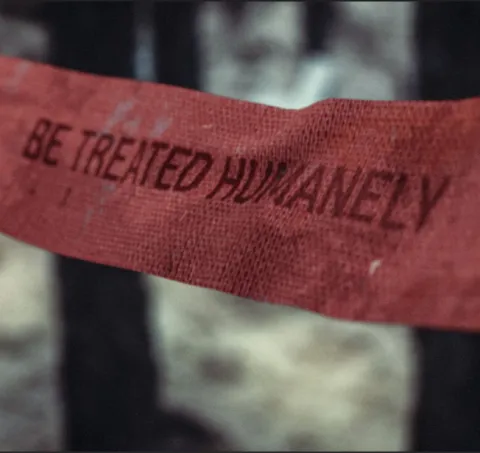
  3. Detainees must be treated humanely and with dignity.

    IHL protects those deprived of their liberty from ill treatment, acts of violence and intimidation.

  4. The dead must be treated with dignity.

    Warrying parties must take all possible measures to search for, collect and evacuate the dead. 

  5. Parties to a conflict must facilitate humanitarian access.

    People must be able to receive humanitarian aid, like food, water and medicine.

  6. IHL places limits on the fighting

    IHL treaties and customary law regulate weapon use and ban some, such as biological and chemical weapons, landmines, and cluster munitions. 

  7. War crimes must be punished.

    States have the responsibility to investigate, prosecute and punish serious violations of IHL.

Why this matters

To uphold and reaffirm the promise that, even in war, humanity must prevail.

The Global IHL Initiative exists to restore respect for the rules of war and ensure that the Geneva Conventions remain a living lifeline for the vulnerable. In an age of rising conflict and fading restraint, we stand for the sanctity of life, for accountability and for a future where the laws of war are not forgotten relics but the foundation of our shared humanity. 

Despite the universal ratification of the Geneva Conventions, violations of fundamental humanitarian norms are widespread. Ongoing conflicts around the globe, whether in urban centres, rural villages or at sea, are causing devastating human suffering, destruction and displacement. Attacks on civilian infrastructure, hospitals and humanitarian workers are all too frequent. The human, social, economic and environmental costs of these violations are unsustainable.

 https://www.upholdhumanityinwar.org/en

[AS ALWAYS PLEASE GO TO THE LINK TO READ GOOD ARTICLES (or quotes) IN FULL: HELP SHAPE ALGORITHMS (and conversations) THAT EMPOWER DECENCY, DIGNITY, JUSTICE & PEACE... and hopefully Palestine, or at least fair and just laws and policies here, there- and everywhere]


World leaders united in defence of international humanitarian law to uphold humanity in war

Alarmed by widespread violations of international humanitarian law (IHL) in conflicts around the world and the resulting unconscionable human suffering, we, the leaders of Brazil, China, France, Jordan, Kazakhstan and South Africa, together with the International Committee of the Red Cross (ICRC), urge States and the international community to act. 

 https://www.icrc.org/en/statement/world-leaders-united-defence-international-humanitarian-law

Friday, August 14, 2026

Occupied West Bank: Settler siege of Palestinians marks a new low ..."“These criminal actions by the settlers, supported or acquiesced to by Israel, the Occupying Power, are making life unbearable for these Palestinian families and are clearly aimed at forcing them to leave their homes and their land,” the UN office said. “Time is running out for these three families before they are forcibly displaced”."


Global perspective Human stories
 
© UNICEF/Alaa Badarneh Women and children walk through Jenin in the occupied West Bank. Israeli forces have extended a closure order in Jenin camp until 20 August.

By Daniel Johnson in Geneva
Peace and Security

In the occupied West Bank, the UN human rights office, OHCHR, appealed on Thursday to Israeli authorities to help Palestinian families trapped in their homes by settlers for days, amid an intensifying campaign to seize their land.

https://news.un.org/en/story/2026/08/1168130 

Key points

  • The West Bank has been under Israeli occupation since the 1967 Arab-Israeli war 
  • Israeli settlements began expanding in the occupied West Bank soon after 1967
  • In 2005, Israel evacuated four settlements in the northern West Bank
  • The occupied territory is central to plans for a future Palestinian state, but violent settlement expansion is a growing obstacle to a negotiated two-State solution

According to reports, the United States has been involved in efforts to end the siege that began on Sunday, with the US Ambassador to Israel calling for the removal of what he called “Israeli terrorists”.

Three Palestinian families – around 15 people in total, including at least two children – have remained confined to their homes “in a state of terror” in the Ras al Ein area of Qusra village, south of Nablus, OHCHR said, alleging that the settlers had cut their power and water. 

“These criminal actions by the settlers, supported or acquiesced to by Israel, the Occupying Power, are making life unbearable for these Palestinian families and are clearly aimed at forcing them to leave their homes and their land,” the UN office said. “Time is running out for these three families before they are forcibly displaced”.

Nowhere to go 

Following the initial OHCHR statement, head of the UN office in the Occupied Palestinian Territory, Ajith Sunghay, told UN News that the families had been subsequently moved into just one home, which remains surrounded by Israeli settlers.

“Again, the Israel Defense Forces (IDF) is either unable or unwilling to protect Palestinian communities, which they are expected to do so under the Geneva Convention; or worse, that the IDF is in collusion with the Israeli settlers, all aimed at displacing Palestinians and occupying their lands,” Mr. Sunghay said.

Soundcloud

He also noted that about 20 Palestinian families from Qusra had been evacuated by Israel Defense Forces soldiers “for security purposes”, before stressing the urgent need for international assistance to end the increasingly dangerous situation in the occupied territory.

He added: “We really welcome statements, we really welcome dialogue…However, this is simply not enough. I think we are past the stage of boiling point. We are seeing unprecedented level of settler violence and we call on Member States to act, use its leverage in every possible manner.”

OHCHR noted that Palestinians living in Qusra have been the target of “increasingly frequent attacks” since November 2025, when Israeli settlers established an outpost nearby.

Previous requests from the Palestinian families to the Israeli military present at the site to intervene have not helped.

“Instead, Israeli security forces seem to have blocked medics, solidarity activists and journalists from reaching the families,” OHCHR said, adding that although soldiers dismantled settlers’ tents on Wednesday, they continued to surround the Palestinians’ homes.

Escalating situation 

Mr. Sunghay noted that the dramatic events in Qusra were unfolding alongside other deeply worrying settler-driven incidents in the occupied West Bank.

This includes the IDF move to cordon off Taybeh town to people who do not live there on Tuesday, allegedly to protect them from Israeli settler attacks. 

“In such circumstances…it's the Palestinians who pay the price and face the brunt of the problems, although it’s the Israelis who are settlers who are creating violence, attacks, and issues for the Palestinians,” the OHCHR senior official insisted. 

An Israeli security fence runs along a hillside, separating a construction site in the foreground from a residential area with white buildings on a hill in the background under a clear blue sky.
© Adobe Stock/Voddol The security barrier erected by Israeli authorities in the occupied West Bank consists of concrete slabs up to eight metres high.

In another blow to peace efforts in the occupied West Bank, Mr. Sunghay noted that Israeli settlers have moved back into Ganim, one of four Israeli settlements in the northern West Bank that were evacuated in 2005 (the others being Kadim, Sa-Nur and Homesh). “This is a trend that we have seen repeatedly that's happening in West Bank,” he said.

Latest data from the UN agency for Palestinian refugees, UNRWA, on Thursday highlighted how Israeli settler “violence and harassment” have continued to target Palestinian communities across the West Bank. This includes those living in the South Hebron Hills and Jordan Valley. 

“In parallel, settlement expansion continued, including the establishment of several new settlement outposts,” UNRWA said.

Reality of Operation 'Iron Wall'

The agency noted that Israeli forces have extended a military closure order affecting the Tulkarm and Nur Shams camps in the northern West Bank until 30 September 2026 and Jenin camp until 20 August 2026.

The move is a renewal of earlier closure orders which have severely restricted access to the largely emptied camps, UNRWA insisted. Today, more than 34,000 Palestinian refugees remain forcibly displaced from Tulkarm, Nur Shams and Jenin camps as a result of the Israeli military’s operation “Iron Wall”, which began in January 2025.

Thursday, July 16, 2026

‘They want to break our will’: Gaza flotilla activist tells of rape in Israeli detention... Anna Liedtke files criminal complaint in Israel over alleged attack by female guards and says abuse was intended to silence campaigners

Anna Liedtke pictured in Cologne, Germany. ‘There is no reason for me to be ashamed.’ Photograph: Judith Jockel/The Guardian
in Jerusalem

Wed 15 Jul 2026 09.00 EDT

The third time Anna Liedtke was subjected to an illegal strip-search in Israeli detention, female prison guards forced her on to her knees, covered her mouth to stop her screaming and raped her, according to interviews and a criminal complaint filed in Israel.

She described hearing male guards laughing during the attack, which she believes they watched and may have filmed. It took place in an area separated from the prison hallway by a partially drawn curtain that her attackers had left open.

Liedtke, 25, joined a flotilla sailing from Europe to Gaza with humanitarian aid last autumn. Israeli forces intercepted her boat in international waters on 8 October and took her to Israel, where she was detained for five days.

The abuse and violence directed at flotilla participants in Israeli prisons, including rape, was intended to intimidate, Liedtke said. “It’s clear they want to break our will and silence us, making this so traumatic that we will never talk about Palestine again,” she told the Guardian.

Instead, she told friends and doctors within days. In December she became the first flotilla activist to talk publicly about rape in Israeli detention. More than a dozen others have reported sexual assault, most anonymously.... READ MORE  https://www.theguardian.com/world/2026/jul/15/gaza-flotilla-activist-rape-complaint-israel-anna-liedtke

   [AS ALWAYS PLEASE GO TO THE LINK TO READ GOOD ARTICLES (or quotes or watch videos) IN FULL: HELP SHAPE ALGORITHMS (and conversations) THAT EMPOWER DECENCY, DIGNITY, JUSTICE & PEACE... and hopefully Palestine] 

Small boats in the flotilla leaving a port in southern Italy, setting sail for Gaza. Photograph: Orietta Scardino/EPA

Friday, May 1, 2026

"My suffering, though severe, was never compounded by denial. The world around me was structured to keep me alive. That distinction matters. Because elsewhere, at this very moment, there are people whose hunger is not the byproduct of illness—but the result of policy. Of decision. Of design. In Gaza, and within the walls of Israeli prisons, hunger is not incidental. It is imposed..." Hunger, By Design By Mike Odetalla


Hunger, By Design
By Mike Odetalla


At the height of my cancer treatment, I lost 60 pounds in less than two months.
Not by choice. Not by neglect. But because I simply could not eat.

Every swallow felt like fire. Every attempt at nourishment became a negotiation with pain. My body, once familiar, began to disappear before my own eyes—reduced not by lack of food, but by my inability to take it in. I didn't recognize the person looking back at me in the mirror.

And yet, even in that darkest stretch, one truth remained constant:

Food was there.

It sat within reach. Prepared. Available. Waiting for me, even when I could not accept it. Doctors urged me. Nurses monitored me. My suffering, though severe, was never compounded by denial. The world around me was structured to keep me alive.

That distinction matters.

Because elsewhere, at this very moment, there are people whose hunger is not the byproduct of illness—but the result of policy. Of decision. Of design.

In Gaza, and within the walls of Israeli prisons, hunger is not incidental. It is imposed.

There, food is not something a patient struggles to swallow—it is something withheld. Rations are restricted. Access is controlled. Malnutrition spreads not because bodies fail, but because systems ensure they do.

I know what it feels like to weaken. To feel your strength slip quietly away. To measure your days not in hours, but in ounces lost and energy drained.

But I also know this: My suffering existed within a system trying—however imperfectly—to save me.

Theirs exists within a system that does not. 

That is the difference between illness and injustice.

Between misfortune and intention.

Between hunger… and hunger used as a weapon.

And once you understand that distinction, you cannot unsee it.

 https://www.facebook.com/photo/?fbid=10165923688376977&set=a.10150390714236977

 [AS ALWAYS PLEASE GO TO THE LINK TO READ GOOD ARTICLES (or quotes or watch videos) IN FULL: HELP SHAPE ALGORITHMS (and conversations) THAT EMPOWER DECENCY, DIGNITY, JUSTICE & PEACE... and hopefully Palestine]

Monday, April 6, 2026

350 Palestinian children are in Israeli prisons on Palestinian Children’s Day, amid escalating, systematic, and direct arrest campaigns targeting them.

Palestinian Center for Prisoners Advocacy

 350 Palestinian children are in Israeli prisons on Palestinian Children’s Day, amid escalating, systematic, and direct arrest campaigns targeting them.  
 
The targeting of Palestinian children has become a fixed policy, including pursuit, night arrests, and forceful detention across various areas.  
 
Detained children face harsh interrogation practices, including isolation, threats, and deprivation of access to a lawyer or family members during the initial stages of questioning.  
 
Children inside prisons are subjected to abuse, beatings, medical neglect, and harsh detention conditions without consideration for their age. 


[AS ALWAYS PLEASE GO TO THE LINK TO READ GOOD ARTICLES (or quotes) IN FULL: HELP SHAPE ALGORITHMS (and conversations) THAT EMPOWER DECENCY, DIGNITY, JUSTICE & PEACE... and hopefully Palestine, or at least fair and just laws and policies]

On Palestinian Children’s Day, the Palestinian Center for Prisoners Advocacy documents the presence of approximately 350 Palestinian children in Israeli prisons, amid ongoing arrest campaigns that increasingly and directly target children across various Palestinian areas.

The targeting of children and the continued arrests are no longer linked to exceptional circumstances; rather, they have become part of a clear on-the-ground policy by Israeli forces. This includes pursuit, night arrests, live fire, and field detention, leading to their transfer to interrogation centers, within a context that affects an age group that is supposed to be protected under international law.

The arrest of these children is carried out through violent raids, accompanied by physical assault and intimidation, before they are subjected to interrogation. During this process, they are exposed to harsh pressure methods, including prolonged interrogation, isolation, threats, and deprivation of the presence of a lawyer or a family member during the initial stages of questioning.

Children in prisons are also subjected to abuse and ill-treatment, including beatings, medical neglect, and detention in conditions unsuitable for their age, in an environment lacking basic needs specific to children.

Over previous years, cases have also been documented in which child prisoners were subjected to moral and security coercion during interrogation, through blackmail and psychological pressure, aimed at extracting confessions or coercing them into cooperating with Israeli security services.

These practices constitute a clear violation of the Convention on the Rights of the Child (1989), which stipulates the protection of children from arbitrary arrest and guarantees their treatment in a manner consistent with their age and dignity, while prohibiting torture or cruel, inhuman, or degrading treatment.

They also contradict Article 37 of the Convention, which states that the detention of children should be used only as a last resort and for the shortest possible time, as well as Article 40, which guarantees a child’s right to a fair trial and juvenile justice standards.

In addition, these violations contravene the provisions of the Geneva Conventions, which require special protection for children in conflict zones.

What is happening to child prisoners comes within an ongoing policy targeting children through arrest and treatment inside prisons, which necessitates urgent and genuine international action to secure their release and to stop the policies and violations carried out by the Israeli occupation against them.

Palestinian Center for Prisoners Advocacy
Sunday, April 5, 2026