Labels

Showing posts with label Accountability. Show all posts

Thursday, August 20, 2026

Thursday, August 13, 2026

A global initiative for humanitarian law: The Global IHL Initiative exists to restore respect for the rules of war and ensure that the Geneva Conventions remain a living lifeline for the vulnerable. In an age of rising conflict and fading restraint, we stand for the sanctity of life, for accountability and for a future where the laws of war are not forgotten relics but the foundation of our shared humanity.


https://youtu.be/xliM7atAwD0?si=ORBSx1V0J9qcHBUP 

Born from the ashes of World War II, the Geneva Conventions are a powerful promise that even in war, humanity must prevail. Created to put limits on the way wars are conducted and to protect those not taking part in the fighting – like civilians, prisoners and wounded soldiers – they have since been complemented with a series of treaties and customary law. This legal framework, known as international humanitarian law - or the laws of war - sets clear rules to follow amid the chaos of conflict.

There are now around 130 active armed conflicts worldwide.

They are not abstract legal concepts. They are the line between life and death, between dignity and despair, for millions caught in the crossfire. Yet despite a global consensus supporting the Geneva Conventions, adherence to even the most basic humanitarian norms remains shockingly insufficient in today’s war zones. Current conflicts reveal, in appalling and devastating ways, the immense challenges facing international humanitarian law in providing real and effective protection.

The suffering witnessed in war zones across the world is not inevitable. With strong political will, we can close the gap between the law and the reality on the ground.

 https://www.upholdhumanityinwar.org/en
How does international humanitarian law (IHL) protect in war?
Global IHL Initiative
  1. Civilians must be protected.

    It is illegal to target civilians and civilian objects, such as homes, schools and hospitals. Civilians must also be protected against the effects of military operations. 

  2. The sick and wounded must be cared for regardless of whose side they're on.

    Wounded, sick and shipwrecked civilians, soldiers and fighters, as well as medical staff, are all protected under IHL.

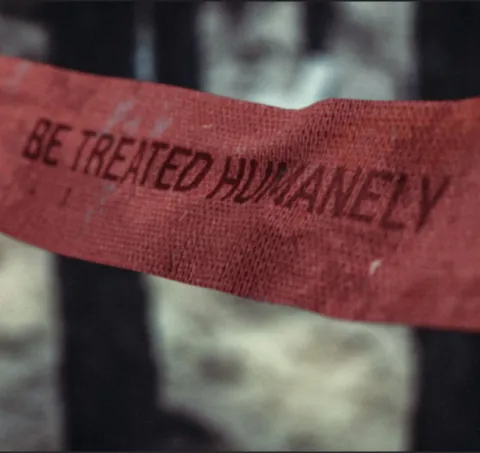
  3. Detainees must be treated humanely and with dignity.

    IHL protects those deprived of their liberty from ill treatment, acts of violence and intimidation.

  4. The dead must be treated with dignity.

    Warrying parties must take all possible measures to search for, collect and evacuate the dead. 

  5. Parties to a conflict must facilitate humanitarian access.

    People must be able to receive humanitarian aid, like food, water and medicine.

  6. IHL places limits on the fighting

    IHL treaties and customary law regulate weapon use and ban some, such as biological and chemical weapons, landmines, and cluster munitions. 

  7. War crimes must be punished.

    States have the responsibility to investigate, prosecute and punish serious violations of IHL.

Why this matters

To uphold and reaffirm the promise that, even in war, humanity must prevail.

The Global IHL Initiative exists to restore respect for the rules of war and ensure that the Geneva Conventions remain a living lifeline for the vulnerable. In an age of rising conflict and fading restraint, we stand for the sanctity of life, for accountability and for a future where the laws of war are not forgotten relics but the foundation of our shared humanity. 

Despite the universal ratification of the Geneva Conventions, violations of fundamental humanitarian norms are widespread. Ongoing conflicts around the globe, whether in urban centres, rural villages or at sea, are causing devastating human suffering, destruction and displacement. Attacks on civilian infrastructure, hospitals and humanitarian workers are all too frequent. The human, social, economic and environmental costs of these violations are unsustainable.

  https://www.upholdhumanityinwar.org/en

Saturday, July 11, 2026

RED CROSS ICRC: In armed conflicts, AI systems can fail, be manipulated or produce unreliable results. That is why decisions involving the use of force must remain under meaningful human control. Machines may support judgement. They must never replace human responsibility.

 https://www.icrc.org/en/article/faq-artificial-intelligence-in-military-domain 

Frequently asked questions: Artificial Intelligence (AI) in the military domain

An arms race is underway in the development and deployment of new technologies in warfare, including artificial intelligence (AI). Rather than making battlefields safer for civilians, these technologies often increase risks and cause significant harm.

What is AI in the military domain?

AI in the military domain refers to the use of artificial intelligence in military systems and operations, including autonomous weapon systems, military decision-support systems, cyber operations and capabilities, logistics, surveillance and intelligence analysis.

Does international humanitarian law apply to AI in warfare?

Yes. IHL applies to all means and methods of warfare, including the use of AI technologies. Any use of force must comply with IHL principles and rules, such as distinction (between civilians and civilian objects on the one hand, and combatants and military objectives on the other), proportionality and precautions. 

Why is the ICRC concerned about the use of AI in the military domain?

The ICRC is concerned that the use of AI in the military could accelerate the pace and scale of warfare, increase unpredictability and reduce human control over the use of force, creating serious risks for civilians.

AI systems are particularly vulnerable to failure in adversarial environments, where opponents may deliberately try to deceive or manipulate the systems, such as by tampering with data or exploiting weaknesses. 

The ICRC emphasizes a human-centred approach because humans – not machines – remain legally responsible for decisions involving the use of force. Human judgement is essential to ensuring compliance with IHL and protecting civilians. AI systems should support human decision-making, rather than impair or replace it. 

What are the main applications of AI in the military domain which raise particular concern?


The ICRC has identified three applications of AI in the military domain that pose significant risks:

  1. Autonomous Weapon Systems (AWS): these systems, once activated, can autonomously select and engage targets without further human intervention.
  2. AI Decision-Support Systems: these systems process vast amounts of data to assist military decision-making, but they carry risks related to inherent unreliability and unpredictability, as well as human over-reliance on the system’s outputs. 
  3. AI in Information and Communication Technologies: AI is increasingly being used in cyber operations and integrated in cyber capabilities, with the potential to increase the scale of cyber-attacks, while also changing their nature and severity, especially in terms of adverse impact on civilians and civilian infrastructure.

Can technology companies become military targets if they support military operations?

Under IHL, technology companies and their employees are, prima facie, civilian objects and are protected against attack. Such protection can, however, be lost if the company’s personnel carry out certain activities or if the company’s property is used in certain ways. For instance, where specific tech company infrastructure or services are used by a warring party to make an effective contribution to military action and its total or partial destruction, capture or neutralization, in the circumstances ruling at the time, offers a definite military advantage to the adversary, it becomes a military objective. 

The ICRC therefore encourages technology companies to carefully assess how their products and services might be used in armed conflict. Companies should also take steps to avoid contributing to violations of IHL and to mitigate the risks their technologies may pose to civilians.... READ MORE https://www.icrc.org/en/article/faq-artificial-intelligence-in-military-domain

 [AS ALWAYS PLEASE GO TO THE LINK TO READ GOOD ARTICLES (or quotes or watch videos) IN FULL: HELP SHAPE ALGORITHMS (and conversations) THAT EMPOWER DECENCY, DIGNITY, JUSTICE & PEACE... and hopefully Palestine]  


ICRC

In armed conflicts, AI systems can fail, be manipulated or produce unreliable results. That is why decisions involving the use of force must remain under meaningful human control. 
 
Machines may support judgement. They must never replace human responsibility. 


Saturday, May 30, 2026

"Speaking to the Guardian, readers in the US echoed the pope’s concerns, describing AI as an “unregulated” industry increasingly being used to the “detriment of too many people”, while also raising fears about surveillance, labor displacement, war and environmental harm."

Pope Leo XIV speaks during a meeting with bishops, members of the clergy and families whose members have been victims of environmental pollution at the Cathedral of Santa Maria Assunta, in Acerra, Italy, on 23 May 2026. Photograph: Ciro De Luca/Reuters
 

Americans echo Pope Leo’s concerns about AI: ‘It threatens workers, privacy and human life’

Guardian readers in the US spoke of fears about unregulated AI in response to the pope’s encyclical warning about the risks of the technology

Sat 30 May 2026 07.00 EDT

In his first major papal text since assuming leadership of the Catholic church last year, Pope Leo issued a stark warning about the rise of artificial intelligence this week, denouncing the “culture of power” driving the AI age.

Calling for the “most rigorous” ethical constraints on AI – which he described as one of the greatest threats facing humanity today – the first US-born pope also warned of “new forms of slavery” emerging through the digital economy.

Speaking to the Guardian, readers in the US echoed the pope’s concerns, describing AI as an “unregulated” industry increasingly being used to the “detriment of too many people”, while also raising fears about surveillance, labor displacement, war and environmental harm.

For Linda Given, a 74-year-old resident of Boston, Massachusetts, who ran a small gift store in Cambridge for nearly 40 years, the pope’s warning resonated deeply.

“I think he’s right to emphasize the dignity of humans, and to warn that things in the AI field are moving both too fast, and without any significant oversight,” Given said, adding: “To use it as any kind of substitute for human interaction or human agency [is] awful … [and] the entirely likely possibility it could be manipulated to do destructive things.”

Stephen Sincoskie, a 55-year-old print shop supervisor from Howell, New Jersey, expressed similar concerns.

“Unregulated AI is a possible threat to workers, privacy and even human life. Unfortunately, the most corrupt family in politics … is making money to look the other way,” he said. 

“I’m concerned the use of AI will replace workers and assist in the ushering in of a fascistic surveillance state. I do not believe for one second the 1% are interested in paying out guaranteed monthly salaries for everyone to relax and enjoy a career and ‘debt free’ life.”

Others focused on the effect AI is already having on education and critical thinking.

Debra, a 58-year-old college professor in Massachusetts, said she worries students are losing critical thinking skills.

“From my perspective, AI is robbing many students of the need to think critically, learn the ways of research and express themselves by writing,”... READ MORE  https://www.theguardian.com/world/2026/may/30/pope-leo-ai-reaction

    [AS ALWAYS PLEASE GO TO THE LINK TO READ GOOD ARTICLES (or quotes or watch videos) IN FULL: HELP SHAPE ALGORITHMS (and conversations) THAT EMPOWER DECENCY, DIGNITY, JUSTICE & PEACE... and hopefully Palestine]  

Saturday, April 4, 2026

"We may speak thousands of languages, but we all call this planet home. No matter where we come from, protecting our Earth is a shared responsibility. We need more ambitious #ClimateAction — for our planet and the generations to come."

United Nations

 
We may speak thousands of languages, but we all call this planet home. No matter where we come from, protecting our Earth is a shared responsibility. We need more ambitious #ClimateAction — for our planet and the generations to come. — via @UNDP  

 https://x.com/UN/status/2040399735526195506

UN Development- Working to end poverty, inequality & climate change & advance the #GlobalGoals.  

[AS ALWAYS PLEASE GO TO THE LINK TO see art or read good articles or quotes  IN FULL: HELP SHAPE ALGORITHMS (and conversations) THAT EMPOWER DECENCY, DIGNITY, JUSTICE & PEACE... and hopefully Palestine, or at least fair and just laws and policies]

Wednesday, March 11, 2026

MIFTAH: In Gaza, bearing witness has become a deadly act. Those who document the truth are targeted, while the world fails to hold Israel accountable for its crimes.


MIFTAH
In Gaza, bearing witness has become a deadly act. Those who document the truth are targeted, while the world fails to hold Israel accountable for its crimes.

 https://x.com/miftahpal/status/2031715040898715940/photo/2

[AS ALWAYS PLEASE GO TO THE LINK TO READ GOOD ARTICLES (or quotes) IN FULL: HELP SHAPE ALGORITHMS (and conversations) THAT EMPOWER DECENCY, DIGNITY, JUSTICE & PEACE... and hopefully Palestine, or at least fair and just laws and policies]