Labels

Monday, April 7, 2014

Statistics: Israel Controls More Than 85% of Land of Historical Palestine... Data from Israeli human rights organizations indicate that Israel has demolished more than 25 thousand Palestinian houses since 1967.


Historical land area of Palestine reached, 27,000 km2, Israel uses more than 85% of the total area of the land, while the Palestinian comprise 48% of the total population and use less than 15% only of the land, a Palestinian therefore has less than a fifth of the area available to an Israeli.

Israeli occupation approves over 2,000 housing units monthly

During 2013, more than eight thousand dunums of land were confiscated from Palestinians and more than 15 thousand horticultural trees were destroyed, causing considerable damage to the Palestinian environment. The Israeli occupation authorities also approved the establishment of more than 23 thousand housing units concentrated in settlements around Jerusalem governorate, according to the annual report issued by the International Relations Department of the PLO.

Israeli occupation plunders the natural resources of the West Bank  ...READ MORE

***
The Palestinian people protests yearly against the confiscation of 21 thousand dunums of land in the Jalil, Al-Muthalath and the Naqab on the 30th of March 1976, the Israeli response resulted in the death of six young demonstrators.

On the occasion of Land Day, the Palestinian Central Bureau of Statistics (PCBS)issued a press release as follows:

Jerusalem; Systematically Judaizing

The Israeli occupation authorities demolish Palestinian houses and impose obstacles and constraints on building licenses for Palestinians. According to Al-Maqdisi Institute, during 2000 - 2013, the Israeli authorities demolished 1,230 buildings in East Jerusalem (the areas annexed by Israel in 1967).

This has resulted in the displacement of 5,419 people, including 2,832 children and 1,423 women.
The estimated losses to Palestinians of the demolition of buildings in Jerusalem total around three and half million US dollars. (This does not include the large fines imposed on so-called construction violations.) Data indicate an increase in cases where residents have to demolish their own houses: 320 people have been forced to demolish their own homes since 2000.

The highest rate of self-demolition was recorded in 2010 with 70 demolitions compared to 49 in 2009.

Data indicate that the total area of residential houses demolished in Jerusalem during 2013 increased in comparison with 2012. A total area of 6,196 m2 was affected during 2013: the area of non-residential establishments demolished totaled 1,150 m2.

Data from Israeli human rights organizations indicate that more than 25 thousand houses have been demolished in Palestine since 1967...READ MORE

My letter to the Economist RE Israel and Palestine Last-ditch bargaining: As negotiations over the big issues stall, both sides bid for minor advantages

RE Israel and Palestine Last-ditch bargaining: As negotiations over the big issues stall, both sides bid for minor advantages
http://www.economist.com/news/middle-east-and-africa/21600177-negotiations-over-big-issues-stall-both-sides-bid-minor

Dear Editor,

Actually ending the Israel-Palestine conflict with a just and lasting peace requires serious research and a willingness to see beyond the spin generated by cynics and cyber bullies on both sides. 

Two fully sovereign, fully secular, fully separate and secure nation states, one called Israel and one called Palestine, are the best way forward as a fully secular two state solution gives the people of Israel and Palestine, and the entire region around them, a chance to move beyond the rage, the religious extremism, the corruption, the obfuscations, the injustices and the insults inspired by the conflict. 

Two states with the rule of fair and just laws as a priority for both... Negotiations over the big issues need to be based on fully respecting international law and universal human rights, including but not limited to the Palestinian refugees very real right to return to original homes and lands.

Sincerely,
Anne Selden Annab

NOTES
Growing Gardens for Palestine: "And it's up to all of us together"... a Spring poem for Palestine & peace

ATFP Peace Building ... civic muscle

"Read and remember, take a minute to recall the smell of your grandmother’s za’atar and the taste of balady labaneh, and imagine what would happen if we were to lose it all…" This Week in Palestine

Palestinians keep heritage alive with Land Day wedding

National Geographic rates the Abraham Path the #1 New Walking Trail in the World!

“Only just peace has a chance to stick and last for generations to come...” Professor Asad Al-Ghalith, Palestinian refugee


Noah Habeeb: Critics of Students for Justice in Palestine ignore crucial facts

Parenting peace & justice

PLO Executive Committee member Hanan Ashrawi said on Tuesday that the United States must stand up for Palestinian human rights and hold Israel accountable

"Palestine transformed into the Land of Israel" Jeff Halper ...Israel's "Judaization" of Jerusalem and the West Bank continues apace

Arab summit refuses to recognize Israel as 'Jewish state'

Advancing Peace between Israelis and Palestinians: Obstacles and Opportunities Statement of ATFP Pres. Ziad Asali at the UN Conference on the Question of Palestine in Ecuador "...encouraging in word and deed the parties to do what they need to in order to make serious progress towards a peace agreement."

Choices Made, Choices Denied ... the gist of Filippo Grandi's most recent and last official speech: "The alleged status quo is in fact constantly spiraling downwards, and every day that passes erodes the norms and boundaries of international and human rights law that are needed to support a just solution of the conflict."  Annie's note: I blogged this very important speech by Filippo Grandi, UNRWA Commissioner-General, by selecting main crucial points that are direct sequential quotes from the text of his lecture at Birzeit University, interspersing his words with illustrations that might help an outsider better understand the situation... and the very real plight of the Palestinians.

Hussein Ibish: Dramatizing the negotiations The new play Camp David illustrates the necessity and difficulty of peace, and how little has changed in 35 years

Heart songs ... from Palestine & beyond

Arab League summit considers withdrawing Arab Peace Initiative

The "Return Unifies Us" day of action includes events organized by Palestinian refugees in a number of countries around the world, especially within the West Bank, Gaza, Syria, and Lebanon.

U.N. rights investigator accuses Israel of 'ethnic cleansing'

Palestine Images.... flowering almond

Ashrawi: “There is a Global Rule of Law, and Israel Must be Subject to it”

In response to the concerns raised by Palestinian churches in Palestine and Israel, the World Council of Churches expresses its own grave concern about the law passed by the Israeli Knesset on 24 February 2014, which would define the status of Palestinian Arab Christians in the State of Israel against their own will.

"I believe that the root of all injustice and oppression has always been the same – the dehumanization of the other. It is the obsession with Us and Them that can lead us, regardless of racial or religious identity, into the abyss." Roger Waters: Why I must speak out on Israel, Palestine and BDS

Maen Rashid Areikat: Obama is right to criticize Israeli settlements

Celebrities press UN on Palestinian refugees in Syria

Old Man of Jerusalem... with an AP archive link to a wonderful old (& very brief) video made in 1957 of an amazing Palestinian, Mohammad Khalil Abulhawa, born in 1821

Outreach: American Friends Service Committee (AFSC) "Our Israeli and Palestinian partners in the Middle East as well as our partners in the U.S. believe as we do that a lasting peace must begin with a commitment to shared security for all."


Refugees and the Right of Return
We call for a just solution to our refugee issue in accordance with UN General Assembly Resolution 194. Our position on refugees is also included and supported in the Arab Peace Initiative (API), which calls for “a just solution to the Palestinian refugee problem to be agreed upon in accordance with UN General Assembly Resolution 194.” A just solution to the refugee issue must address two aspects: the right of return and reparations.
Refugees, Borders & Jerusalem
"Where, after all, do universal human rights begin? In small places, close to home - so close and so small that they cannot be seen on any maps of the world. Yet they are the world of the individual person; the neighborhood he lives in; the school or college he attends; the factory, farm, or office where he works. Such are the places where every man, woman, and child seeks equal justice, equal opportunity, equal dignity without discrimination. Unless these rights have meaning there, they have little meaning anywhere. Without concerted citizen action to uphold them close to home, we shall look in vain for progress in the larger world."Eleanor Roosevelt

More than sixty years ago, back in 1949, the Application of Israel for admission to membership in the United Nations (A/818) clearly pointed out that Israel was directly contravening "the previous recommendations of the United Nations in at least three important respects: in its attitude on the problem of Arab refugees, on the delimitation of its territorial boundaries, and on the question of Jerusalem." http://unispal.un.org/UNISPAL.NSF/85255e950050831085255e95004fa9c3/1db943e43c280a26052565fa004d8174?OpenDocument 
Do Palestinians have a right to return to the places from which they or their ancestors were displaced? UNHCR’s support for the right of return is based on the idea that the right of return is a recognized customary norm of International law which is included in the Universal Declaration of Human Rights, the International Covenant on Civil and Political Rights, the International Convention on the Elimination of All Forms of Racial Discrimination, and the Fourth Geneva Convention.

The Palestinian Refugee's Right of Return: No issue is more emblematic of the 20th century Palestinian experience than the plight of the approximately seven million Palestinian refugees.

What message do we send?


Reflections By An ARAB JEW by Ella Habiba Shohat "When my grandmother first encountered Israeli society in the '50s, she was convinced that the people who looked, spoke and ate so differently--the European Jews--were actually European Christians. Jewishness for her generation was inextricably associated with Middle Easterness. My grandmother, who still lives in Israel and still communicates largely in Arabic, had to be taught to speak of "us" as Jews and "them" as Arabs. For Middle Easterners, the operating distinction had always been "Muslim," "Jew," and "Christian," not Arab versus Jew. The assumption was that "Arabness" referred to a common shared culture and language, albeit with religious differences."

UNITED NATIONS: Give Peace a Chance... The year 2014 has been proclaimed the International Year of Solidarity with the Palestinian People... “The objective of the  International Year of Solidarity with the Palestinian People is to promote solidarity with the Palestinian people as a central theme, contributing to international awareness of (a) core themes regarding the question of Palestine, as prioritized by the Committee, (b) obstacles to the ongoing peace process, particularly those requiring urgent action such as settlements, Jerusalem, the blockade of Gaza and the humanitarian situation in the occupied Palestinian territory and; (c) mobilization of global action towards the achievement of a comprehensive, just and lasting solution of the question of Palestine in accordance with international law and the relevant resolutions of the United Nations.”


History of the United Nations' Universal Declaration of Human Rights: "The Universal Declaration of Human Rights, which was adopted by the UN General Assembly on 10 December 1948, was the result of the experience of the Second World War. With the end of that war, and the creation of the United Nations, the international community vowed never again to allow atrocities like those of that conflict happen again. World leaders decided to complement the UN Charter with a road map to guarantee the rights of every individual everywhere. The document they considered, and which would later become the Universal Declaration of Human Rights, was taken up at the first session of the General Assembly in 1946. " http://www.un.org/en/documents/udhr/history.shtml

U.N. Resolution 194 from 1948 Resolves that the refugees wishing to return to their homes and live at peace with their neighbours should be permitted to do so at the earliest practicable date, and that compensation should be paid for the property of those choosing not to return and for loss of or damage to property which, under principles of international law or in equity, should be made good by the Governments or authorities responsible;

Emanating from the conviction of the Arab countries that a military solution to the conflict will not achieve peace or provide security for the parties, the council:
1. Requests Israel to reconsider its policies and declare that a just peace is its strategic option as well.
2. Further calls upon Israel to affirm:
I- Full Israeli withdrawal from all the territories occupied since 1967, including the Syrian Golan Heights, to the June 4, 1967 lines as well as the remaining occupied Lebanese territories in the south of Lebanon.
II- Achievement of a just solution to the Palestinian refugee problem to be agreed upon in accordance with U.N. General Assembly Resolution 194.
III- The acceptance of the establishment of a sovereign independent Palestinian state on the Palestinian territories occupied since June 4, 1967 in the West Bank and Gaza Strip, with East Jerusalem as its capital.
3. Consequently, the Arab countries affirm the following:
I- Consider the Arab-Israeli conflict ended, and enter into a peace agreement with Israel, and provide security for all the states of the region.
II- Establish normal relations with Israel in the context of this comprehensive peace.
Do Palestinians have a right to return to the places from which they or their ancestors were displaced?
Palestinian refugees’ right to return to the homes from which they were displaced is well established in International law.  The first source of support for Palestinian refugees’ claims to a right of return is UN General Assembly Resolution 194 (III) Of December 1948, paragraph 11, in which the UN General Assembly,
“Resolves that the refugees wishing to return to their homes and live at peace with their neighbors should be permitted to do so at the earliest practicable date, and that compensation should be paid for the property of those choosing not to return and for loss of or damage to property which, under principles of international law or in equity, should be made good by the governments or authorities responsible;
Instructs the Conciliation Commission to facilitate the repatriation, resettlement and economic and social rehabilitation of the refugees and the payment of compensation…”
Since 1949, this resolution together with UNSC Res. 242 and 338 have been regularly reaffirmed by the UN General Assembly.

The rights outlined in this resolution are firmly grounded in international humanitarian, human rights, and refugee law.  According to the United Nations High Commission for Refugees (UNHCR) Executive Conclusion No. 40, “…the basic rights of persons to return voluntarily to their country of origin is reaffirmed and it is urged that international cooperation be aimed at achieving this solution.”[xi]  UNHCR’s support for the right of return is based on the idea that the right of return is a recognized customary norm of International law which is included in the Universal Declaration of Human Rights, the International Covenant on Civil and Political Rights, the International Convention on the Elimination of All Forms of Racial Discrimination, and the Fourth Geneva Convention.[xii]  

  • All human beings are born free and equal in dignity and rights.They are endowed with reason and conscience and should act towards one another in a spirit of brotherhood.
The Golden Rule... Do unto others as you would have them do unto you

 Live by the Golden Rule


Thursday, April 3, 2014

Growing Gardens for Palestine: "And it's up to all of us together"... a Spring poem for Palestine & peace by Anne Selden Annab


       "And it's up to all of us together."
                       A Spring poem
                                        for Palestine & peace 
 
Young bright things are coming-
stirring the ground, stretching,
reaching into the light and air
youth blossoming
everywhere
for Palestine

Young bright things
being gardens
of and for peace,
of and for decency, dignity and dialogue.

Young bright things
perfecting diplomacy
and Golden Rule thinking
in a modern age
where a whisper here
is heard there and echoed.

Young bright things
mentored by quiet heroes
and the kindness of strangers
through the years
finding the right words
to convey what is and shape
what will be...

Young bright things
infusing beauty with their being
character with their contributions
passion with their energy
imagination
and empathy
for Palestine
and peace.


 poem by Anne Selden Annab
inspiration by ATFP 
& accountability

 "There are innumerable ways we can mobilize for peace.... The most important thing is that these ideas are just the beginning of what is possible. What's really needed is for each and every one of us that prefers a future of peace over conflict to contribute our own individual or collective initiatives to help that make happen. It's up to me. It's up to you. And it's up to all of us together." Tala Haikal

Wednesday, April 2, 2014

ATFP Peace Building ... civic muscle

ATFP Ending the Israel-Palestine Conflict

Youth Factor: The Missing Element in the Middle East Peace Process
April 1, 2014

Ironically, the major problem facing us now is not the novelty, but the staleness, of the idea of peace between Israel and Palestine. We need to treat peace as an idea that is still fresh, or at least that can be refreshed.

Surrounded by fanatics
April 1, 2014

Words matter. Sensible people know that. But fanatics know it too. Those who strive for peace between Israel and the Palestinians are keenly aware of their encirclement by radical propaganda. This has been true for decades, but the intensity of mania on the fringes isn't abating.

*** 
 
World Press Round Up

A tiny fringe group of radical Israeli settlers, mostly teenagers and young men, have been carrying out acts of vandalism in recent years to protest what they perceive as the Israeli government's pro-Palestinian policies and in retaliation for Palestinian attacks.
People walk past Hebrew graffiti that reads, "America equals Nazi Germany," at the Deir Rafat convent, central Israel, Tuesday, April 1, 2014. Israeli police say vandals have scrawled hate graffiti on a Catholic monastery in central Israel and slashed the tires of nearby cars. (AP Photo/Sebastian Scheiner)
ATFP Pres. Ziad Asali’s Statement at the UN Conference on the Question of Palestine in Ecuador March 26, 2014 "...encouraging in word and deed the parties to do what they need to in order to make serious progress towards a peace agreement."

ATFP Gala 2013

 American Task Force on Palestine... A Decade of Achievement: Answers to Frequently Asked Questions About ATFP

 ATFP is a vehicle and asset for those Palestinian and Arab Americans who wish to make use of it. And it can serve as an exemplar for those who want to emulate or elaborate on its approach through organizations or initiatives of their own. Others who chose a different path should make use of the openness of the American political system to advance their own agendas. The single greatest asset belonging to the Palestinian- and Arab-American communities is our citizenship in by far the most powerful country in the world, which is also a free society that imposes no structural, legal or practical barriers to our own participation as fully engaged Americans. Anyone can assert their rights to full, equal American citizenship and help to define and implement our core, indispensable national interests, which include Middle East peace based on the creation of a Palestinian state.

ATFP on facebook

Commissars of Arab-American political correctness want the community powerless 

 
IBISH: ‘Tough love’ can keep Israel and the Palestinians honest

Israel is used to indulgence from the West, but it’s beginning to experience unexpected and uncomfortable forms of pressure. The Palestinians are used to being pressured by the West regarding Israel, but not on internal governance. It’s high time for a period of “tough love” for both, and this seems to have begun. It’s in everyone’s interests.

Israel has been trying to get into the US visa waiver programme, meaning that citizens of Israel wouldn’t need a visa to enter the United States. But US law requires that American citizens must receive the same treatment. And it’s been clear for decades that Israel discriminates against Palestinian and other Arab Americans.

This was acknowledged by the state department last week when spokeswoman Jen Psaki noted: “The department of homeland security and state remain concerned with the unequal treatment that Palestinian Americans and other Americans of Middle Eastern origin experience at Israel’s border and checkpoints, and reciprocity is the most basic condition of the visa waiver programme.”

In other words, the Obama administration is not going to make Israel an exception in allowing it to discriminate against American citizens on the basis of their ethnicity, religion or national origin.

There has been a recent spike in the number of rejections of Israeli visa applications. In the House of Representatives, a bill that effectively exempted Israel from the reciprocity clause languished. Instead, in January, the committee on foreign affairs adopted the “US-Israel Strategic Partnership Act of 2013”, which requires Israel to “satisfy” and “continue to satisfy” section 217 of the Immigration and Nationality Act for inclusion in the visa waiver programme. This requires “reciprocal privileges” for Americans.

The position of the state department and department of homeland security on Israel’s well-documented discrimination against Palestinians and other Arab Americans means it clearly wouldn’t qualify under the House bill.

Legislation pending in the Senate incoherently contains language that would both require Israel to comply with Section 217 and simultaneously be allotted a special dispensation to discriminate against Americans. Given the position of the House and the administration, it now seems almost certain that Israel’s efforts to get the United States to wink at its undeniable record and practice of discriminating against Palestinian and Arab Americans just isn’t going to happen.

The apparent collapse of efforts to include Israel in the US visa waiver programme is only the latest instance of what might be termed “tough love” coming from its western allies. This particular instance is pursuant to American anti-discrimination legislation and the rights of all Americans.

But many recent comments from both Barack Obama and John Kerry, the US secretary of state, have been much more blunt about the dangers facing Israel in the event of a collapse of peace talks with the Palestinians, and the limitations of what the US might be able, or implicitly interested, in doing to prevent the “international fallout.”

Among the key examples of this is an even “tougher” form of “love” coming from the European Union and individual European states, who are beginning to put substance into their long-standing policies objecting to Israel’s illegal settlement project.

They have already insisted that multilateral and public sector projects don’t include funding or support for any settlements. And Germany, Israel’s closest friend in Europe, is pushing to extend those restrictions to bilateral and private sector projects in any territories “not under Israel’s jurisdiction before June 1967”. If that happens, most other European countries will quickly follow suit.

For their own purposes, both the Boycott, Divestment and Sanctions movement (BDS) that seeks to target Israel as a whole rather than the occupation and settlements, and the Israeli government are trying to conflate the emerging European policy with BDS.

Benjamin Netanyahu spent a good deal of his recent speech at the American pro-Israel  organisation  AIPAC doing just that, with the overt purpose of making Europe’s actions seem anti-Israel, if not anti-Semitic. But in truth, the two are totally unconnected and pursuant to different goals.

Whatever BDS activists may imagine, European statesmen don’t read their blogs or Twitter feeds, and are not inspired by their rhetoric. The Europeans are pursuing the logic of their own policies and – since the United States does not appear to object to any of this – also potentially giving the Americans at least additional rhetorical leverage with Israel.

Europe’s policies aren’t anti- Israel. They are pro-peace and pursuant to international law. This is friends doing what friends should do: helping each other see what’s in their best interests and refusing to cooperate with self-destructive behaviour.

The Palestinians, too, require some “tough love.” The “love” they need is much greater aid and technical support from the West and the Arab world.

The “tough” part would be for the donor community to demand, as they can and should, that Palestinian advancements in recent years in good governance, transparency and security professionalism – many of which have frayed over the past 12 months – be at least restored to their former standards. The Palestinian people clearly want effective and accountable governance, and the donor community has unique leverage to help them ensure they get it.

The Palestinians and Israelis need their friends to help them achieve peace. But, like everyone, they also need their friends to help keep them honest. That’s what real friends do.

Hussein Ibish is a senior fellow at the American Task Force on Palestine, a columnist for Now Media and blogs at www.ibishblog.com. On Twitter: @ibishblog.


ATFP's fundamental mission is to advocate that a conflict-ending solution that allows two states, Israel and Palestine, to live side-by-side in peace, security and dignity is in the American national interest. ATFP emphasizes its role as an American organization serving American interests first and foremost. ATFP sees those interests as directly and indispensably served by the creation of a Palestinian state in the territories occupied in 1967. It believes such an arrangement is the only potential conflict-ending solution and supports negotiations to achieve it. ATFP also seeks to bring Americans and Palestinians closer together at every level, and to mainstream Palestine, Palestinians, Palestinian Americans in the American policy and broader national conversations.

ATFP also stands for the continuous improvement of the Palestinian quality of life despite the political and diplomatic variables. ATFP strongly supports Palestinian economic development, institutional-building and reforms aimed at good governance, accountability, transparency and the rule of law. ATFP supports the creation of a state of Palestine that is democratic, pluralistic, tolerant and peaceful. ATFP believes that resolving the Palestinian issue is inextricably linked with developments in the Arab world and the broader Middle East. It also holds that American interests and values are complementary rather than contradictory in the Middle East, and especially with regard to Palestine.

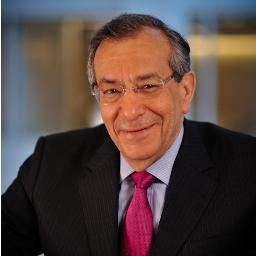
Ziad Asali

@ZiadAsali

President and founder of American Task Force on Palestine. ____RTs are interesting!
Washington D.C. · americantaskforce.org

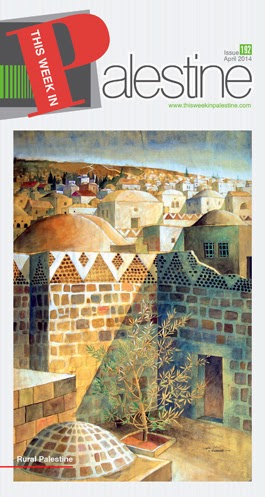
"Read and remember, take a minute to recall the smell of your grandmother’s za’atar and the taste of balady labaneh, and imagine what would happen if we were to lose it all…" This Week in Palestine


Theme: Rural Palestine
Cover photo: Suleiman Mansour


Ya yalla hal rabee’, nohroth hal sahel, wallah bilzare’ wallah, bnihmy ardina al hurra… The lyrics from a folkloric song, recomposed and distributed for Sareyyet Ramallah’s lastest dabkeh production, embody the essence of Palestine’s “rurality.” “Come, my people, let us farm the plain; with farming we protect our free land.” The idea that farming is a form of resistance is and should remain at the centre of Palestinian nonviolent resistance. Palestinians identify themselves with the land. We are first and foremost a rural agricultural society. Our modern urban centres have sprouted from villages and farming communities. We as a people are not urban, but rather descendants of farming families who are deeply tied to their land. And our Nakba is not simply the story of becoming refugees but rather the loss of our farming villages. Our producing farmers have become landless refugees.

It is not a coincidence that we chose Rural Palestine for April’s theme just as khobbaizeh, loof, akkoub, loze akhdar, and karaz akhdar (mallow, black lily, gundelia, green almonds, and green cherries) are in season - rural Palestinian delicacies that have many of us travel hours back to our home villages to taste a small dish. If this issue is supposed to accomplish anything at all, it should serve as a reminder that we are a hop, skip, and a jump away from rural Palestine no matter where we live. It should also put front and centre the true danger that we face as a nation today: an endangered farming craft, not only because of land confiscation but also through the seeping of Israeli produce into our markets and the savage industrialisation of rural fertile farming areas; the latter being more dangerous than Israeli occupation itself. If we lose our rural identity, we lose Palestine, plain and simple.

Read and remember, take a minute to recall the smell of your grandmother’s za’atar and the taste of balady labaneh, and imagine what would happen if we were to lose it all…

You will notice as you leaf through this issue that our print edition has a new look.  Again this is no coincidence that we chose to unveil our new look as winter dissipates and spring blossoms.  We are very excited about the new print edition, and hope that you will see it as the natural bloom and evolution of our previous look.  We look forward to hearing your feedback.

Riyam Kafri-AbuLaban
Content Editor

 
[AS ALWAYS PLEASE GO TO THE LINK TO READ GOOD ARTICLES IN FULL: HELP SHAPE ALGORITHMS (and conversations) THAT EMPOWER DECENCY, DIGNITY, JUSTICE & PEACE... and hopefully Palestine]
April 2014


One of the unforgettable memories that seems to accompany my few morning moments most days since I was a child is the smell of taboun bread stuffed with spinach saturating the air as it mixed with the first dawn light outside my grandparents’ house. I would watch my grandmother’s hands blend into the darkness of the taboun oven as she fiddled with the bread back and forth before laying it to rest on the stone bed in the bottom of the oven. My grandmother did this sacredly every day as part of the breakfast preparation ceremony.

I guess I developed a connection to the countryside of Palestine guided by my grandmother’s passion for the fields, the fig trees, the apricots, and the sage or mint herbs that we picked to prepare tea. We would wait for the rest of the family to get up to prepare breakfast under the grape pergola. My grandmother made everything herself: the jam, the labaneh balls dipped in oil, the olives, the pickles, and the zeit and zaatar. Her kindness taught me to care for the little things around me; the sound of the birds, the small vegetable garden, the chickens running around in the coop, and the olive terraces leading down into the valley through a set of intertwined narrow paths where shade is abundant during hot summer days. My grandmother’s generosity was an enlightenment and a stone-engraved lesson in rural hospitality and graciousness.

What does rural Palestine offer beyond this affability? A diverse landscape, a commanding series of olive-tree-covered mountains, and a historically immersed serene Palestinian village are some of the first thoughts that might come to mind. In my involvement with organisations such as the Rozana Association for Rural Tourism Development working from Birzeit, NEPTO (the Network of Experiential Palestinian Tourism Organizations), Masar Ibrahim, and others, I have been active in promoting community-based rural tourism throughout the West Bank. All our work is based on a simple platform idea that aims to identify the resources and capacities that exist in rural areas and that are able to add value to and benefit the local community. Needless to say, resources in the rural areas are abundant and include elements of architecture, handcrafts, environment, nature, food, culture, and heritage. Consolidated together these elements not only form attractive packages for visitors and guests, they also contribute to the building efforts of a differentiated Palestinian identity. I used to think that people who are as connected to the land as my grandparents could convert everything they touch into gold, given that they were able to create many things seemingly from nothing. The lands in rural Palestine can provide for the well being of our people. They are our food basket and our heritage. Our villages are immersed in history and they tell the story of an ancient people whose roots reach beyond time and civilisation. 
 
The question remains: How do we move forward beyond this potential? All organisations that are involved in community-based tourism supported by a strategic cooperation within the Ministry of Tourism and Antiquities have been converging towards a holistic vision that reflects the shape of the Palestinian rural-tourism product. The vision is based on a network of thematic trails and paths and a number of centres for local culture, all of which are linked together and developed in harmony and synchronisation, building and sharing synergies, resources, and capacities. One of the main pillars is a long trail that runs through the West Bank from Rummaneh in the north to Hebron and its vicinity in the south. This trail is locally called Masar Ibrahim and is essentially a cultural trail that zigzags between villages, fostering the Palestinian culture of hospitality, friendship, and kindness. National Geographic recently ranked this trail as the number one new trail in the world. It forms a spine as it crosses the entire West Bank. Masar Ibrahim intersects with the Nativity Trail in several areas as it connects between Bethlehem and Nazareth. Both trails also link with a network of Sufi trails, led by the Rozana Association. The Sufi trails model is based on a network of hub villages that operate as centres from which a number of trails originate. These are also cultural trails that attempt to promote local resources, history, heritage, landscape, environment, and an opportunity to meet and benefit the local rural communities...READ MORE

[AS ALWAYS PLEASE GO TO THE LINK TO READ GOOD ARTICLES IN FULL: HELP SHAPE ALGORITHMS (and conversations) THAT EMPOWER DECENCY, DIGNITY, JUSTICE & PEACE... and hopefully Palestine]
 

 [AS ALWAYS PLEASE GO TO THE LINK TO READ GOOD ARTICLES IN FULL: HELP SHAPE ALGORITHMS (and conversations) THAT EMPOWER DECENCY, DIGNITY, JUSTICE & PEACE... and hopefully Palestine]

Sunday, March 30, 2014

Palestinians keep heritage alive with Land Day wedding

[AS ALWAYS PLEASE GO TO THE LINK TO READ GOOD ARTICLES IN FULL: HELP SHAPE ALGORITHMS (and conversations) THAT EMPOWER DECENCY, DIGNITY, JUSTICE & PEACE... and hopefully Palestine]
The couple dance during their wedding ceremony as Palestinians mark Land Day in Burj al-Shemali. (The Daily Star/Mohammed Zaatari)
March 31, 2014
By Mohammed Zaatari
The Daily Star

BURJ AL-SHEMALI, Lebanon: At a heritage wedding to mark Land Day, Abu Khaldoun, an elderly Palestinian, recalls the last wedding he attended in Haifa before Palestine was seized and later declared the state of Israel. “The women were ululating and we were playing with fireworks,” he said. “I can see Palestine again in this heritage wedding, and I’ve always dreamed of attending a wedding again in the land of my ancestors.”

Land Day commemorates the events of March 30, 1976, when six Palestinians were killed and hundreds more wounded and jailed after clashing with Israeli police during a protest over the Israeli government’s plan to expropriate 60,000 dunums of Arab-owned land in the Galilee.

A heritage wedding was held in the refugee camp of Burj al-Shemali in Tyre to honor the day, with Abu Khaldoun among many attending.

The groom, Ali al-Ahmad, was dressed in traditional Palestinian garb, while his bride Raghida Hammoud al-Mohammad, surrounded by her family and friends, arrived with her hands and feet painted with henna, a wedding tradition that dates back to the time of her grandmother before the Nakba in 1948.

“The day will come when I will paint henna on my daughter’s hands for her wedding day in Palestine,” Mohammad said. “I hope our families in Palestine, which is about 10 km away from the camp, can hear the sounds of this celebration. I hope the air carries our sounds to them.”
Later, the groom, holding a sword, performed a traditional dance in front of his bride, to demonstrate his manliness and his ability to protect her.

“The pictures of the wedding have already been to sent to our relatives in Gaza through the Internet,” Ahmad said.

The traditional Palestinian wedding was organized by the Human Dialogue Forum.

The typical DJs were absent from this wedding, replaced instead by a band dressed in Palestinian garb performing traditional songs and spoken word pieces.

“We wanted this traditional wedding to reach out to the traditional Palestinian land for Land Day. We wanted it to be the wedding of the land and to provide an incentive to the new generation to hold on to Palestine and to their Palestinian culture and heritage,” wedding coordinator Farid Jamal told The Daily Star.

Saturday, March 29, 2014

My letter to the NYTimes RE Editorial: Peace Process on Life Support?

Palestinian Heritage
RE NYTimes Editorial: Peace Process on Life Support?
http://www.nytimes.com/2014/03/29/opinion/peace-process-on-life-support.html?ref=opinion

Dear Editor,

Israel as a sovereign country has a sovereign responsibilities:  Convincing Israel and its supporters and investors to end the ongoing illegal occupation of the Palestinian territories and the ongoing persecution, impoverishment and displacement of the native non-Jewish population of historic Palestine is one of the biggest challenges of this century. 

Golden Rule thinking has helped many people make good progress, as has the internet with its global instant reach around the world as well as back into time.

This year there will either be a carefully negotiated agreement based on full respect for international law and universal human rights shaping two sovereign but clearly separate secular nation states, one called Israel and one called Palestine, or there will be an ongoing Israel-Palestine conflict exasperating the angst of the Israelis and the very real plight and suffering of the Palestinians. 

Time will tell- but there is no way to predict much less quantify how much worse the ongoing Israel-Palestine conflict might suddenly become, and no way to forecast the many negative ramifications for the entire region if we miss this one last chance to weigh in championing the rule of fair and just laws and a lasting peace with true security for all the people- regardless of supposed race, religion, nationality or gender.

Sincerely,
Anne Selden Annab

NOTES
National Geographic rates the Abraham Path the #1 New Walking Trail in the World!

“Only just peace has a chance to stick and last for generations to come...” Professor Asad Al-Ghalith, Palestinian refugee
 
Noah Habeeb: Critics of Students for Justice in Palestine ignore crucial facts

Parenting peace & justice

PLO Executive Committee member Hanan Ashrawi said on Tuesday that the United States must stand up for Palestinian human rights and hold Israel accountable

"Palestine transformed into the Land of Israel" Jeff Halper ...Israel's "Judaization" of Jerusalem and the West Bank continues apace

Arab summit refuses to recognize Israel as 'Jewish state'

Advancing Peace between Israelis and Palestinians: Obstacles and Opportunities Statement of ATFP Pres. Ziad Asali at the UN Conference on the Question of Palestine in Ecuador "...encouraging in word and deed the parties to do what they need to in order to make serious progress towards a peace agreement."

Choices Made, Choices Denied ... the gist of Filippo Grandi's most recent and last official speech: "The alleged status quo is in fact constantly spiraling downwards, and every day that passes erodes the norms and boundaries of international and human rights law that are needed to support a just solution of the conflict."  Annie's note: I blogged this very important speech by Filippo Grandi, UNRWA Commissioner-General, by selecting main crucial points that are direct sequential quotes from the text of his lecture at Birzeit University, interspersing his words with illustrations that might help an outsider better understand the situation... and the very real plight of the Palestinians.

Hussein Ibish: Dramatizing the negotiations The new play Camp David illustrates the necessity and difficulty of peace, and how little has changed in 35 years

Heart songs ... from Palestine & beyond

Arab League summit considers withdrawing Arab Peace Initiative

The "Return Unifies Us" day of action includes events organized by Palestinian refugees in a number of countries around the world, especially within the West Bank, Gaza, Syria, and Lebanon.

Israeli architecture association faces ban from international forum: Royal Institute of British Architects proposes boycott of Israeli Association of United Architects' over Palestinian settlements

U.N. rights investigator accuses Israel of 'ethnic cleansing'

Palestine Images.... flowering almond

Ashrawi: “There is a Global Rule of Law, and Israel Must be Subject to it”

In response to the concerns raised by Palestinian churches in Palestine and Israel, the World Council of Churches expresses its own grave concern about the law passed by the Israeli Knesset on 24 February 2014, which would define the status of Palestinian Arab Christians in the State of Israel against their own will.

"I believe that the root of all injustice and oppression has always been the same – the dehumanization of the other. It is the obsession with Us and Them that can lead us, regardless of racial or religious identity, into the abyss." Roger Waters: Why I must speak out on Israel, Palestine and BDS

Maen Rashid Areikat: Obama is right to criticize Israeli settlements

Celebrities press UN on Palestinian refugees in Syria

Old Man of Jerusalem... with an AP archive link to a wonderful old (& very brief) video made in 1957 of an amazing Palestinian, Mohammad Khalil Abulhawa, born in 1821

Outreach: American Friends Service Committee (AFSC) "Our Israeli and Palestinian partners in the Middle East as well as our partners in the U.S. believe as we do that a lasting peace must begin with a commitment to shared security for all."

"The best and most effective way to reduce the tensions and tragedies such as the murder of the Jordanian judge, is to end the occupation and totally remove the unwanted Israeli occupiers from Palestinian territories." Daoud Kuttab Analysis: Allenby killing highlights need for serious change

Netanyahu's demand for recognition of Israel as a Jewish state bizarrely inserts Palestinians into the 'Who is a Jew' debate: Ziad Asali of the American Task Force on Palestine

Ibish: How many times must the Palestinians recognize Israel?  

Video of the Late Amb. Sam Lewis, a Friend of both Palestine and Israel

American Task Force on Palestine... A Decade of Achievement: Answers to Frequently Asked Questions About ATFP

U.N. Denies Altering Image of Palestinian Refugees in Damascus By the NYTimes' Robert Mackey

Visualizing Palestine: 20 Years of Talks Keeping Palestine Occupied

A UN Committee Expresses Concern over Recent Developments in Occupied Jerusalem... The committee said that Israel also continues to construct settlements in East Jerusalem, in violation of international law and in defiance of the international community's repeated calls for ending such illegal acts.

Plea to the Pope... Ash Wednesday Letter To Pope Francis: Speak Out Against Targeting of Palestinian Children


Palestinian Refugees (1948-NOW) refused their right to return... and their right to live in peace free from religious bigotry and injustice.

Refugees and the Right of Return

We call for a just solution to our refugee issue in accordance with UN General Assembly Resolution 194. Our position on refugees is also included and supported in the Arab Peace Initiative (API), which calls for “a just solution to the Palestinian refugee problem to be agreed upon in accordance with UN General Assembly Resolution 194.” A just solution to the refugee issue must address two aspects: the right of return and reparations.
Refugees, Borders & Jerusalem
"Where, after all, do universal human rights begin? In small places, close to home - so close and so small that they cannot be seen on any maps of the world. Yet they are the world of the individual person; the neighborhood he lives in; the school or college he attends; the factory, farm, or office where he works. Such are the places where every man, woman, and child seeks equal justice, equal opportunity, equal dignity without discrimination. Unless these rights have meaning there, they have little meaning anywhere. Without concerted citizen action to uphold them close to home, we shall look in vain for progress in the larger world."Eleanor Roosevelt

More than sixty years ago, back in 1949, the Application of Israel for admission to membership in the United Nations (A/818) clearly pointed out that Israel was directly contravening "the previous recommendations of the United Nations in at least three important respects: in its attitude on the problem of Arab refugees, on the delimitation of its territorial boundaries, and on the question of Jerusalem." http://unispal.un.org/UNISPAL.NSF/85255e950050831085255e95004fa9c3/1db943e43c280a26052565fa004d8174?OpenDocument 
Do Palestinians have a right to return to the places from which they or their ancestors were displaced? UNHCR’s support for the right of return is based on the idea that the right of return is a recognized customary norm of International law which is included in the Universal Declaration of Human Rights, the International Covenant on Civil and Political Rights, the International Convention on the Elimination of All Forms of Racial Discrimination, and the Fourth Geneva Convention.

The Palestinian Refugee's Right of Return: No issue is more emblematic of the 20th century Palestinian experience than the plight of the approximately seven million Palestinian refugees.

What message do we send?

Reflections By An ARAB JEW by Ella Habiba Shohat "When my grandmother first encountered Israeli society in the '50s, she was convinced that the people who looked, spoke and ate so differently--the European Jews--were actually European Christians. Jewishness for her generation was inextricably associated with Middle Easterness. My grandmother, who still lives in Israel and still communicates largely in Arabic, had to be taught to speak of "us" as Jews and "them" as Arabs. For Middle Easterners, the operating distinction had always been "Muslim," "Jew," and "Christian," not Arab versus Jew. The assumption was that "Arabness" referred to a common shared culture and language, albeit with religious differences."

UNITED NATIONS: Give Peace a Chance... The year 2014 has been proclaimed the International Year of Solidarity with the Palestinian People... “The objective of the  International Year of Solidarity with the Palestinian People is to promote solidarity with the Palestinian people as a central theme, contributing to international awareness of (a) core themes regarding the question of Palestine, as prioritized by the Committee, (b) obstacles to the ongoing peace process, particularly those requiring urgent action such as settlements, Jerusalem, the blockade of Gaza and the humanitarian situation in the occupied Palestinian territory and; (c) mobilization of global action towards the achievement of a comprehensive, just and lasting solution of the question of Palestine in accordance with international law and the relevant resolutions of the United Nations.”

History of the United Nations' Universal Declaration of Human Rights: "The Universal Declaration of Human Rights, which was adopted by the UN General Assembly on 10 December 1948, was the result of the experience of the Second World War. With the end of that war, and the creation of the United Nations, the international community vowed never again to allow atrocities like those of that conflict happen again. World leaders decided to complement the UN Charter with a road map to guarantee the rights of every individual everywhere. The document they considered, and which would later become the Universal Declaration of Human Rights, was taken up at the first session of the General Assembly in 1946. " http://www.un.org/en/documents/udhr/history.shtml

U.N. Resolution 194 from 1948 Resolves that the refugees wishing to return to their homes and live at peace with their neighbours should be permitted to do so at the earliest practicable date, and that compensation should be paid for the property of those choosing not to return and for loss of or damage to property which, under principles of international law or in equity, should be made good by the Governments or authorities responsible;

Emanating from the conviction of the Arab countries that a military solution to the conflict will not achieve peace or provide security for the parties, the council:
1. Requests Israel to reconsider its policies and declare that a just peace is its strategic option as well.
2. Further calls upon Israel to affirm:
I- Full Israeli withdrawal from all the territories occupied since 1967, including the Syrian Golan Heights, to the June 4, 1967 lines as well as the remaining occupied Lebanese territories in the south of Lebanon.
II- Achievement of a just solution to the Palestinian refugee problem to be agreed upon in accordance with U.N. General Assembly Resolution 194.
III- The acceptance of the establishment of a sovereign independent Palestinian state on the Palestinian territories occupied since June 4, 1967 in the West Bank and Gaza Strip, with East Jerusalem as its capital.
3. Consequently, the Arab countries affirm the following:
I- Consider the Arab-Israeli conflict ended, and enter into a peace agreement with Israel, and provide security for all the states of the region.
II- Establish normal relations with Israel in the context of this comprehensive peace.
Do Palestinians have a right to return to the places from which they or their ancestors were displaced?
Palestinian refugees’ right to return to the homes from which they were displaced is well established in International law.  The first source of support for Palestinian refugees’ claims to a right of return is UN General Assembly Resolution 194 (III) Of December 1948, paragraph 11, in which the UN General Assembly,
“Resolves that the refugees wishing to return to their homes and live at peace with their neighbors should be permitted to do so at the earliest practicable date, and that compensation should be paid for the property of those choosing not to return and for loss of or damage to property which, under principles of international law or in equity, should be made good by the governments or authorities responsible;
Instructs the Conciliation Commission to facilitate the repatriation, resettlement and economic and social rehabilitation of the refugees and the payment of compensation…”
Since 1949, this resolution together with UNSC Res. 242 and 338 have been regularly reaffirmed by the UN General Assembly.

The rights outlined in this resolution are firmly grounded in international humanitarian, human rights, and refugee law.  According to the United Nations High Commission for Refugees (UNHCR) Executive Conclusion No. 40, “…the basic rights of persons to return voluntarily to their country of origin is reaffirmed and it is urged that international cooperation be aimed at achieving this solution.”[xi]  UNHCR’s support for the right of return is based on the idea that the right of return is a recognized customary norm of International law which is included in the Universal Declaration of Human Rights, the International Covenant on Civil and Political Rights, the International Convention on the Elimination of All Forms of Racial Discrimination, and the Fourth Geneva Convention.[xii]  


  • All human beings are born free and equal in dignity and rights.They are endowed with reason and conscience and should act towards one another in a spirit of brotherhood.
The Golden Rule... Do unto others as you would have them do unto you

 Live by the Golden Rule