Labels

Showing posts with label Tala Haikal. Show all posts

Saturday, October 4, 2014

Tala Haikal: "It may not be possible to immediately free all the kidnapped girls and women due to the scope of the conflict with ISIS and the geographical dispersal of the captives in various locations. Some of these women and girls can be freed only once ISIS is destroyed."

Haikal is a Middle East analyst at the American Task Force on Palestine, a think tank in Washington, DC. She tweets @talamay.

"ISIS has kidnapped an estimated 4,000 Iraqi girls and women from Yazidi and other minority groups for the purpose of selling them to locals or donating them to loyal jihadists. Sadly this is not unique -- traces of sexual slavery are still evident in various parts of the world, despite legislation prohibiting it -- but these crimes are being committed on an extraordinary scale by ISIS. While these barbaric rapists are fulfilling their sexual perversions the world is silently watching. Instead, the international community must work to free the Iraqi women and bring accountability to the chronically neglected issue of the victimization of women in wars.

The kidnapped women and girls are generally separated into small groups. Their price varies between $25 and $1000. Some are as young as 12 years old.  ISIS has beheaded 17 of them. There have been at least 11 reported cases of suicide, according to an email response from the Human Rights Department at Iraq’s Foreign Ministry to this writer. As described by Liz Sly of the Washington Post, only a conversion to Islam can “upgrade” the status of these captives from prison inmates to “comfort wives.”"

[AS ALWAYS PLEASE GO TO THE LINK TO READ GOOD ARTICLES IN FULL: HELP SHAPE ALGORITHMS (and conversations) THAT EMPOWER DECENCY, DIGNITY, JUSTICE & PEACE... and hopefully Palestine]


ISIS and sexual slavery


Tuesday, July 29, 2014

The Solution to Middle East Chaos ... American Task Force on Palestine: Categorically and unequivocally condemning all violence against civilians, no matter the cause and who the victims or perpetrators may be

The Solution to Middle East Chaos
July 28, 2014
Gaza, Syria, and Iraq are pained by that same disease of extremism and conflict. Civilians, more specifically children and women, are bearing the brunt of the injustices. In today's Middle East, we have sacrificed a generation to the flames of rage.


Israel’s rhetoric exposes some disturbing moral grey areas
July 28, 2014 

In the ongoing Gaza campaign, Israel and its supporters have once again fallen back on the shopworn idea that civilian casualties are justifiable because its primary intention is not to specifically target non-combatants.


VIDEO: The Conflict in Gaza: Recalculating the Political-Military Equation 
Published on Jul 24, 2014
Experts discuss Israeli and Hamas objectives and capabilities in the Gaza conflict, likely winners and losers, potential for a ceasefire agreement, and implications for future conflicts in the Middle East. Read more and download slide presentations


 VIDEO: MSNBC Last Word (7-18-14)... Nearly 300 Palestinians have died in the conflict between Hamas and Israel as both sides trade rockets and the blame. But who supports Hamas? Ziad Asali discusses.


 ATFP Calls for De-Escalation between Israel and the Palestinians

July 8, 2014, 
Washington, DC -- The American Task Force on Palestine (ATFP)
today called on Israel and the Palestinians to de-escalate as quickly as
 possible from an increasingly explosive situation and a moment of grave
 peril. Major airstrikes on Gaza have killed numerous Palestinians,
reportedly including several children, today while another heavy barrage
 of rocket fire from Gaza was launched towards southern Israel, and at
least one rocket being reportedly shot down over Tel Aviv. Today's
violence comes in the context of tit-for-tat killings of, and attacks
on, Israeli and Palestinian teenagers in Jerusalem, widespread tensions
in the West Bank, and even growing unrest among Palestinian citizens of
Israel. 

ATFP called on all sides to demonstrate leadership and to take immediate and
 concrete actions to de-escalate the growing conflict and refrain from
inflammatory rhetoric. ATFP urged all parties to consider the negative
consequences of similar conflagrations in the past, and recall that they
 did not benefit either side, militarily or politically, but caused the
deaths of countless innocent civilians, enormous destruction of
property, and widespread and lasting misery. ATFP urged President Barack
 Obama and the rest of the international community to use their good
offices to ensure that all prospects for resolving the crisis are fully
explored.

ATFP categorically and unequivocally condemns all violence against civilians, no matter the cause and who the victims or perpetrators may be
ATFP's mission is to articulate and educate about the United States
national interest in helping to create a Palestinian state living alongside Israel in peace, security and dignity. ATFP is committed to strengthening Palestinian-American relations at every level. The Task Force supports Palestinian institution-building, good governance, anti-corruption measures, economic development, and improved living standards. ATFP holds that these same values are relevant to the broader Arab world, and that the question of Palestine is inextricably linked to regional realities and developments.

Thursday, July 10, 2014

Tala Haikal: Empathy Is Essential to Humanity

ATFP's Tala Haikal
  [AS ALWAYS PLEASE GO TO THE LINK TO READ GOOD ARTICLES IN FULL: HELP SHAPE ALGORITHMS (and conversations) THAT EMPOWER DECENCY, DIGNITY, JUSTICE & PEACE... and hopefully Palestine]  

Nelson Mandela once said "you will achieve more in this world through acts of mercy than you will through acts of retribution." If only Mandela were still alive and could guide and inspire Israelis and Palestinians to eschew revenge and violence, especially when it comes to children.

Eyal Yifrah, Gilad Shaar and Naftali Fraenkel were three Israeli teenagers kidnapped and killed by Palestinian extremists in the occupied West Bank. The disappearance of the three teenagers triggered a manhunt that lasted for 17 days. Ultimately, the bodies of the boys were found in a field near Hebron, and it is evident they were killed shortly after being captured.

Mohamed Hussein Abu Khdeir, a sixteen year-old Palestinian teenager was abducted and killed by Jewish Israeli extremists. Mohamed's killing was an apparent "revenge attack." A recent autopsy reveals Mohamed was burnt alive.

To make matters worse, Mohamed's cousin Tariq, a fifteen year old Palestinian-American, was brutally beaten and arrested by Israeli police and then put under house arrest. His case attracted widespread attention largely because he is an American citizen, although abusive treatment of Palestinian children by Israeli authorities is widespread and well documented.

These crimes are tragic but not unexpected. And they are horrifying. The price of the lack of peace in the Israeli-Palestinian conflict is inevitably paid in human life, and increasingly the lives of children.
Of course, children are not the only victims in this non-ending violent conflict. Whole communities are being terrorized. Families in southern Israel are being targeted with a barrage of rockets. People in Gaza are being bombed and killed. Civilians bear the brunt of the suffering.

Historically, more Palestinian civilians have been killed than Israelis at every stage in the conflict. However, it does not matter which side you are on to recognize that children, above all, should not be harmed. There should be a special place in everybody's hearts for children.

The "normal" reactions to such deeds are anger, horror, violence, revenge, incitement etc. Many young Israelis will be asking what's wrong with the Palestinians just as many Palestinians question the humanity of Israel. In the recent days I have seen Facebook posts and tweets urging more destruction, violence, and killing. Some young Israelis and Palestinians are being radicalized by the loss of their friends, community members and school mates and are being devoured from fear and hatred.

However, I believe the most constructive approach to dealing with these types of tragedies is to show empathy for the other side and ask empathy from them. Empathy cannot be demanded without also being shown. It always must be a two-way street. I understand that its hard for Israelis and Palestinians to show empathy in this existential conflict. There are a number of reasons why people want to suppress empathy in order to brace themselves for pain and loss on the other side. Despite the reasons why human beings suppress their fellow feeling empathy is required to keep Israelis and Palestinians humane in the context of the conflict. If you lose your empathy you lose your humanity.

We Arab-Americans, Jewish-Americans, Palestinians, Arabs and Israelis need to work together to eliminate violence and seek empathy for ourselves and others. The families of Eyal, Gilad, Naftali, Mohamed deserve our public and private sympathy. We need to retain the higher moral ground no matter where we stand on the political spectrum.

As a young twenty-two year old Arab-American woman I would like to send my condolences to all these families. I cannot understand what it feels like losing a child. However, I ask those families not to seek vengeance for healing purposes. Instead, the proper response is to advocate for an end to the conflict so that no Israeli or Palestinian child will face the same fate of Eyal, Gilad, Naftali and Mohamed. The future of these teenagers has been taken away, but we should work together so that no other future of a child, whether Israeli or Palestinian, is stolen away.

As long as the Israeli-Palestinian conflict exists, tragedies like these are unavoidable. It is the lack of peace that produces such evil deeds. It is important not to forget that violence does not prevent violence. Only a negotiated peace between Israel and the Palestinians can eliminate this violence we have inherited from our parents.

It is for these reasons why we need two states for two people. Israelis deserve to live in a secure and peaceful state alongside a free and independent Palestinian state. If there is no solution to the conflict, violence will continue. Violence will continue to target the most vulnerable people on both sides. We have now been put on notice. We need to commit to peace. The time to act is now.

Tala Haikal is the Youth Outreach Coordinator at the American Task Force on Palestine, and tweets @talamay

Friday, May 2, 2014

Pro-Palestine, Pro-Peace, Pro-Israel.... productive, pragmatic and focused on what can actually help people

Moving Forward

Friday, May 2, 2014
Poughkeepsie, NY


What does a just resolution to the Israeli-Palestinian conflict look like? How can dignity and security be restored to Palestinians and Jews on the ground in the Middle East? Americans for Peace Now Campus Outreach Manager Aaron Mann, The American Task Force on Palestine Youth Outreach Coordinator Tala Haikal and J Street U Mid-Atlantic Campus Organizer Andrew Gordon-Kirsch will speak to how their work addresses these key questions and more. Join Vassar students for an honest discussion with three leading Washington-based organizations who share a vision of two states for two peoples. 
A conversation with
Aaron Mann, Americans for Peace Now; and
Andrew Gordon-Kirsch, J Street U
***
                                                                  Thursday, May 01, 2014


“We really wanted to show that it’s possible to have a conversation about this issue that’s productive, pragmatic and focused on what could actually help people,” Boxerman said. “We believe that via the two-state solution, you are being pro-Israel, pro-Palestine and pro-peace.”

Ghaith al-Omari, an executive director of the American Task Force on Palestine: “You can’t deal with this conflict by denying the other...”


ProPalestine
ProDiplomacy
ProSovereignStatehood
ProUniversalHumanRights
ProCompassion
ProDemocracy 
ProJustice
ProPeace 

    ProTheRuleofFair&JustLaws... ProPeacewithIsrael

“Where, after all, do universal human rights begin? In small places, close to home – so close and so small that they cannot be seen on any maps of the world. Yet they are the world of the individual person; the neighbourhood he lives in; the school or college he attends; the factory, farm or office where he works. Such are the places where every man, woman and child seeks equal justice, equal opportunity, equal dignity without discrimination. Unless these rights have meaning there, they have little meaning anywhere. Without concerned citizen action to uphold them close to home, we shall look in vain for progress in the larger world.”  Eleanor Roosevelt, “In Our Hands” (1958 speech delivered on the tenth anniversary of the Universal Declaration of Human Rights)

What are human rights?

The concept of human rights acknowledges that every single human being is entitled to enjoy his or her human rights without distinction as to race, colour, sex, language, religion, political or other opinion, national or social origin, property, birth or other status.

Human rights are legally guaranteed by human rights law, protecting individuals and groups against actions that interfere with fundamental freedoms and human dignity. They are expressed in treaties, customary international law, bodies of principles and other sources of law. Human rights law places an obligation on States to act in a particular way and prohibits States from engaging in specified activities. However, the law does not establish human rights. Human rights are inherent entitlements which come to every person as a consequence of being human.

The following are some of the most important characteristics of human rights:
  • Human rights are founded on respect for the dignity and worth of each person;
  • Human rights are universal, meaning that they are applied equally and without discrimination to all people;
  • Human rights are inalienable, in that no one can have his or her human rights taken away; they can be limited in specific situations (for example, the right to liberty can be restricted if a person is found guilty of a crime by a court of law);
  • Human rights are indivisible, interrelated and interdependent, for the reason that it is insufficient to respect some human rights and not others. In practice, the violation of one right will often affect respect for several other rights.
  • All human rights should therefore be seen as having equal importance and of being equally essential to respect for the dignity and worth of every person.

Article 1 of The Universal Declaration of Human Rights:
  • All human beings are born free and equal in dignity and rights. They are endowed with reason and conscience and should act towards one another in a spirit of brotherhood.


Wednesday, April 2, 2014

ATFP Peace Building ... civic muscle

ATFP Ending the Israel-Palestine Conflict

Youth Factor: The Missing Element in the Middle East Peace Process
April 1, 2014

Ironically, the major problem facing us now is not the novelty, but the staleness, of the idea of peace between Israel and Palestine. We need to treat peace as an idea that is still fresh, or at least that can be refreshed.

Surrounded by fanatics
April 1, 2014

Words matter. Sensible people know that. But fanatics know it too. Those who strive for peace between Israel and the Palestinians are keenly aware of their encirclement by radical propaganda. This has been true for decades, but the intensity of mania on the fringes isn't abating.

*** 
 
World Press Round Up

A tiny fringe group of radical Israeli settlers, mostly teenagers and young men, have been carrying out acts of vandalism in recent years to protest what they perceive as the Israeli government's pro-Palestinian policies and in retaliation for Palestinian attacks.
People walk past Hebrew graffiti that reads, "America equals Nazi Germany," at the Deir Rafat convent, central Israel, Tuesday, April 1, 2014. Israeli police say vandals have scrawled hate graffiti on a Catholic monastery in central Israel and slashed the tires of nearby cars. (AP Photo/Sebastian Scheiner)
ATFP Pres. Ziad Asali’s Statement at the UN Conference on the Question of Palestine in Ecuador March 26, 2014 "...encouraging in word and deed the parties to do what they need to in order to make serious progress towards a peace agreement."

ATFP Gala 2013

 American Task Force on Palestine... A Decade of Achievement: Answers to Frequently Asked Questions About ATFP

 ATFP is a vehicle and asset for those Palestinian and Arab Americans who wish to make use of it. And it can serve as an exemplar for those who want to emulate or elaborate on its approach through organizations or initiatives of their own. Others who chose a different path should make use of the openness of the American political system to advance their own agendas. The single greatest asset belonging to the Palestinian- and Arab-American communities is our citizenship in by far the most powerful country in the world, which is also a free society that imposes no structural, legal or practical barriers to our own participation as fully engaged Americans. Anyone can assert their rights to full, equal American citizenship and help to define and implement our core, indispensable national interests, which include Middle East peace based on the creation of a Palestinian state.

ATFP on facebook

Commissars of Arab-American political correctness want the community powerless 

 
IBISH: ‘Tough love’ can keep Israel and the Palestinians honest

Israel is used to indulgence from the West, but it’s beginning to experience unexpected and uncomfortable forms of pressure. The Palestinians are used to being pressured by the West regarding Israel, but not on internal governance. It’s high time for a period of “tough love” for both, and this seems to have begun. It’s in everyone’s interests.

Israel has been trying to get into the US visa waiver programme, meaning that citizens of Israel wouldn’t need a visa to enter the United States. But US law requires that American citizens must receive the same treatment. And it’s been clear for decades that Israel discriminates against Palestinian and other Arab Americans.

This was acknowledged by the state department last week when spokeswoman Jen Psaki noted: “The department of homeland security and state remain concerned with the unequal treatment that Palestinian Americans and other Americans of Middle Eastern origin experience at Israel’s border and checkpoints, and reciprocity is the most basic condition of the visa waiver programme.”

In other words, the Obama administration is not going to make Israel an exception in allowing it to discriminate against American citizens on the basis of their ethnicity, religion or national origin.

There has been a recent spike in the number of rejections of Israeli visa applications. In the House of Representatives, a bill that effectively exempted Israel from the reciprocity clause languished. Instead, in January, the committee on foreign affairs adopted the “US-Israel Strategic Partnership Act of 2013”, which requires Israel to “satisfy” and “continue to satisfy” section 217 of the Immigration and Nationality Act for inclusion in the visa waiver programme. This requires “reciprocal privileges” for Americans.

The position of the state department and department of homeland security on Israel’s well-documented discrimination against Palestinians and other Arab Americans means it clearly wouldn’t qualify under the House bill.

Legislation pending in the Senate incoherently contains language that would both require Israel to comply with Section 217 and simultaneously be allotted a special dispensation to discriminate against Americans. Given the position of the House and the administration, it now seems almost certain that Israel’s efforts to get the United States to wink at its undeniable record and practice of discriminating against Palestinian and Arab Americans just isn’t going to happen.

The apparent collapse of efforts to include Israel in the US visa waiver programme is only the latest instance of what might be termed “tough love” coming from its western allies. This particular instance is pursuant to American anti-discrimination legislation and the rights of all Americans.

But many recent comments from both Barack Obama and John Kerry, the US secretary of state, have been much more blunt about the dangers facing Israel in the event of a collapse of peace talks with the Palestinians, and the limitations of what the US might be able, or implicitly interested, in doing to prevent the “international fallout.”

Among the key examples of this is an even “tougher” form of “love” coming from the European Union and individual European states, who are beginning to put substance into their long-standing policies objecting to Israel’s illegal settlement project.

They have already insisted that multilateral and public sector projects don’t include funding or support for any settlements. And Germany, Israel’s closest friend in Europe, is pushing to extend those restrictions to bilateral and private sector projects in any territories “not under Israel’s jurisdiction before June 1967”. If that happens, most other European countries will quickly follow suit.

For their own purposes, both the Boycott, Divestment and Sanctions movement (BDS) that seeks to target Israel as a whole rather than the occupation and settlements, and the Israeli government are trying to conflate the emerging European policy with BDS.

Benjamin Netanyahu spent a good deal of his recent speech at the American pro-Israel  organisation  AIPAC doing just that, with the overt purpose of making Europe’s actions seem anti-Israel, if not anti-Semitic. But in truth, the two are totally unconnected and pursuant to different goals.

Whatever BDS activists may imagine, European statesmen don’t read their blogs or Twitter feeds, and are not inspired by their rhetoric. The Europeans are pursuing the logic of their own policies and – since the United States does not appear to object to any of this – also potentially giving the Americans at least additional rhetorical leverage with Israel.

Europe’s policies aren’t anti- Israel. They are pro-peace and pursuant to international law. This is friends doing what friends should do: helping each other see what’s in their best interests and refusing to cooperate with self-destructive behaviour.

The Palestinians, too, require some “tough love.” The “love” they need is much greater aid and technical support from the West and the Arab world.

The “tough” part would be for the donor community to demand, as they can and should, that Palestinian advancements in recent years in good governance, transparency and security professionalism – many of which have frayed over the past 12 months – be at least restored to their former standards. The Palestinian people clearly want effective and accountable governance, and the donor community has unique leverage to help them ensure they get it.

The Palestinians and Israelis need their friends to help them achieve peace. But, like everyone, they also need their friends to help keep them honest. That’s what real friends do.

Hussein Ibish is a senior fellow at the American Task Force on Palestine, a columnist for Now Media and blogs at www.ibishblog.com. On Twitter: @ibishblog.


ATFP's fundamental mission is to advocate that a conflict-ending solution that allows two states, Israel and Palestine, to live side-by-side in peace, security and dignity is in the American national interest. ATFP emphasizes its role as an American organization serving American interests first and foremost. ATFP sees those interests as directly and indispensably served by the creation of a Palestinian state in the territories occupied in 1967. It believes such an arrangement is the only potential conflict-ending solution and supports negotiations to achieve it. ATFP also seeks to bring Americans and Palestinians closer together at every level, and to mainstream Palestine, Palestinians, Palestinian Americans in the American policy and broader national conversations.

ATFP also stands for the continuous improvement of the Palestinian quality of life despite the political and diplomatic variables. ATFP strongly supports Palestinian economic development, institutional-building and reforms aimed at good governance, accountability, transparency and the rule of law. ATFP supports the creation of a state of Palestine that is democratic, pluralistic, tolerant and peaceful. ATFP believes that resolving the Palestinian issue is inextricably linked with developments in the Arab world and the broader Middle East. It also holds that American interests and values are complementary rather than contradictory in the Middle East, and especially with regard to Palestine.

Ziad Asali

@ZiadAsali

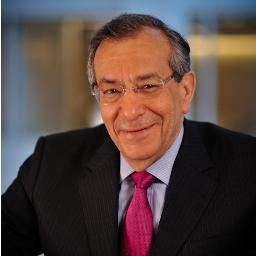
President and founder of American Task Force on Palestine. ____RTs are interesting!
Washington D.C. · americantaskforce.org