81 years of service to the 🌍. 17 #GlobalGoals for people & planet.
On today's #UNDay see how the UN makes a difference in the lives of everyone, everywhere👉 https://buff.ly/OyS3zho
[AS
ALWAYS PLEASE GO TO THE LINK TO
READ GOOD ARTICLES (or quotes or watch videos) IN FULL: HELP
SHAPE ALGORITHMS (and
conversations) THAT EMPOWER
DECENCY, DIGNITY, JUSTICE &
PEACE... and hopefully
Palestine]
The United Nations celebrates its 81st anniversary on
Saturday, highlighting more than eight decades of work to advance
peace, human rights and development around the world.
On #UNDay, 24 October, the United Nations celebrates 81 years of work to advance peace, human rights and development for all.
As global challenges grow, Secretary-General @antonioguterres calls on countries to uphold the UN Charter.
United Nations Day heralds the entry into force of the UN Charter
in 1945. The global body officially came into being after the founding
document was ratified by a majority of its signatories, including the
five permanent members of the Security Council.
The day has been celebrated annually on 24 October since 1948.
The
agenda has remained unchanged: settling disputes through diplomacy,
combating poverty and hunger, promoting human rights and delivering
lifesaving aid to people affected by conflict, disasters and
displacement.
Humanity’s future
In his last message marking the day in charge of the UN, Secretary-General António Guterres said it stood for the idea that “humanity’s future depends on our ability to work together to advance peace, development and human rights.”
He
highlighted the profound challenges facing the world today, including
conflict, the climate crisis, rising inequalities and technological
advances outpacing the ability to govern them.
“The United Nations is an essential part of the fabric of our world,” he said. “And it’s needed more than ever.”
Prelude to the UN
As the Second World War raged, a remarkable international effort was already taking shape to help rebuild a shattered world.
Founded
in November 1943, the United Nations Relief and Rehabilitation
Administration (UNRRA) began its work before the United Nations itself
had been constituted.
Faced with hunger, disease, mass
displacement and devastation, it helped deliver the essentials of
survival and offered hope to millions struggling to rebuild their
lives.
Beyond emergency relief, UNRRA became a pioneering experiment in international cooperation.
UN Video highlights UNRRA’s extraordinary mission through archival footage and personal testimony.
Watch Before the UN: The Forgotten Story of UNRRA:
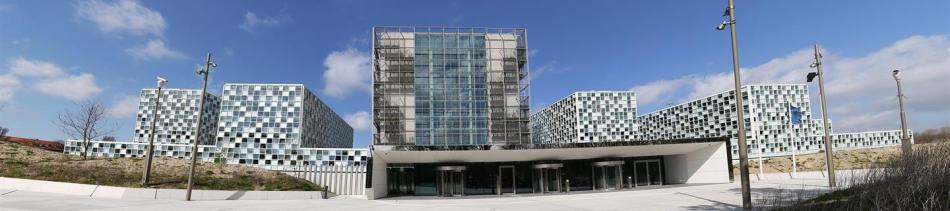
The #ICC thanks the European Parliament @Europarl_ENfor awarding the Court and its officials the 2026 Sakharov Prize for Freedom of Thought, at a time when the Court and its officials face unprecedented challenges.
International Criminal Court (ICC): fighting impunity for war crimes, crimes against humanity, genocide and aggression. Follow/RT≠Endorsement FR: @CourPenaleInt
[AS
ALWAYS PLEASE GO TO THE LINK TO
READ GOOD ARTICLES (or quotes or watch videos) IN FULL: HELP
SHAPE ALGORITHMS (and
conversations) THAT EMPOWER
DECENCY, DIGNITY, JUSTICE &
PEACE... and hopefully
Palestine]
The
International Criminal Court (ICC) investigates and, where warranted,
tries individuals charged with the gravest crimes of concern to the
international community: genocide, war crimes, crimes against humanity
and the crime of aggression. As a court of last resort, it seeks to
complement, not replace, national Courts. Governed by an international
treaty called the Rome Statute...
[AS
ALWAYS PLEASE GO TO THE LINK TO
READ GOOD ARTICLES (or quotes or watch videos) IN FULL: HELP
SHAPE ALGORITHMS (and
conversations) THAT EMPOWER
DECENCY, DIGNITY, JUSTICE &
PEACE... and hopefully
Palestine]
The Nobel Peace Prize for 2026 goes to a
person who with exceptional courage and integrity has led the way
towards a more comprehensive global legal order. This year’s laureate
has been instrumental in ensuring that war crimes, crimes against
humanity and genocide are prosecuted.
The Norwegian Nobel Committee has
decided to award the Nobel Peace Prize for 2026 to Navanethem “Navi”
Pillay for her efforts to promote peace and international law.
Navi Pillay’s commitment to universal
legal principles and her firm moral compass are constants in a long
career. Born into a family of Indian Tamil origin under apartheid in
Durban, South Africa, Pillay became a lawyer and legal pioneer,
confronting deep structural discrimination, segregation and exclusion. A
common thread runs from her early work defending Nelson Mandela and others who stood up against apartheid to her service as a judge in some of the key international court cases of our time.
This year’s laureate has significantly
enlarged the scope and impact of international law. She has served as a
judge on the High Court in South Africa, the International Criminal
Tribunal for Rwanda and the International Criminal Court. She was the
United Nations High Commissioner for Human Rights and, until recently,
she chaired the UN Independent International Commission of Inquiry on
the Occupied Palestinian Territory. Today Navi Pillay is a judge on the
International Court of Justice in the case where Myanmar stands accused
of genocide.
In historic international court cases,
she has shown that legal measures can help prevent acts of war and
violence. Navi Pillay has also contributed to strengthen the
institutions of international law. Her independence, expertise and
steadfastness have made her one of the most respected international
jurists of our time.
The first Nobel Peace Prize was awarded
125 years ago. Already then, the Norwegian Nobel Committee underscored
the importance of resolving conflicts through international law – a
theme that has remained prominent throughout the history of the peace
prize. The reach of international law expanded after the Second World
War, in particular with the creation of the UN
institutions. The key insight was that lasting peace must be built on
legal principles, not on the will of the strong or a fragile balance of
power. Additional legal mechanisms were introduced in the post-war
decades, and momentum picked up further after the end of the Cold War.
[AS
ALWAYS PLEASE GO TO THE LINK TO
READ GOOD ARTICLES (or quotes or watch videos) IN FULL: HELP
SHAPE ALGORITHMS (and
conversations) THAT EMPOWER
DECENCY, DIGNITY, JUSTICE &
PEACE... and hopefully
Palestine]
The 2026 Nobel Peace Prize has been awarded to South Africa's Navi Pillay for her work on international law and human rights.
| Photo Credit: FABRICE COFFRINI/AFP
The
2026 Nobel Peace Prize was awarded to Navanethem “Navi” Pillay for her
efforts to promote peace and international law. The Prize’s press
statement described Pillay as a person with exceptional courage and
integrity, who has led the way towards a more comprehensive global legal
order.
“The system of
international law is under tremendous pressure, and its institutions are
under attack,” Jørgen Watne Frydnes, chair of the Norwegian Nobel
Committee, said. “We see a shift towards power politics at the expense
of legal frameworks and global respect for law and justice.”
“Navi
Pillay is one of the great defenders of international legal principles
in our time. Her distinguished career reminds us of the need to support,
fortify and expand the global rule of law,” he added.
[AS
ALWAYS PLEASE GO TO THE LINK TO
READ GOOD ARTICLES (or quotes or watch videos) IN FULL: HELP
SHAPE ALGORITHMS (and
conversations) THAT EMPOWER
DECENCY, DIGNITY, JUSTICE &
PEACE... and hopefully
Palestine]
Make
Israeli-Palestinian Ceasefire Permanent, Allow Humanitarian Assistance
at Scale, Secretary-General Urges in Message Marking Third Anniversary
of 7 October
Three
years ago, on 7 October 2023, Hamas and other Palestinian armed groups
launched an abhorrent, large-scale terror attack on Israel, brutally
killing more than 1,200 Israelis and foreign nationals.
Civilians
were deliberately targeted and murdered in their homes, in their
communities and at a music festival. A total of 251 people were
abducted and taken into the Gaza Strip as hostages, including women,
children and the elderly. Their captors subjected the hostages to
horrific abuse in captivity, including torture and other forms of cruel,
inhuman or degrading treatment, and sexual violence. Some were killed
by their captors or during the ensuing hostilities. Nothing can justify
these atrocities.
Three years on, the pain of 7 October endures
for the families who lost loved ones, for survivors and for all those
whose lives were forever changed. I have met with Israeli families
whose worlds were shattered that day and listened to survivors who
continue to carry deep physical and emotional scars. I have heard from
former hostages about the unthinkable torment they and other captives
endured as they were held in Gaza in deplorable conditions and the
anguish and uncertainty suffered by their families throughout their
captivity. I am profoundly relieved for all those who have regained
their freedom and been reunited with their loved ones. I mourn those
who were killed in the attacks and those who died in captivity. Their
suffering, and the enduring grief of their families, must never be
forgotten.
These horrors must never be repeated. The devastating
hostilities that followed have inflicted untold suffering on
Palestinians in Gaza, including massive loss of life, displacement and
destruction. Civilians continue to endure intolerable conditions.
Their suffering, too, demands an end — now.
Last year’s ceasefire
brought some relief. But, it has yet to deliver security, adequate
humanitarian assistance or a credible path to recovery and peace.
I
urge all parties to implement their commitments in full and advance to
the next phase of the ceasefire, on the basis of the Comprehensive Plan
to End the Gaza Conflict. It is time for the ceasefire to become
permanent. It is time to allow humanitarian assistance at scale. And
it is time to respect international law. We must build the political
path to lasting peace across the whole region. The United Nations
remains unwavering in its commitment to these imperatives.
Let
this anniversary mark not only another year of mourning, but also a
renewed determination to build a different future: one in which
Israelis and Palestinians can live side by side in peace and security,
with their rights, dignity and aspirations fulfilled.