Labels

Showing posts with label Red Cross ICRC. Show all posts

Tuesday, November 17, 2026

NPR: United Nations talks seek to rein in 'killer robots' as fears over AI weapons grow

An armed robot developed by Turkish defense companies is demonstrated at a facility in Duzce, Turkey, on April 29 -  Omer Urer/Anadolu via Getty Images

GENEVA — Negotiations on possible rules for the use of lethal autonomous weapons, also known as 'killer robots' are underway at the United Nations in Geneva.

Supporters of controls on autonomous weapons say this week's U.N. conference on Certain Conventional Weapons (or CCW), which meets just once every five years, is the last best chance to agree rules before it is too late.

Warfare technology has advanced rapidly in the last few years, with some experts warning that the world is just months away from having weapons that can choose targets and make the decision to kill autonomously.

In Ukraine and Gaza, AI-assisted weapons have already been used to take out targets, with Ukrainian civilians reporting being 'hunted' by drones as they shop or go to school. But these are still controlled remotely by humans.

Humanitarian organizations say the decision to kill – and responsibility for that choice – must stay in human hands. Ahead of this week's meeting, the United Nations, the International Committee of the Red Cross and the Pope have all called for legally binding rules. U.N. Secretary-General Antonio Guterres warned that allowing fully autonomous weapons to kill would be 'crossing a moral red line'.

What are the risks?

The Red Cross is especially worried that existing rules of war – the Geneva Conventions – cannot be fully respected by autonomous weapons. War is often chaotic and confusing, and the situation can change rapidly. Under the Conventions, soldiers who are wounded or in the process of surrendering can no longer be targeted... READ MORE  https://www.npr.org/2026/11/16/nx-s1-6042548/un-killer-robots-ai-weapons-drones

  [AS ALWAYS PLEASE GO TO THE LINK TO READ GOOD ARTICLES (or quotes or watch videos) IN FULL: HELP SHAPE ALGORITHMS (and conversations) THAT EMPOWER DECENCY, DIGNITY, JUSTICE & PEACE... and hopefully Palestine] 

Sunday, October 11, 2026

An arms race is underway in the development and deployment of new technologies in warfare, including artificial intelligence (AI). Rather than making battlefields safer for civilians, these technologies often increase risks and cause significant harm.

ICRC

 
Faster decisions in war do not always mean safer outcomes for civilians. 
 
As AI is increasingly used in military operations, it can raise serious risks when life-or-death decisions depend on systems that may be unpredictable, biased, or difficult to control. 
 
 
 [AS ALWAYS PLEASE GO TO THE LINK TO READ GOOD ARTICLES (or quotes or watch videos) IN FULL: HELP SHAPE ALGORITHMS (and conversations) THAT EMPOWER DECENCY, DIGNITY, JUSTICE & PEACE... ] 
 

An arms race is underway in the development and deployment of new technologies in warfare, including artificial intelligence (AI). Rather than making battlefields safer for civilians, these technologies often increase risks and cause significant harm.

What is AI in the military domain?

AI in the military domain refers to the use of artificial intelligence in military systems and operations, including autonomous weapon systems, military decision-support systems, cyber operations and capabilities, logistics, surveillance and intelligence analysis.

Does international humanitarian law apply to AI in warfare?

Yes. IHL applies to all means and methods of warfare, including the use of AI technologies. Any use of force must comply with IHL principles and rules, such as distinction (between civilians and civilian objects on the one hand, and combatants and military objectives on the other), proportionality and precautions. 

Why is the ICRC concerned about the use of AI in the military domain?

The ICRC is concerned that the use of AI in the military could accelerate the pace and scale of warfare, increase unpredictability and reduce human control over the use of force, creating serious risks for civilians.

AI systems are particularly vulnerable to failure in adversarial environments, where opponents may deliberately try to deceive or manipulate the systems, such as by tampering with data or exploiting weaknesses. 

The ICRC emphasizes a human-centred approach because humans – not machines – remain legally responsible for decisions involving the use of force. Human judgement is essential to ensuring compliance with IHL and protecting civilians. AI systems should support human decision-making, rather than impair or replace it. 

What are the main applications of AI in the military domain which raise particular concern?


The ICRC has identified three applications of AI in the military domain that pose significant risks:

  1. Autonomous Weapon Systems (AWS): these systems, once activated, can autonomously select and engage targets without further human intervention.
  2. AI Decision-Support Systems: these systems process vast amounts of data to assist military decision-making, but they carry risks related to inherent unreliability and unpredictability, as well as human over-reliance on the system’s outputs. 
  3. AI in Information and Communication Technologies: AI is increasingly being used in cyber operations and integrated in cyber capabilities, with the potential to increase the scale of cyber-attacks, while also changing their nature and severity, especially in terms of adverse impact on civilians and civilian infrastructure.

Can technology companies become military targets if they support military operations?

Under IHL, technology companies and their employees are, prima facie, civilian objects and are protected against attack. Such protection can, however, be lost if the company’s personnel carry out certain activities or if the company’s property is used in certain ways. For instance, where specific tech company infrastructure or services are used by a warring party to make an effective contribution to military action and its total or partial destruction, capture or neutralization, in the circumstances ruling at the time, offers a definite military advantage to the adversary, it becomes a military objective. 

The ICRC therefore encourages technology companies to carefully assess how their products and services might be used in armed conflict. Companies should also take steps to avoid contributing to violations of IHL and to mitigate the risks their technologies may pose to civilians.

Does the ICRC engage with technology companies developing AI systems for use in the military domain?

Yes, the ICRC actively engages with technology companies and other stakeholders involved in the development of AI systems. These discussions focus on familiarising these companies with IHL, including how their services and activities may expose their staff, assets and customers to harm. They also focus on how AI systems can be designed and developed to better support compliance with IHL and reduce civilian harm.... READ MORE 

https://www.icrc.org/en/article/faq-artificial-intelligence-in-military-domain

 [AS ALWAYS PLEASE GO TO THE LINK TO READ GOOD ARTICLES (or quotes or watch videos) IN FULL: HELP SHAPE ALGORITHMS (and conversations) THAT EMPOWER DECENCY, DIGNITY, JUSTICE & PEACE... and hopefully Palestine]    

Thursday, September 24, 2026

Humanity in war: A global initiative for humanitarian law - As of mid-August 2026, 118 states have officially joined the Global IHL Initiative, launched by Brazil, China, France, Jordan, Kazakhstan and South Africa, together with the ICRC.

https://www.upholdhumanityinwar.org/en
 

Born from the ashes of World War II, the Geneva Conventions are a powerful promise that even in war, humanity must prevail. Created to put limits on the way wars are conducted and to protect those not taking part in the fighting – like civilians, prisoners and wounded soldiers – they have since been complemented with a series of treaties and customary law. This legal framework, known as international humanitarian law - or the laws of war - sets clear rules to follow amid the chaos of conflict.

There are now around 130 active armed conflicts worldwide.

They are not abstract legal concepts. They are the line between life and death, between dignity and despair, for millions caught in the crossfire. Yet despite a global consensus supporting the Geneva Conventions, adherence to even the most basic humanitarian norms remains shockingly insufficient in today’s war zones. Current conflicts reveal, in appalling and devastating ways, the immense challenges facing international humanitarian law in providing real and effective protection.

The suffering witnessed in war zones across the world is not inevitable. With strong political will, we can close the gap between the law and the reality on the ground.

How does international humanitarian law (IHL) protect in war?
Global IHL Initiative
  1. Civilians must be protected.

    It is illegal to target civilians and civilian objects, such as homes, schools and hospitals. Civilians must also be protected against the effects of military operations. 

  2. The sick and wounded must be cared for regardless of whose side they're on.

    Wounded, sick and shipwrecked civilians, soldiers and fighters, as well as medical staff, are all protected under IHL.

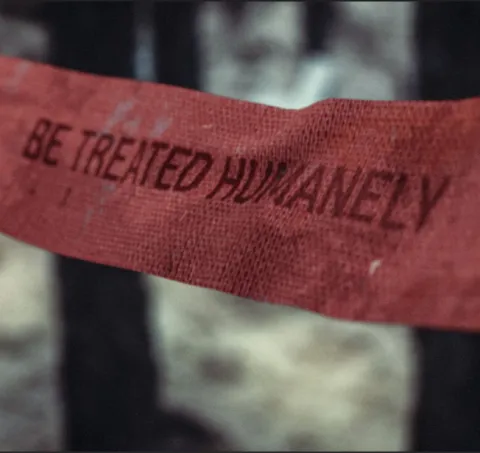
  3. Detainees must be treated humanely and with dignity.

    IHL protects those deprived of their liberty from ill treatment, acts of violence and intimidation.

  4. The dead must be treated with dignity.

    Warrying parties must take all possible measures to search for, collect and evacuate the dead. 

  5. Parties to a conflict must facilitate humanitarian access.

    People must be able to receive humanitarian aid, like food, water and medicine.

  6. IHL places limits on the fighting

    IHL treaties and customary law regulate weapon use and ban some, such as biological and chemical weapons, landmines, and cluster munitions. 

  7. War crimes must be punished.

    States have the responsibility to investigate, prosecute and punish serious violations of IHL.

Why this matters

To uphold and reaffirm the promise that, even in war, humanity must prevail.

The Global IHL Initiative exists to restore respect for the rules of war and ensure that the Geneva Conventions remain a living lifeline for the vulnerable. In an age of rising conflict and fading restraint, we stand for the sanctity of life, for accountability and for a future where the laws of war are not forgotten relics but the foundation of our shared humanity. 

Despite the universal ratification of the Geneva Conventions, violations of fundamental humanitarian norms are widespread. Ongoing conflicts around the globe, whether in urban centres, rural villages or at sea, are causing devastating human suffering, destruction and displacement. Attacks on civilian infrastructure, hospitals and humanitarian workers are all too frequent. The human, social, economic and environmental costs of these violations are unsustainable.

 https://www.upholdhumanityinwar.org/en

[AS ALWAYS PLEASE GO TO THE LINK TO READ GOOD ARTICLES (or quotes) IN FULL: HELP SHAPE ALGORITHMS (and conversations) THAT EMPOWER DECENCY, DIGNITY, JUSTICE & PEACE... and hopefully Palestine, or at least fair and just laws and policies here, there- and everywhere]


World leaders united in defence of international humanitarian law to uphold humanity in war

Alarmed by widespread violations of international humanitarian law (IHL) in conflicts around the world and the resulting unconscionable human suffering, we, the leaders of Brazil, China, France, Jordan, Kazakhstan and South Africa, together with the International Committee of the Red Cross (ICRC), urge States and the international community to act. 

 https://www.icrc.org/en/statement/world-leaders-united-defence-international-humanitarian-law

Wednesday, August 5, 2026

How Biden Enabled Israel’s Aggression Toward Gaza—and Iran: Top officials from the previous Administration now express regret over their failure to rein in Netanyahu.

Jake Sullivan, Biden’s former national-security adviser, told me, “I will say straightforwardly—we should have put more pressure on Israel to take a different approach.”Photograph by Saher Alghorra / NYT / Redux
A Reporter at Large

How Biden Enabled Israel’s Aggression Toward Gaza—and Iran

Top officials from the previous Administration now express regret over their failure to rein in Netanyahu.

On March 5, 2024, five months into the war in Gaza, Mirjana Spoljaric, the president of the International Committee of the Red Cross, sent a confidential letter to President Joe Biden. Under the Geneva Conventions, the Red Cross holds a unique responsibility to counsel states about avoiding war crimes. In the letter, which I obtained from a former United States official, Spoljaric reminded Biden that the organization had condemned the “horrific” October 7th massacre of Israelis by Hamas, and remained “relentless” in pressing the group to release the hostages it had taken. But she was now appealing to Biden “with profound alarm” because Israel, which had been pummelling Gaza with heavy munitions since October, was ignoring the Red Cross as never before. “The way the hostilities are being conducted by Israel is incompatible” with the laws of armed conflict, she wrote, “particularly the obligations to protect civilians and distinguish between military targets and civilians or civilian infrastructure, to ensure dignified treatment of detainees and the dead, to protect medical installations and personnel, and to provide and enable access of humanitarian aid.”

Allowing the Red Cross to visit detainees during a war or an occupation is one of the brightest lines established by the Geneva Conventions. Yet, after October 7th, Israel, for perhaps the first time in its history, fully blocked the organization’s access to Palestinian detainees from Gaza and the West Bank, putting it in the company of pariah states such as North Korea and Eritrea; even the warring factions in Yemen allowed Red Cross visits. Spoljaric noted that humanitarian groups and journalists had reported a “massive surge” in the number of Palestinians in Israeli prisons. At least a thousand had been released back into Gaza, and many of them gave accounts of torture, even though the Israeli military had concluded that they were not Hamas fighters. The Times reported that one released detainee, a law student named Fadi Bakr, described being beaten so severely that his genitals turned blue and blood still appeared in his urine weeks later. He said that Israeli guards had played music so loudly that one of his ears bled. (An Israeli military spokesman told the Times that the captors followed “Israeli and international law” and played music at a “low volume,” to prevent detainees from coördinating.) But the Red Cross couldn’t address such allegations: Spoljaric said that Israel had suspended all “legal-operational dialogue.”

To try to influence Hamas to release hostages, Spoljaric had appealed to Qatar and other patrons of the group; she now implored Biden to “bring about an immediate change” in Israel’s conduct. An appendix to the letter cited U.S. laws and Administration policies that prohibited the transferring of weapons likely to be used in war crimes, and Spoljaric urged Biden to withhold weapons “that should not be used in densely populated areas, in light of their devastating humanitarian impacts.” She warned Biden that failing to “uphold minimum standards of humanity” would be a “moral defeat” that “future generations are unlikely to forgive us for failing to avert.”

Two years after Spoljaric’s letter, President Donald J. Trump ordered the U.S. military to join Israel in attacking Iran. Some former senior officials in the Biden Administration told me that, in certain ways, the war in Iran was an extension of the Gaza conflict... READ MORE https://www.newyorker.com/magazine/2026/07/27/how-biden-emboldened-israels-aggression-toward-gaza-and-iran

[AS ALWAYS PLEASE GO TO THE LINK TO READ GOOD ARTICLES (or quotes or watch videos) IN FULL: HELP SHAPE ALGORITHMS (and conversations) THAT EMPOWER DECENCY, DIGNITY, JUSTICE & PEACE... and hopefully Palestine]

Saturday, July 11, 2026

RED CROSS ICRC: In armed conflicts, AI systems can fail, be manipulated or produce unreliable results. That is why decisions involving the use of force must remain under meaningful human control. Machines may support judgement. They must never replace human responsibility.

 https://www.icrc.org/en/article/faq-artificial-intelligence-in-military-domain 

Frequently asked questions: Artificial Intelligence (AI) in the military domain

An arms race is underway in the development and deployment of new technologies in warfare, including artificial intelligence (AI). Rather than making battlefields safer for civilians, these technologies often increase risks and cause significant harm.

What is AI in the military domain?

AI in the military domain refers to the use of artificial intelligence in military systems and operations, including autonomous weapon systems, military decision-support systems, cyber operations and capabilities, logistics, surveillance and intelligence analysis.

Does international humanitarian law apply to AI in warfare?

Yes. IHL applies to all means and methods of warfare, including the use of AI technologies. Any use of force must comply with IHL principles and rules, such as distinction (between civilians and civilian objects on the one hand, and combatants and military objectives on the other), proportionality and precautions. 

Why is the ICRC concerned about the use of AI in the military domain?

The ICRC is concerned that the use of AI in the military could accelerate the pace and scale of warfare, increase unpredictability and reduce human control over the use of force, creating serious risks for civilians.

AI systems are particularly vulnerable to failure in adversarial environments, where opponents may deliberately try to deceive or manipulate the systems, such as by tampering with data or exploiting weaknesses. 

The ICRC emphasizes a human-centred approach because humans – not machines – remain legally responsible for decisions involving the use of force. Human judgement is essential to ensuring compliance with IHL and protecting civilians. AI systems should support human decision-making, rather than impair or replace it. 

What are the main applications of AI in the military domain which raise particular concern?


The ICRC has identified three applications of AI in the military domain that pose significant risks:

  1. Autonomous Weapon Systems (AWS): these systems, once activated, can autonomously select and engage targets without further human intervention.
  2. AI Decision-Support Systems: these systems process vast amounts of data to assist military decision-making, but they carry risks related to inherent unreliability and unpredictability, as well as human over-reliance on the system’s outputs. 
  3. AI in Information and Communication Technologies: AI is increasingly being used in cyber operations and integrated in cyber capabilities, with the potential to increase the scale of cyber-attacks, while also changing their nature and severity, especially in terms of adverse impact on civilians and civilian infrastructure.

Can technology companies become military targets if they support military operations?

Under IHL, technology companies and their employees are, prima facie, civilian objects and are protected against attack. Such protection can, however, be lost if the company’s personnel carry out certain activities or if the company’s property is used in certain ways. For instance, where specific tech company infrastructure or services are used by a warring party to make an effective contribution to military action and its total or partial destruction, capture or neutralization, in the circumstances ruling at the time, offers a definite military advantage to the adversary, it becomes a military objective. 

The ICRC therefore encourages technology companies to carefully assess how their products and services might be used in armed conflict. Companies should also take steps to avoid contributing to violations of IHL and to mitigate the risks their technologies may pose to civilians.... READ MORE https://www.icrc.org/en/article/faq-artificial-intelligence-in-military-domain

 [AS ALWAYS PLEASE GO TO THE LINK TO READ GOOD ARTICLES (or quotes or watch videos) IN FULL: HELP SHAPE ALGORITHMS (and conversations) THAT EMPOWER DECENCY, DIGNITY, JUSTICE & PEACE... and hopefully Palestine]  
 

ICRC

In armed conflicts, AI systems can fail, be manipulated or produce unreliable results. That is why decisions involving the use of force must remain under meaningful human control. 
 
Machines may support judgement. They must never replace human responsibility.