Labels

Showing posts with label Raja Shehadeh. Show all posts

Tuesday, April 28, 2026

"Don't Say Palestine- How the Media Manufactured Consent for Genocide" NEW BOOK by the brilliant headline fixing writer Assal Rad ... "In Don’t Say Palestine, Rad reveals a pattern of dehumanizing language—in outlets from CNN and the AP to the BBC and The New York Times—so consistently employed throughout the Palestinian genocide that it amounts to a policy. Mainstream Western media consistently downplays Israeli responsibility, “others” Palestinians, and casts doubt on inviolable tenets of international law like the sanctity of hospitals and journalists in war zones."

 Assal Rad
Humbled to share the cover of my forthcoming book. A project born of heartbreak, urgency, and the unbearable reality of watching Israel’s genocide against Palestinians unfold in real time.

Assal Rad  https://x.com/AssalRad

PLEASE FOLLOW HER
 
A searing indictment of Western media that lays bare how the "free press," long tasked with speaking truth to power, instead became a vital part of the machinery that enabled the genocide in Palestine

If you’re not writing the truth about crimes against humanity, you’re culpable in them.

Activist and Middle East historian Assal Rad is known as the “headline fixer” for her powerful posts that illustrate how mainstream Western media’s coverage of the Gaza Genocide is filled with double standards. Israelis are described as "children" and "civilians," while Palestinians are "people under 18" and "collateral damage"; Israelis are
killed; Palestinians die. Even in the wake of the so-called ceasefire, major Western media continually obfuscates Israeli violence in Palestine: For example, the Associated Press reported that "Gaza's living conditions worsen as strong winds and hypothermia kill 5." No, Rad corrects: Gaza's living conditions worsen as Israel blocks aid.

In
Don’t Say Palestine, Rad reveals a pattern of dehumanizing language—in outlets from CNN and the AP to the BBC and The New York Times—so consistently employed throughout the Palestinian genocide that it amounts to a policy. Mainstream Western media consistently downplays Israeli responsibility, “others” Palestinians, and casts doubt on inviolable tenets of international law like the sanctity of hospitals and journalists in war zones. This groundbreaking, eye-opening exposé offers both a moral reckoning and an urgent call to action, mapping with devastating clarity the media’s complicity in whitewashing a human rights crisis. 
 [AS ALWAYS PLEASE GO TO THE LINK TO READ GOOD ARTICLES (or quotes or watch videos) IN FULL: HELP SHAPE ALGORITHMS (and conversations) THAT EMPOWER DECENCY, DIGNITY, JUSTICE & PEACE... and hopefully Palestine]


Praise 
 
“Amidst some of the worst journalistic failures of this century, Assal Rad has consistently done vital work to point out the myriad ways institutional hypocrisy, cowardice, and willful obliviousness work hand-in-hand with state violence to justify and normalize any manner of atrocity. Her intellectual rigor and moral claritynot only on the journalistic malpractice that so often marks Western media coverage of the ongoing genocide in Gaza, but on how this malpractice eventually seeps into all coverageare unwavering. At a time when it would have been so much more convenient to stay silent, I and so many others are grateful for her willingness to speak.”
—Omar El Akkad, National Book Award–winning author of One Day, Everyone Will Have Always Been Against This

“If you’ve ever wondered how the media manipulated perception through subtle use of language, this is the book for you to read. Assal Rad in her superb book shows how no other institution is as instrumental in shaping perception like the media, which is not a record of truth-telling but a carefully curated narrative and elaborate system of erasure, euphemism, and deference to power.”
—Raja Shehadeh, National Book Award finalist and author of We Could Have Been Friends, My Father and I

“A poignant reminder of the power of words to normalise, or legitimise, genocide.”
—Yanis Varoufakis, author of Technofeudalism
  

Saturday, July 12, 2025

" Ever since the failure to implement the 1948 UN resolution 194, which gave Palestinian refugees the right to return to their homes in what became Israel, we have been disappointed again and again." Yes, Israel’s plan for Rafah would be a crime – but international law has never protected Gaza Raja Shehadeh

Rafah, in the southern Gaza Strip – the planned site of Israel’s internment centre. Photograph: Eyad Baba/AFP/Getty Images

Yes, Israel’s plan for Rafah would be a crime – but international law has never protected Gaza

Raja Shehadeh
Palestinians continue to hold on to the practice we call sumoud – refusing to give up or leave – despite the world turning its back on us

Over the past 21 long months of Israel’s genocidal war on Gaza, voices all over the world have decried the demise of international law and the rule-based order. And indeed, the facade of Israel’s adherence to international law has vanished and policies that constitute war crimes are now brazenly declared.

This week, Israel’s defence minister, Israel Katz, has shared plans to forcibly move Palestinians into a camp in the ruins of Rafah. Once they enter, they cannot leave. In other words, a concentration camp, which by definition is an internment centre for members of a national group (as well as political prisoners or minority groups) on the grounds of security or punishment, usually by military order. Michael Sfard, an Israeli human rights lawyer, was quoted in the Guardian as saying that Katz “laid out an operational plan for a crime against humanity”. Hundreds have been killed and thousands wounded trying to access food.

I have tried hard to understand the incomprehensible suffering endured by Palestinians in Gaza and how it is that most Israelis do not acknowledge their humanity. How are they able to show no remorse for what their army is carrying out in their name? I believe the seed of our dehumanisation was planted during the Arab-Israeli war in 1948. Palestinians were violently deprived of land, property and belongings in what we would come to call the Nakba (Arabic for “the catastrophe”), on the grounds that the land was God-given to the Jewish people. From that time, Israelis have been able to use Arab homes, lands and orchards without any feeling of guilt. The 7 October attacks were the starting point of the war, but Israel has been systematically degrading and dispossessing the Palestinian people for decades.

Such violations of international law lead to a feeling of despair about the inability of institutions to prevent the horrors of Israeli actions in Gaza and the West Bank and to hold perpetrators to account. The UN-backed international criminal court has issued arrest warrants for Netanyahu and former defence minister Yoav Gallant over allegations of “the war crime of starvation as a method of warfare; and the crimes against humanity of murder, persecution and other inhumane acts”. No arrests have been made. The west continues to supply military and political support to Israel. I ask myself: should we Palestinians feel helpless in the face of this failure?

And yet the truth is that international law, though used as a measuring stick and point of reference by human rights organisations, has... READ MORE https://www.theguardian.com/commentisfree/2025/jul/12/israel-rafah-plan-crime-international-law-palestinians

   [AS ALWAYS PLEASE GO TO THE LINK TO READ GOOD ARTICLES (or quotes) IN FULL: HELP SHAPE ALGORITHMS (and conversations) THAT EMPOWER DECENCY, DIGNITY, JUSTICE & PEACE... and hopefully Palestine, or at least fair and just laws and policies]

Monday, February 10, 2025

Nine Quarters of Jerusalem- A New Biography of the Old City by Matthew Teller, lets the communities of the Old City speak for themselves. Ranging through ancient past and political present, it evokes the city’s depth and cultural diversity.

In Jerusalem, what you see and what is true are two different things.

Maps divide the walled Old City into four quarters, yet that division doesn’t reflect the reality of mixed and diverse neighbourhoods.

Beyond the crush and frenzy of its major religious sites, much of the Old City remains little known to visitors, its people overlooked and their stories untold.

Nine Quarters of Jerusalem lets the communities of the Old City speak for themselves. Ranging through ancient past and political present, it evokes the city’s depth and cultural diversity. Matthew Teller’s highly original ‘biography’ features the Old City’s Palestinian and Jewish communities, but also spotlights its Indian and African populations, its Greek and Armenian and Syriac cultures, its downtrodden Dom Gypsy families and its Sufi mystics.

The book discusses the sources of Jerusalem’s holiness and the ideas – often startlingly secular – that have shaped lives within its walls.

It is an evocation of place through story, led by the voices of Jerusalemites.... READ MORE  https://www.matthewteller.com/nine-quarters-of-jerusalem/

MATTHEW TELLER

My newest book Daybreak in Gaza: Stories of Palestinian Lives and Culture (Saqi Books, 2024), co-edited with Palestinian friends Mahmoud Muna, Juliette Touma and Jayyab Abusafia, gathers almost a hundred accounts of Gazan lives and stories from before and during Israel’s ongoing assault, by Gaza’s writers and artists, but also its doctors and shopkeepers, its farmers and students and office workers. ‘A most significant collection, one that frightens, awes and inspires,’ said Philippe Sands. Suad Amiry called it ‘essential reading’ and Fatima Bhutto said: ‘Daybreak in Gaza must be shared with the world.’

My previous book Nine Quarters of Jerusalem: A New Biography of the Old City (Profile Books and Other Press, 2022) reassesses histories and outlooks on Jerusalem as told through stories of the communities that live – and have lived – inside the city’s walls. Jonathan Dimbleby called it “original and illuminating” and Raja Shehadeh said it “reveals the Old City of Jerusalem better than any other book written about the city.” It was the Observer‘s ‘Book of the Week’ and a ‘Book of the Year’ in the Daily Telegraph, Geographical magazine and elsewhere.

My book Quite Alone: Journalism from the Middle East 2008-2019 collects some of my travel, feature journalism and news reporting.  

 [AS ALWAYS PLEASE GO TO THE LINK TO READ GOOD ARTICLES (or quotes or watch videos) IN FULL: HELP SHAPE ALGORITHMS (and conversations) THAT EMPOWER DECENCY, DIGNITY, JUSTICE & PEACE... and hopefully Palestine]

Monday, November 20, 2023

Raja Shehadeh: Israel has long wanted Palestinians out of Gaza – my father saw it firsthand

"Today, almost six decades after my father’s failed effort to convince the Israeli government to make peace with the Palestinians based on sharing the land, I feel the dreadful consequences of this failure. The killing of 11,000 people by Israeli forces, the attacks taking place in the West Bank by both the Israeli army and Jewish settlers that have led to the deaths of 200 Palestinians, and the failure of the world to deter Israel’s excesses has ushered profound fear into my own life.

The cries of the man with dual Irish-Palestinian nationality who lived in Gaza’s Beach camp on the shore of the Mediterranean still ring in my ears. He said to an Al Jazeera reporter that his camp was being bombed from all sides by Israel, and he wondered whether he would survive. He was in darkness with only a torch lighting his face. He asked how much more suffering we must endure before the world stops this, then most poignantly asked the viewers: “Are you enjoying this?” I wonder whether he survived the Israeli bombings. Or another man who, after informing the reporter, “They’re bombing the camp continuously,” said, “We’re leaving our home. We’re moving to al-Shifa hospital.” He ended with the plea: “Do something. Do something.” I thought of him as the hospital was surrounded by the Israeli army.

Everything that gave me hope that when violence reaches an unconscionable point and excessive violations of human rights are committed, Israel will be made to stop, is shattered now. I used to have faith that we would be protected by international humanitarian law, or by an outcry from the Israeli public against the excesses of their government – yet at this point I see no hope in either. Nor does it seem that there is hope that Israel will wake up from the delusion that war and violence against the Palestinians and its unassailable military strength will give it peace and security. This leaves us Palestinians in the occupied Palestinian territories vulnerable and with serious danger for our lives and our future presence in this land." 

... READ MORE

Israel has long wanted Palestinians out of Gaza – my father saw it firsthand

Raja Shehadeh

Decades after the 1967 war, Israel is still under the illusion that violence against the Palestinians will give it peace and security

https://www.theguardian.com/commentisfree/2023/nov/20/1967-israel-gaza-palestinians-father

https://i.guim.co.uk/img/media/bfdac4a67234b1a2215852d4878a9198ef4dd3b3/0_346_5184_3110/master/5184.jpg?width=940&dpr=1&s=none
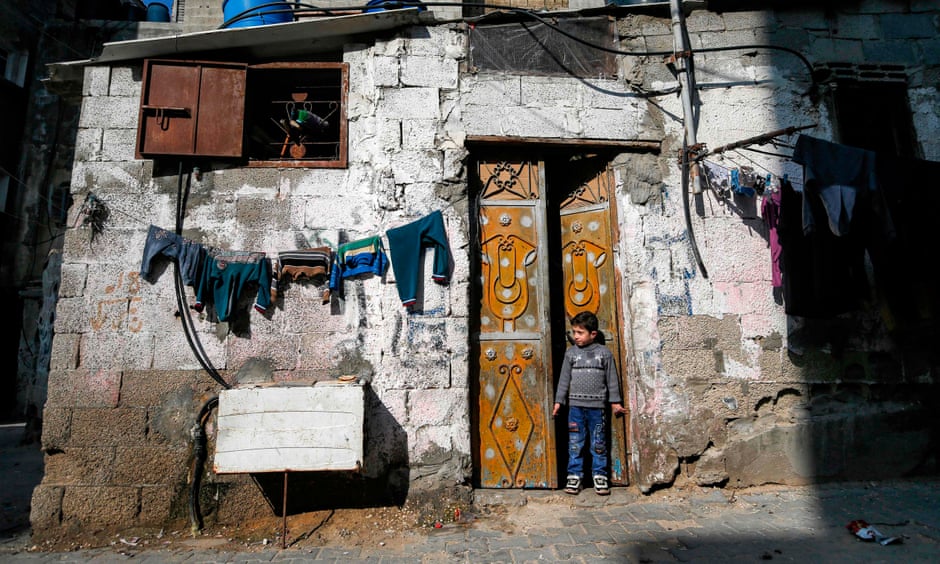
Mass expulsion of Palestinians from Gaza was also not feasible while the world was watching. So other strategies were employed.’ A Palestinian boy at the al-Shati camp, Gaza City, 2020. Photograph: Mohammed Abed/AFP/Getty Images

 [AS ALWAYS PLEASE GO TO THE LINK TO READ GOOD ARTICLES or quotes IN FULL: HELP SHAPE ALGORITHMS (and conversations) THAT EMPOWER DECENCY, DIGNITY, JUSTICE & PEACE... and hopefully Palestine]

Wednesday, February 13, 2013

Rising From Ruins: Even as Israel neglects a major archaeological site in the West Bank, it is preventing the Palestinian Authority from tending to it.

"The Oslo Accords list Sebastia among the archeological sites of importance to Israel, yet Israel is not taking care of the place, arguably one of the most important set of ruins in the West Bank. Nor is it allowing the Palestinian Authority to do so. And even though USAID-supported renovation work is taking place in the village, supposedly to improve the ailing Palestinian economy by encouraging tourism in the West Bank, the international community has done nothing to oppose Israeli actions that impede tourism (and are contrary to international law)." RAJA SHEHADEH in the NYTimes
Signs outside a village in the West Bank identical to those at the entrance of Sebastia. Photo credit Bassam Almohor
[AS ALWAYS PLEASE GO TO THE LINK TO READ GOOD ARTICLES IN FULL: HELP SHAPE ALGORITHMS (and conversations) THAT EMPOWER DECENCY, DIGNITY, JUSTICE & PEACE... and hopefully Palestine]

http://latitude.blogs.nytimes.com/2013/02/13/ruins-in-the-west-bank-are-another-victim-of-the-israeli-palestinian-conflict/

Wednesday, February 6, 2013

RAJA SHEHADEH: More Than a Land Grab

Settlers increasingly impinging on Palestinian lives

Jewish settlers aren't just taking empty space, they're destroying Palestinian property and threatening their lives.

http://latitude.blogs.nytimes.com/2013/02/06/settlers-increasingly-impinging-on-palestinian-lives/?ref=global

RAMALLAH, West Bank — Last week some inhabitants of the Palestinian village of Burin, near Nablus, set up a small and peaceful protest camp on private land in an attempt to protect the village from encroaching Jewish settlers. On Saturday, the Israeli Army evicted the Palestinians. According to one report, the settlers uprooted nearly 100 olive trees, a 16-year-old Palestinian was wounded, 20 people suffered tear gas inhalation, and a mosque was set on fire.

As I read about these events, which transpired not far from where I live, I was struck by how we Palestinians are no longer able to enjoy the land where we live. In recent years Jewish settlers have taken plenty of unpopulated Palestinian land; now, even our hometowns are unsafe.

And, of course, the scramble for land in the West Bank is not the only way in which settlers have been increasingly impinging on our lives.... READ MORE

A Palestinian activist ran from teargas after the Israeli police broke up a protest against Jewish settlers on Feb. 2 in the West Bank village of Burin. Mohamad Torokman/Reuters
[AS ALWAYS PLEASE GO TO THE LINK TO READ GOOD ARTICLES IN FULL: HELP SHAPE ALGORITHMS (and conversations) THAT EMPOWER DECENCY, DIGNITY, JUSTICE & PEACE... and hopefully Palestine]

Friday, December 14, 2012

Raja Shehadeh reflects on the UN resolution to recognise Palestine as a non-member observer state

"In my tale, "The Two Djinnis and the Wall", I let loose my imagination and have a Palestinian hiker who has been stopped at an Israeli checkpoint tell of his dreams of a new reality in the region to a female Israeli soldier detaining him while his backpack is being searched. She had claimed she did not understand Arabic, but when he finishes she asks: "Will I ever be able to travel to the places you speak about? My family comes from Aleppo." I hope writers can serve the cause of peace by provoking people's yearning for it. Aren't new realities created by first imagining them, making what is possible in art thinkable in life?"


Palestine: Diary of a historic month

29 November 2012 … Palestinians at a rally in Ramallah. Photograph: APAimages/Rex Features

Wednesday, October 3, 2012

My letter to the NYTimes RE License to Care by Raja Shehadeh

Palestinian children stand near the Ras Khamis checkpoint in East Jerusalem. A permit system, controlled by the Israeli authorities, determines who can enter Israel for work or care. Abir Sultan/European Pressphoto Agency

RE License to Care by Raja Shehadeh
http://latitude.blogs.nytimes.com/2012/10/02/withholding-travel-permits-israel-deprives-palestinians-of-medical-care/?ref=global

Dear Editor,

Always good to see Palestine's
Raja Shehadeh in your pages, diplomatically reminding us to notice and better understand the very real plight of the Palestinians.   The worse the news from Syria becomes the more I worry about how much more horrific the Israel-Palestine conflict is bound to become in time, with Palestinian men, women and children bearing the brunt of the pain and loss.

Sincerely,
Anne Selden Annab

Notes

Suspected hardline Israelis scrawled pro-settler graffiti and religious insults on a monastery outside the walls of Jerusalem's Old City on Tuesday, police said, in the latest of a series of attacks on non-Jewish sites.

Israel scrambles Palestinian 'right of return' with Jewish refugee talk


King Abdullah II of Jordan: The reason behind Tehran’s nuclear programme is the Palestinian-Israeli conflict.

Palestine's Abbas: "Despite our feelings of disappointment and loss of hope, we continue to sincerely extend our hands to the Israeli people to make peace."   [Full text: Abbas address to UN General Assembly]

The Rule of Law
  "The real rule of law is substantive and encompasses many human-rights requirements. It reflects the idea of equality in a substantive way: not just that no one is above the law, but that everyone is equal before and under the law, and is entitled to its equal protection and equal benefit..." Louise Arbour, former U.N. High Commissioner for Human Rights & president of the International Crisis Group.

OBAMA: "It is time to marginalize those who, even when not resorting to violence, use hatred of America, or the West, or Israel as the central organizing principle of politics," Obama said. "For that only gives cover, and sometimes makes an excuse, for those who resort to violence."
  U.S. President Barack Obama challenged world leaders to tackle the recent violence rippling across the Muslim world, calling it “not simply an assault on America” but an attack “on the very ideals upon which the United Nations was founded.”

Ambassadorship is no longer reserved for elites. In this era of digital interconnectedness, we are all called upon to use free speech to foster peace, not violence. To honor Ambassador Stevens, let us uphold that responsibility in our online – and offline – interactions.


************

The Office of International Religious Freedom ( http://www.state.gov/j/drl/irf/Given the U.S. commitment to religious freedom, and to the international covenants that guarantee it as the inalienable right of every human being, the United States seeks to:
Promote freedom of religion and conscience throughout the world as a fundamental human right and as a source of stability for all countries

"Where, after all, do universal human rights begin? In small places, close to home - so close and so small that they cannot be seen on any maps of the world. Yet they are the world of the individual person; the neighborhood he lives in; the school or college he attends; the factory, farm, or office where he works. Such are the places where every man, woman, and child seeks equal justice, equal opportunity, equal dignity without discrimination. Unless these rights have meaning there, they have little meaning anywhere. Without concerted citizen action to uphold them close to home, we shall look in vain for progress in the larger world."Eleanor Roosevelt

The Golden Rule... Do unto others as you would have them do unto you

Thursday, August 23, 2012

NYTimes Latitudes: A Tale of Two Territories by Raja Shehadeh

Jeremy Sutton-Hibbert for The New York Times: Hikers near the Cuillin Mountains in Scotland.

PORTREE, Scotland — Earlier this month, ahead of the Edinburgh International Book Festival, my wife Penny and I decided to go hiking on the Isle of Skye. We were staying outside Portree, the main town on the island, at the foot of Loch Sligachan. From the window of our room we could see the Black Cuillin Mountains, their towering summits silhouetted against the sky as if drawn by a mighty hand.

As the sun rose one morning, the mist that filled the glen by the mountains started to lift, slowly exposing more of the jagged outline: turrets and gullies of sheer, bare basalt and gabbro. We set out on Dunvegan Road toward the Cuillins, following the sign to Glen Brittle. We walked under an unusually blue sky, breathing the clear air and listening to water cascading nearby.

Step after step, I felt myself shedding the worries I had brought with me from Palestine, my troubled homeland. The Cuillins pierced the sky. These mountains have been here since long before the Israeli-Palestinian conflict, I thought, and they will long after I am gone.

We had walked for three and a half miles when we decided to stop at a waterfall to rest and read. As we stepped down toward a cove, I considered the differences between this landscape and Palestine’s. There it is dry; here there are rivers and waterfalls. There the hills are round and soft; here majestic mountains challenge the best of climbers.

We soon decided to climb back up to the path. Penny went ahead while I paused for a moment, turning around to take a last look at our lovely resting spot. I heard an anguished cry....READ MORE

[AS ALWAYS PLEASE GO TO THE LINK TO READ GOOD ARTICLES IN FULL: HELP SHAPE ALGORITHMS (and conversations) THAT EMPOWER DECENCY, DIGNITY, JUSTICE & PEACE... and hopefully Palestine]

Monday, July 30, 2012

Tales from the West Bank: Palestinian Raja Shehadeh chronicles life during occupation

The Palestinian author and lawyer Raja Shehadeh has kept a diary since the 1967 Israeli invasion of his homeland
AFP/Getty Images
The author and lawyer has kept a diary since the 1967 Israeli invasion of his homeland.
[AS ALWAYS PLEASE GO TO THE LINK TO READ GOOD ARTICLES IN FULL: HELP SHAPE ALGORITHMS (and conversations) THAT EMPOWER DECENCY, DIGNITY, JUSTICE & PEACE... and hopefully Palestine] 
13 December 2009

I'm just back from a lovely day spent in Wadi Kelt, the ravine on the way between Jerusalem and Jericho. This is one of the few places in the West Bank where one can be sure of finding water even after the drought of the past eight months. Turned out we were not the only ones who had the idea of an outing there. Just after we put down our rucksacks and stretched out on the rock in the sun, a Palestinian family of nine arrived. They were disappointed to find us there but settled for the second best slab of rock on the opposite side of the pool. Their smaller group included two bearded men and two young women with hijab, another of undetermined age with the niqab and four children. We, on the other hand, were a mixed group of Palestinians and foreigners, photographers and teachers, all of whom live and work in the West Bank.

As soon as I saw them I wondered how they had managed the rocky path without falling in the water. The women in our group invariably wore jeans and colourful shirts. I had been thinking as we passed the Israeli checkpoint of how clothes distinguish the various groups in our tiny land… the Israeli women soldiers wore tight khaki trousers with a low waist emphasising the contours of their hips, bedecked with mobile phones. They looked at us through their dark sunglasses giving us orders with their hands while exchanging flirty looks and sexual innuendos with the male soldiers with whom they conversed in loud Hebrew. To them we were mere specks on the terrain that belonged exclusively to them, where they could move us around with a flick of their small finger like pieces on a chequers board.

From the way we looked and dressed, the sombre-looking family at the picnic must have suspected we were Israelis, but our fellow picnickers were within earshot and could easily hear us speaking Arabic. Unfortunately we did not do what would have been normal a few years ago, perhaps because we drew an imaginary line between us, with them, the suspected Islamists on the one side, and us seculars on the other, with the fresh water pond between. No one from our side either greeted them or went over to their side to invite them to join us on our side of the rock which was large enough to accommodate them as well. So a distance was established between us from the beginning, much wider than the natural divide, the small pool of water that separated us.

4 January 2010
Penny and I went today to Bethlehem to look at the work of Banksy, the British street artist, on the Annexation Wall there. This conflict and the methods Israel uses to repress Palestinians are producing responses in many parts of the world. Banksy is one artist – but not the only one – who has come to express his feelings about the situation using his wall as the canvas.

We took the Walajeh Road heading f southwest on a circular route to Bethlehem which is directly south of Jerusalem, all in order to avoid the checkpoint between the two cities. We were stopped at the Walajeh checkpoint which I had heard also checks whether those crossing have paid their taxes to Israel, just to make life more complicated...READ MORE

Thursday, July 19, 2012

Latitude: A Palestinian in Jerusalem By Raja Shehadeh

Tourists tend to see Jerusalem's Old City as a model of tolerance. It's not.
[AS ALWAYS PLEASE GO TO THE LINK TO READ GOOD ARTICLES IN FULL: HELP SHAPE ALGORITHMS (and conversations) THAT EMPOWER DECENCY, DIGNITY, JUSTICE & PEACE... and hopefully Palestine]

Jerusalem — As a tourist visiting the Old City of Jerusalem, seeing Christians, Jews and Muslims walking side by side, hearing church bells ringing and Muslims being called to prayer, you might think the place is a model of tolerance.

As a resident of the Old City of Jerusalem, you think differently.


Last Sunday, I was taken on a tour by Nadera Shalhoub-Kervokian, a Palestinian and a professor of criminology at the Hebrew University of Jerusalem, who has lived in the Old City for the past 30 years. Her home — a tastefully furnished second-floor apartment, where she and her husband raised three daughters — is in the Armenian quarter.

It’s also right at the edge of the Jewish quarter, which was rebuilt, expanded and repopulated after Israel’s victory in the 1967 war and its occupation of East Jerusalem. According to one study, [pdf] in 2006 37,060 people lived in the Old City, including 27,500 Muslims, 5,681 Christians, 3,089 Jews and 790 Armenian. To this day most groups live in their own quarters, but as Nadera explained, Israeli Jews have increasingly been moving into other areas as well.

As we walked around the Christian Quarter, Nadera pointed out all the buildings and single rooms that have recently been taken over by Israeli Jews. Exploiting the economic straits in which Arabs find themselves, Orthodox Jews (many with money from American relatives) have been buying a room here, a house there...READ MORE

***********
Raja Shehadeh's Palestinian Walks won the Orwell Prize for books in 2008

Thursday, July 5, 2012

Our lives remain in peril....

"...Neither Hereini nor I nor any of the villagers anywhere in the West Bank is an Israeli citizen. You’d think that as such we shouldn’t need to concern ourselves with law and order in Israel. Except that we do: as long as Israel refuses to abide by the principle of international law that holds it responsible for our protection as inhabitants of the territories it occupies, our lives remain in peril." RAJA SHEHADEH
http://latitude.blogs.nytimes.com/2012/07/04/the-folly-of-israels-settlement-policy/?ref=global

The Folly of Israel’s Settlement Policy

[AS ALWAYS PLEASE GO TO THE LINK TO READ GOOD ARTICLES IN FULL: HELP SHAPE ALGORITHMS (and conversations) THAT EMPOWER DECENCY, DIGNITY, JUSTICE & PEACE... and hopefully Palestine] 

Friday, June 22, 2012

Latitute- VIEWS FROM AROUND THE WORLD... Checkpoint Jitters By RAJA SHEHADEH

Abir Sultan/European Pressphoto Agency

Jabaa Checkpoint, West Bank — Every day, at hundreds of checkpoints throughout the West Bank, Palestinians are stopped and made to wait, often for a long while, before they are let through. Last week I was halted at the Jabaa checkpoint on my way from my home in Ramallah to dinner at a friend’s house in Bethlehem.

I was by myself, listening to a Beethoven string quartet, one of the most beautiful of his later works. The weather was good; the moon was out. I was in a meditative mood. I wanted to feel the beauty of the moment and not let it be determined, defined or in any way affected by the bored Israeli soldiers blocking my way...READ MORE

[AS ALWAYS PLEASE GO TO THE LINK TO READ GOOD ARTICLES IN FULL: HELP SHAPE ALGORITHMS (and conversations) THAT EMPOWER DECENCY, DIGNITY, JUSTICE & PEACE... and hopefully Palestine]


Thursday, June 14, 2012

My letters to the NYTimes & WSJ RE Music for the Masses by Raja Shehadeh & Harris letter about Maen Rashid Areikat's "The Time for a Palestinian State Is Now"

A Palestinian girl practicing the flute at a school in a refugee camp near Ramallah, West Bank, in April 2009. The lessons were organized by the Al Kamandjati Association, which supports the education of Palestinian children (Rina Castelnuovo for The New York Times)

RE:  Music for the Masses by Raja Shehadeh
http://latitude.blogs.nytimes.com/2012/06/13/classical-music-makes-a-comeback-in-palestine/?ref=global

Dear Editor,

Delighted to see another fascinating NYTimes blog post by Raja Shehadeh ! I very much hope that more reasonable, compassionate, creative and intelligent Palestinians like
Shehadeh can continue to help lead Palestine (and its many various supporters) away from the dangerous influence of Islamists who seek not only the destruction of Israel, but also the destruction of secular freedom and justice for the people of Palestine: The Hamas government is quite clear that there will be "No peace with secularism". 

FYI Trudy Rubin currently reporting from Egypt points out that "the Muslim Brotherhood, which now dominates Parliament, is trying to eliminate women's right to divorce, lower the marriage age to 12, and rescind a law that bans female genital mutilation."  Egyptian women fighting for rights


Meanwhile (according to Haaretz, providing a highly relevant news report I know about only because of the American Task force on Palestine ):   Israel admits it revoked residency rights of a quarter million Palestinians- "Many of those prevented from returning were students or young professionals, working aboard to support their families"

The very real plight of the Palestinians is being exasperated and made worse by religious extremists and bigots and useful idiots on both sides of the Israel-Palestine conflict.  Bad will swiftly shift to worse without an officially negotiated agreement that provides for two sovereign states - Israel and Palestine - living side by side in peace and security.
 
Full respect for international law, basic human rights, real democracy and diplomacy can and should help create a viable and economically stable free Palestine (with real borders) that is democratic, pluralistic, non-militarized and neutral in armed conflicts. A fully secular two state solution really is the best way forward- for everyone's sake.

Sincerely,
Anne Selden Annab


************************

RE: Mr. Ariekat's Partial Remembrance letter by David Harris, Executive Director American Jewish Committee
http://online.wsj.com/public/page/letters.html

Dear Editor,

Clearly David Harris Executive Director American Jewish Committee does not want Americans to support a fully secular two state solution to once and for all end the Israel-Palestine conflict. Rather than answering diplomatic outreach with diplomatic outreach Harris choses to misinterpret and scorn Maen Rashid Areikat's The Time for a Palestinian State Is Now.

But that does not change the fact that it really is time for a Palestinian state.  There are and will be people who vehemently object to ending the conflict, just as there were people who vehemently objected to the end of slavery- and Jim Crow laws.

Sincerely,
Anne Selden Annab


Notes
"Since we established the American Task Force on Palestine in 2003, I have been criticised for being "too soft on Israel", mostly by those who seek to lecture me about the Nakba and trumpet their own Palestinian "patriotic credentials". In an insightful comment about my attendance at a recent Israeli Independence Day event, a distinguished Palestinian American friend of mine noted, “you weren't celebrating the exodus of 800,000 Palestinians, or the destruction of Palestine, or the Nakba, but keeping the face of Palestine alive, and keeping the door for negotiations and human contact open.”  Ziad Asali: Learning from the Nakba

"In our debate, I continued to insist that a two-state solution between Israel and the Palestinians is indeed still possible, mostly because a majority on both sides want it and because there is a huge body of international opinion and law that requires it." Hussein Ibish: Nothing is “inevitable”

"It is in Israel's vital interest to come to a complete resolution of the conflict between it and the Palestinian people sooner rather than later, relieving the weight of this tragic conflict from both of our peoples' shoulders. We owe it to ourselves. We owe it to the world." Maen Rashid Areikat: The Time for a Palestinian State Is Now


Thursday, May 3, 2012

Israel may have won the battle of settling into the West Bank, but it has lost the war of making peace with the Palestinians.

"... After I left Sabri’s house, I drove back to Ramallah, riding through tunnels burrowed under the highways that connect Jewish settlements to the rest of Israel. There’s no escaping the new geography of this land, I thought.

And then another thought struck, perhaps one even bleaker. Israel may have won the battle of settling into the West Bank, but it has lost the war of making peace with its closest neighbors, the Palestinians. And they are Israel’s only hope of gaining acceptance in the Middle East."  RAJA SHEHADEH May 3, 2012

Raja Shehadeh, a lawyer and writer living in Ramallah, is the author of “A Rift in Time: Travels with my Ottoman Uncle,” “2037: Le Grand Bouleversement” and “Palestinian Walks: Notes on a Vanishing Landscape,” which won the Orwell Prize in 2008.

 [AS ALWAYS PLEASE GO TO THE LINK TO READ GOOD ARTICLES IN FULL: HELP SHAPE ALGORITHMS (and conversations) THAT EMPOWER DECENCY, DIGNITY, JUSTICE & PEACE... and hopefully Palestine]
Sabri Garaib in the village of Beit Ijza, West Bank, in December 2009.Al Haq

by Raja Shehadeh

BEIT IJZA, West Bank — One of the first statements under oath that I took for Al Haq, a human rights organization I helped establish, was from Sabri Garaib, a farmer from Beit Ijza, a Palestinian village ten miles northwest of Jerusalem. I remember sitting on the porch of his house overlooking the garden and the low, undulating hills planted with wheat and barley that spread out on all sides. All 112 acres, I was told, were in danger of being expropriated by the new Jewish settlement of Givon Hahadasha.

It was 1982. In the many years since then Sabri repeatedly fought the settlers in order to hold on to his land. He would go to the Military Objection Committee to counter claims challenging his ownership. He would appeal to the Israeli high court, using every recourse available. He would go to jail for fighting off settlers who tried to stop him from farming or for removing fences they’d put up. But the settlement kept growing all around his house, claiming his land one acre at a time.

Sabri died on April 18. He was 73. It had been several years since I’d gone to his house, and when I visited recently to pay my condolences to his family I was appalled by what I saw. The house was hemmed in on three sides, with only a few yards of space left for a garden between the house and a gigantic steel fence. To get to the front door, I had to pass through a metal gate that is operated from the army camp nearby and walk down a narrow walkway lined with more steel fencing.... READ MORE

Tuesday, May 1, 2012

Raja Shehadeh in the New York Times: One group gets more rights, more land and more water while the other’s development is being strangled.

"... I could also see the separation wall snaking through the hills. Here and elsewhere throughout the West Bank, the wall separates communities — Israeli Jews on one side, Palestinians on the other — subjecting them to different laws and different lives. One group gets more rights, more land and more water while the other’s development is being strangled." RAJA SHEHADEH

Activists demonstrating against the construction of Israel’s separation barrier in the West Bank village of Bilin in 2005.
 http://latitude.blogs.nytimes.com/2012/04/27/documentary-explores-israeli-legal-system-in-palestinian-occupied-territories/?src=tp

April 27, 2012, 12:30 pm

A Few Good Lawyers

 [AS ALWAYS PLEASE GO TO THE LINK TO READ GOOD ARTICLES IN FULL: HELP SHAPE ALGORITHMS (and conversations) THAT EMPOWER DECENCY, DIGNITY, JUSTICE & PEACE... and hopefully Palestine]